Can You Take Collagen and Creatine Together? What the Science Actually Says
Wondering if you can take collagen and creatine together? Here's the science on absorption, timing, dosing, and mixing — plus what Reddit users get wrong.
Can You Take Collagen and Creatine Together? What the Science Actually Says
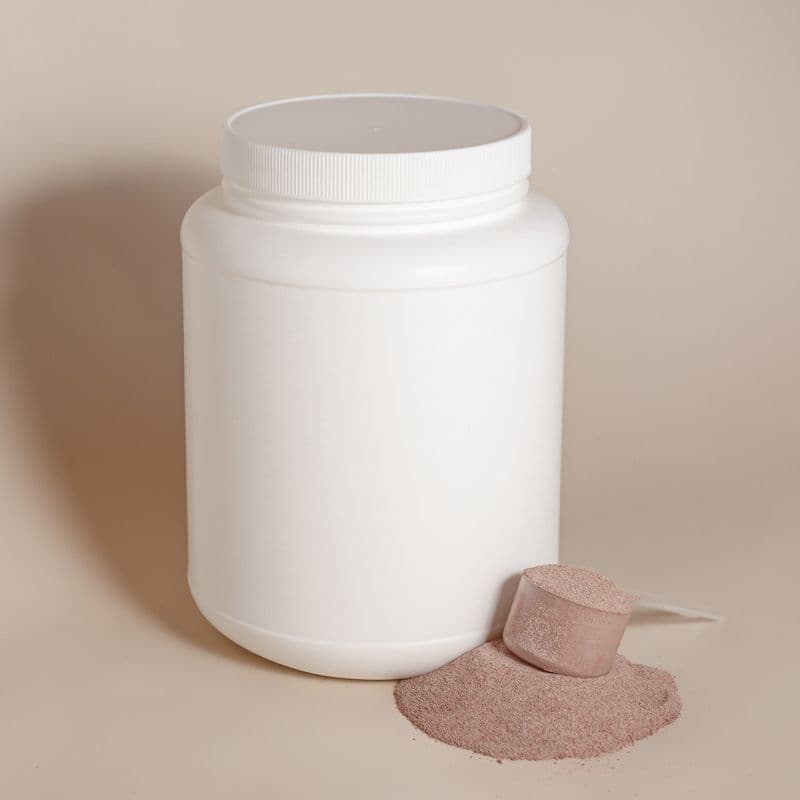
If you've stood in your kitchen at 7 a.m. with a collagen scoop in one hand and a creatine scoop in the other, wondering whether taking both is genius or a waste of money — you're asking the same question half of r/Supplements seems to ask every month. The threads all start the same way: "both are amino acid things, so won't they compete for absorption?", or "do I need to space them two hours apart?", or the classic "I read on a blog that collagen blocks creatine — is that true?"
It's a reasonable worry. Both come in similar-looking tubs, both dissolve into a shake, and both get lumped under "amino acid supplements" in most fitness writing. So the intuition that they might trip over each other in your gut feels like common sense.
Here's the short answer before we get into the weeds: yes, you can take collagen and creatine together, and no, they don't fight each other for absorption. They use entirely different transporters in your gut, they accumulate in different tissues, and there is no published evidence of harm — or of meaningful interference — from combining them. The why behind that is actually the interesting part, and it's exactly what most big health sites skip. They'll tell you "both are safe" and stop there.
That's what this piece is for. I want to walk you through what's actually happening when the two share a shaker bottle — the transporter biology, the amino-acid math, the timing question, the dosing math — so you can stop second-guessing your stack and get on with your morning.
If you want the full collagen picture first — what it does, how it works, what the skin and joint trials actually show — start with our Collagen Peptides Benefits: The Complete Science Guide. This piece is for when you're ready to stack the two and want to know whether that's okay. (And if you're new to creatine specifically, our Creatine for Women: Benefits, Dosage & Myths covers the basics.)
The Quick Answer — Can You Take Them Together?

Collagen and creatine are safe to take together. They're both amino-acid-derived, but they use completely different transporters in the gut and accumulate in different tissues — collagen peptides head mostly to skin, joints, and tendons, while creatine stockpiles in skeletal muscle and brain. There's no absorption competition, and no published evidence of harm from combining them.
Here's a lookup table for the questions people ask most:
| Question | Quick Answer |
|---|---|
| Can you take collagen and creatine together? | Yes. They're safe at the same time — they use different transporters in the gut and don't compete for absorption. |
| Does collagen interfere with creatine absorption? | No. Collagen peptides use the Pept-1 transporter; creatine uses its own transporter (SLC6A8). Different "doors," no bottleneck. |
| Can I mix them in the same shake? | Yes — both dissolve in water and taste fairly neutral. The only thing to watch is grittiness from cheaper creatine. |
| When's the best time to take both? | Post-workout is the most practical window, but timing is flexible. Creatine cares about daily consistency more than timing; collagen is forgiving. |
| How much should I take? | Collagen 5–15 g/day + creatine 3–5 g/day (maintenance). See the dosing table for goal-specific amounts. |
| Will they cause bloating? | Uncommon. Creatine draws water into muscle (not fat). If GI upset happens, split the doses across the day. |
| Who should check with a doctor first? | Anyone pregnant or breastfeeding (creatine data is thin), anyone with kidney disease, or on medications affecting kidney function. |
The short version: different doors, different destinations, no traffic jam. Now let's look at why that is — because understanding the mechanism is what tells you whether timing and dose actually matter.
Do They Compete for Absorption? (The Question That Started All This)

This is where most articles wave their hands and say "both are safe" and move on. I don't want to do that, because the reason they don't compete is the single most useful thing to understand about this stack. Once you get it, you stop worrying about spacing doses two hours apart and start focusing on the things that actually matter (like, you know, taking creatine every day).
Where the worry comes from
The intuition goes like this: collagen is made of amino acids, creatine is synthesized from amino acids, so they're both knocking on the same doors in your gut, right? That's the logic you'll see repeated in Reddit comments and in plenty of blog posts. It sounds plausible enough that nobody questions it.
It's also wrong, for a specific and kind of elegant reason.
Different transporters, different lines
Your intestinal wall is not one big sponge. It's a row of highly selective doors, each run by a specific transporter protein that only lets certain molecules through. Collagen peptides and creatine use completely different doors.
Collagen peptides enter through Pept-1. When you drink hydrolyzed collagen, your gut breaks it down into small di- and tripeptides — two- and three-amino-acid fragments. Those fragments are absorbed across the intestinal wall primarily by PepT1 (the intestinal peptide transporter 1, gene name SLC15A1), a transporter whose entire job is to shuttle di- and tripeptides from the gut into your intestinal cells and then into circulation (Smith et al., 2013, PMC4419090). PepT1 is a remarkably promiscuous transporter — it handles more than 400 dipeptides and 8,000 tripeptides generated from dietary protein digestion. Once in the blood, collagen-derived peptides — including the signature dipeptide proline-hydroxyproline (Pro-Hyp) — circulate and reach skin, joints, and other connective tissues, where they signal fibroblasts and other cells to ramp up new collagen synthesis. A landmark human study in 2005 was the first to directly show intact collagen-derived peptides, especially Pro-Hyp, appearing in human blood after volunteers drank collagen hydrolysate (Iwai et al., 2005).
Creatine enters through SLC6A8. Creatine is not a peptide. It's a small nitrogenous molecule that your body makes endogenously (from arginine, glycine, and methionine, in a two-step pathway split between kidney and liver — more on that below). Whether you eat it in meat or take it as a supplement, creatine crosses the intestinal wall and later enters muscle cells through a dedicated sodium- and chloride-dependent transporter called CRT1 / SLC6A8 (Peral et al., 2002; reviewed in Bürkle & Christensen, 2020, PMC7644880). This is a completely different protein from PepT1, with a different substrate.
So the mental model of "both queuing for the same door" is off. Collagen peptides line up at the PepT1 counter. Creatine walks up to a different counter, SLC6A8. Neither one slows the other down, because they were never in the same line.
Different destinations too
Even after absorption, they head to different places. Collagen-derived peptides preferentially reach skin, joint cartilage, tendons, and bone — the connective tissues where collagen fibrils actually get built. Creatine is taken up mainly by skeletal muscle (about 95% of your body's creatine pool lives there) and, to a lesser extent, brain. There's no overlap in where the two accumulate, so there's no competition for storage space either.
Different nitrogen paths
One more layer, because it's worth being precise. Glycine is shared between the two — collagen is roughly one-third glycine, and glycine is also one of the three amino acids your body uses to synthesize creatine. Doesn't that mean they compete for glycine?
In theory, maybe a little. In practice, no. The amount of glycine a collagen dose contributes (several grams) is vastly more than your body's daily creatine-synthesis demand consumes (a fraction of a gram), and most adults get ample glycine from ordinary protein intake. Your body makes creatine endogenously via two enzymes — AGAT (in the kidney) and GAMT (in the liver) — using arginine, glycine, and methionine as precursors (Wyss & Kaddurah-Daouk, 2000). There's no human data showing that collagen supplementation meaningfully shifts endogenous creatine synthesis up or down. The two systems aren't bottlenecked against each other.
An honest limit
I want to be straight with you about what the evidence does and doesn't say here. There is no single randomized trial that gave volunteers collagen + creatine together and measured absorption head-to-head against each supplement alone. The reasoning above comes from transporter biology — two different transporters means two different uptake routes, so by definition they don't compete for the same gate — and it lines up with what users report in practice. It's a well-grounded mechanistic argument, not a directly tested clinical result. Treat it as "very likely correct" rather than "proven in an RCT."
Different Amino Acids, Different Jobs
So they don't compete for absorption. The next question is whether they overlap in function — and here too the answer is that they're almost entirely complementary.
Collagen and creatine are both amino-acid-derived, but they do fundamentally different things in your body. Collagen is a structural input: it supplies the specific amino acids (glycine, proline, hydroxyproline) your connective tissues use to build collagen fibrils. Creatine is an energy input: it becomes phosphocreatine, the quick-release reserve that regenerates ATP during short, intense efforts like lifting a barbell or sprinting.
Here's the side-by-side:
| Collagen Peptides | Creatine | Why It Matters | |
|---|---|---|---|
| Key amino acids | Glycine (~33%), proline, hydroxyproline — in the Gly-X-Y repeat | Synthesized from glycine + arginine + methionine (not a protein itself) | Different building blocks → different jobs |
| Primary target tissue | Skin, joints, tendons, bone | Skeletal muscle, brain | No overlap in where they accumulate |
| Main function | Structural protein synthesis (collagen fibrils) | ATP energy buffering (phosphocreatine system) | Structure vs energy — complementary, not competing |
| Time to see results | Skin/joint: typically 8–12+ weeks | Strength/mass: 2–4 weeks (loading) or 4–8 weeks (maintenance) | Different timelines, can run in parallel |
| Nitrogen/protein contribution | Counts toward daily protein (low biological value) | Negligible protein contribution (not a protein) | No competition for nitrogen pools |
A note on the numbers. Collagen's amino acid composition is unusually lopsided: glycine makes up about one-third of its residues (it sits in every third position of the repeating Gly-X-Y sequence), with proline and hydroxyproline making up much of the rest — together those three account for roughly 57% of collagen's total amino acids. This is well-established biochemistry, consistent across textbook descriptions and recent systematic reviews of collagen supplementation for skin aging (Khan et al., 2023, PMC10180699). Creatine, by contrast, isn't a protein at all — it's a single small molecule your body synthesizes from glycine, arginine, and methionine via the two enzymes noted above, then ships to muscle through the bloodstream (Wyss & Kaddurah-Daouk, 2000).
The practical upshot: collagen's glycine doesn't "double up" with creatine's glycine requirement in any way that matters. The two supplements are doing unrelated work in unrelated tissues. That's exactly what makes the combination attractive rather than redundant — you're targeting two different aging pathways at once.
Timing Guide — Morning, Pre/Post-Workout, or Night?
Once you know they don't compete, the timing question mostly deflates. But there are still sensible defaults, so let me give you the short version and then the reasoning.
The core principle: creatine cares about daily consistency far more than it cares about when you take it. The whole point of creatine supplementation is to build up and maintain a saturated muscle store over weeks — that's what delivers the strength and body-composition benefits. Skipping days breaks that saturation, and no amount of clever timing on the days you do take it makes up for that. Collagen, by contrast, is genuinely forgiving: there's a slight absorption edge on an empty stomach, but the difference is small enough that "whenever you'll actually remember" beats "the theoretically optimal minute."
| Your Priority | Recommended Timing | Why | Avoid |
|---|---|---|---|
| Skin & joints (collagen-led) | Morning (empty stomach) or before bed | Slight absorption edge on empty stomach; collagen is forgiving either way | Overthinking timing (consistency matters more) |
| Strength & workout (creatine-led) | 30–60 min pre- or post-workout | Post-workout with carbs/protein may slightly aid uptake; pre/post difference is small | Skipping days (daily consistency builds saturation) |
| Both together (simplest) | Post-workout shake | One habit, both supplements, good compliance | Splitting into 4+ doses (unnecessary complexity) |
| Rest days | Any consistent time with a meal | Saturation maintenance; timing irrelevant on off-days | Skipping rest days (breaks creatine saturation) |
The pre- vs post-workout question, honestly answered
You'll see a lot of ink spilled on whether creatine should go before or after a workout. A systematic review of creatine timing around exercise found a slight lean toward post-workout being marginally better for body composition and strength, driven largely by a single RCT — but the overall effect size is small, and the bigger variable is simply taking it consistently every day, near exercise or not (Forbes et al., 2021, PMC8401986). The International Society of Sports Nutrition's position stand reaches essentially the same place: timing is a minor lever; daily intake is the major one (Kreider et al., 2017, PMC5469049).
My honest read: if you're an elite athlete optimizing the last 2%, by all means take your creatine post-workout with carbs and protein. If you're a normal person trying to get stronger and keep your joints working, take both supplements whenever you'll actually do it every day. Post-workout is the most practical single window because it's one habit — shake, collagen, creatine, done — but don't let timing perfectionism talk you out of consistency.
For the deep dive on what collagen does and why, see our Collagen Peptides Benefits: The Complete Science Guide. For everything on creatine — dosing, myths, why it matters for women — read our Creatine for Women: Benefits, Dosage & Myths.
Can You Mix Them in One Shake?

Yes — and this is the easiest way to actually stick with the stack. Both collagen peptides and creatine monohydrate dissolve in water and have fairly neutral taste, so there's no chemical or flavor reason you can't put them in the same glass.
A few practical notes:
- Solubility. Collagen peptides dissolve cleanly in cold or room-temperature water — arguably better than most protein powders. Creatine monohydrate dissolves fine but can leave a slight grittiness, especially in cheaper non-micronized forms. If the texture bothers you, spend the extra two dollars on a micronized creatine monohydrate, which grinds the powder into finer particles that dissolve without the sandy finish.
- Taste. Both are essentially tasteless. Collagen can have a very faint savory note; creatine is mildly bitter in larger doses. Mixed into a shake with any flavor (protein powder, fruit, milk), neither comes through. Taking both in plain water is perfectly doable but a little flat.
- Temperature. Cold water or a smoothie is ideal. There's a persistent internet claim that hot water "denatures" collagen peptides and ruins them — this is mostly overheated. Collagen peptides are already hydrolyzed (pre-broken-down) and are quite heat-stable; stirring them into warm coffee or oatmeal doesn't destroy the active peptides. If you want them in a hot drink, go ahead. Just avoid prolonged boiling.
- Settling. Creatine can settle at the bottom of a shaker if you let it sit. Give it a quick re-shake before the last sip, or drink it right after mixing.
Can You Add Protein Powder Too? (The 3-Stack)
Yes — and this is probably the most common way people end up running the stack. A post-workout shake with whey (or plant) protein + collagen + creatine is safe and sensible. Whey and casein deliver free amino acids and peptides via a mix of transporters (including PepT1 for peptides and various free-amino-acid transporters for single amino acids), and protein powder doesn't interfere with creatine uptake — in fact the ISSN position stand notes that taking creatine with protein and carbs can modestly enhance uptake via insulin's effect on the creatine transporter (Kreider et al., 2017, PMC5469049).
A reasonable 3-stack recipe: 25 g whey + 10 g collagen peptides + 5 g creatine monohydrate, in cold water or milk, post-workout. That's roughly 35–40 g of high-quality protein (whey plus collagen contributes), a maintenance creatine dose, and one shaker bottle to wash. The only thing to watch is total volume if you have a sensitive stomach — that's a lot of solute at once, so if you bloat, split the collagen into a separate morning serving.
Dosing Guide — How Much of Each, Together?
Here's where I'd rather give you a table than a paragraph. The right dose depends on what you're trying to do, and the combination scales differently for each supplement.
| Your Goal | Collagen (g/day) | Creatine (g/day) | Notes |
|---|---|---|---|
| Skin & joints focus | 10–15 g | 3 g (maintenance floor) | Creatine at minimum effective dose for general health |
| Strength & body composition focus | 5 g | 5 g | Standard athletic dosing |
| Women 40+ comprehensive stack | 10 g | 3–5 g | Sarcopenia + joint + skin simultaneously |
| Loading phase (creatine only) | (no loading needed) | 20 g/day × 5–7 days, then 3–5 g | Collagen has no loading protocol |
| Sensitive stomach / GI issues | Split 5 g AM + 5 g PM | 3 g with meals | Split doses to reduce bloating |
Where those numbers come from
Collagen. The skin and joint trials land in a fairly consistent range. Meta-analyses of oral collagen for skin aging — including a 26-RCT pooled analysis of over 1,700 participants — typically used 2.5–10 g/day of hydrolyzed collagen over 8–24 weeks and saw significant improvements in skin hydration, elasticity, and wrinkle reduction, with no serious adverse events (Khan et al., 2023, PMC10180699). For joint pain, a meta-analysis of collagen peptide trials in knee osteoarthritis used roughly 5–10 g/day over 3–6 months and found a significant analgesic effect versus placebo (León-López et al., 2023, PMC10505327). So 5–15 g/day comfortably covers both targets. There's no benefit to a loading phase for collagen.
Creatine. The standard protocols are well established. The ISSN position stand and a detailed review of common creatine misconceptions both confirm that either a loading protocol (about 20 g/day, usually split into four 5 g doses, for 5–7 days) followed by a 3–5 g/day maintenance dose, or simply 3–5 g/day from the start with no loading, will achieve full muscle saturation — loading just gets you there faster (Kreider et al., 2017, PMC5469049; Kreider et al., 2021, PMC7871530). For most people, skipping the load and just taking 3–5 g every day is simpler and equally effective over a few extra weeks.
A per-bodyweight tweak if you want to get precise: creatine maintenance is often given as roughly 0.03–0.1 g/kg body mass per day. For a 60 kg (132 lb) woman, that lands at 1.8–6 g/day — which is why 3–5 g is the practical sweet spot for most adults. Collagen dosing doesn't scale meaningfully with body weight in the trials; it's studied at fixed gram doses.
What not to do. Don't take 10 g+ of creatine in a single dose — that's a reliable way to trigger GI cramping and diarrhea, and it doesn't saturate muscle any faster than splitting it. If you're loading, divide the 20 g/day into four doses. Collagen at 20 g+ in one sitting is mostly just excess protein (fairly harmless, but pointless).
Who Benefits Most — The Women 40+ Stack

If I had to pick one demographic for whom the collagen + creatine combination makes the most mechanistic sense, it's women in their 40s and beyond. Not because the stack is unsafe for anyone else — it isn't — but because the three things this combo targets happen to be the three things that accelerate right around perimenopause and beyond.
After about 40, women tend to lose muscle mass and strength faster than men at the same age (sarcopenia), joint cartilage thins and aches more, and skin collagen content drops sharply — all on overlapping timelines. The standard advice is "resistance training and protein," which is correct but incomplete. This is exactly where a targeted stack helps:
- Collagen addresses the connective-tissue side: skin elasticity and hydration, joint comfort, tendon resilience. The skin and osteoarthritis meta-analyses cited above both found meaningful effects in middle-aged and older adults (Khan et al., 2023, PMC10180699; León-López et al., 2023, PMC10505327).
- Creatine addresses the muscle-and-strength side. A lifespan-perspective review on creatine in women's health concluded that supplementation supports strength, lean mass, and exercise performance in both pre-menopausal and post-menopausal women, with emerging evidence for mood and cognition benefits too — and noted that women's habitual creatine intake is often well below useful levels (Smith-Ryan et al., 2021, PMC7998865).
The point isn't that collagen or creatine is a magic fix for aging. It's that they cover complementary aging pathways — structure and energy — that both decline in parallel after 40. You're not stacking two things that do the same job; you're stacking two things that each address a different part of the same larger picture.
You'll see this exact logic in r/Menopause and r/PetiteFitness threads: women in perimenopause who started both together reporting firmer skin, less creaky knees, and better gym numbers — the kinds of multi-system changes you'd predict from the mechanism. Anecdotes aren't data, but in this case they line up cleanly with what the RCTs show for each supplement individually.
For the complete creatine-for-women picture — why it matters especially after 40, the dosing specifics, the myths that won't die — read our Creatine for Women: Benefits, Dosage & Myths.
Pregnancy, Breastfeeding & Special Cases
This is the section where I have to be more cautious, because the evidence thins out in a specific way that matters.
Collagen during pregnancy and breastfeeding. Collagen peptides are a food-derived protein — essentially the same stuff you'd get from eating bone broth or gelatin-containing foods — and there's no mechanistic reason to expect harm at typical supplement doses (5–15 g/day). That said, large, high-quality trials specifically in pregnant and breastfeeding women don't exist. The honest position is: collagen is generally regarded as safe as a food-derived protein, but pregnancy-specific data is limited. If you're pregnant or nursing and want to continue collagen, it's worth a quick mention to your OB/GYN, more for completeness than out of documented concern.
Creatine during pregnancy and breastfeeding. Here the evidence gap is sharper, and I want to be direct about it. Creatine does appear naturally in breast milk (concentrations are highest in colostrum and decline as milk matures), and some animal studies have hinted at potential benefits of maternal creatine supplementation for fetal development — but there are no adequate human trials establishing the safety of creatine supplementation (at the 3–5 g/day doses used for fitness) during pregnancy or lactation. The NIH LactMed database, reviewing the available evidence, notes that while creatine is a normal component of human milk, supplement-specific safety data in nursing mothers is insufficient to support routine use (NIH LactMed: Creatine, NBK501853).
My recommendation, and the one I'd give a friend: if you're pregnant or breastfeeding, don't start creatine supplementation without your OB/GYN's explicit sign-off. This isn't because creatine is known to be harmful — it isn't — but because the human safety data specifically for supplementation in pregnancy and lactation hasn't been generated, and that's not a gap you should fill by extrapolating from animal studies or from the safety profile in non-pregnant adults. The honest line is "not recommended due to insufficient human data," and your clinician is the right person to weigh that against your specific situation.
Kidney disease. This is the one hard contraindication worth naming. Creatine supplementation raises creatinine levels (a normal metabolic product of creatine), which is generally harmless in people with healthy kidneys but can complicate the interpretation of kidney-function tests in people with pre-existing kidney disease. The ISSN position stand concludes that creatine is safe in healthy individuals but flags those with existing renal disease as needing medical supervision (Kreider et al., 2017, PMC5469049). If you have any form of kidney disease, or you're on medications that affect kidney function (certain blood pressure drugs, NSAIDs at high doses, some antibiotics), talk to your doctor before starting creatine. Collagen doesn't carry the same concern at normal doses.
Autoimmune conditions and medications. If you're on immunosuppressants, or you have a condition your doctor is actively managing, run any new supplement past them first. Not because collagen or creatine is uniquely dangerous here, but because "run new supplements past your doctor" is the correct default whenever a medical condition is in play.
Side Effects & When to Separate Them
Side effects from either supplement at the doses above are uncommon, and serious ones are rare. But "uncommon" isn't "never," so here's what to watch for and when it makes sense to split the doses.
Creatine and water weight. The most predictable effect of starting creatine is a small uptick in body weight (typically 1–3 lb over the first week, more if you load) from water being drawn into muscle cells. This is intracellular water retention — water inside the muscle, where you want it — not subcutaneous bloating or fat gain. It's the intended mechanism by which creatine supports training. If the scale jumps after your first week, that's what's happening; it's not a reason to stop.
GI effects. Both supplements are protein/amino-acid-based, and taking a large bolus of either on an empty stomach can cause mild fullness, gas, or loose stools in sensitive people. Creatine at single doses above about 7–10 g is the more common offender. Collagen is usually well tolerated, but a 15 g dose in plain water first thing in the morning can sit heavy if your stomach is sensitive.
Does taking them together cause bloating? Generally no — but if you're dumping 15 g of collagen plus 5 g of creatine plus 25 g of whey into one shaker and chugging it on an empty stomach, that's a lot of solute at once, and that's the thing most likely to cause GI discomfort, not any interaction between the supplements. The fix is to split the dose: collagen in the morning, creatine + protein post-workout, or take the whole stack with a meal to slow gastric emptying.
Here's a triage table to help you figure out where you fall:
| Experience | Likely Fine (keep going) | Adjust (split/space doses) | Stop + Check with Clinician |
|---|---|---|---|
| Mild water-weight from creatine (1–3 lb) | ✓ | ||
| Slight GI fullness in the first week | ✓ | ||
| Persistent bloating | ✓ (split doses, take with meals) | ||
| GI cramps / diarrhea (often from large single creatine doses) | ✓ (reduce creatine dose, split into 2–3 doses) | ||
| Signs of kidney strain — very rare, but persistent flank pain, marked change in urination, swelling | ✓ | ||
| Allergic reaction (rash, itching, swelling) — very rare | ✓ |
Quality and third-party testing. One non-trivial point: collagen sourcing matters for contaminants. Lower-quality collagen from questionable sources can carry heavy-metal residues; look for hydrolyzed collagen peptides from reputable brands that do third-party testing (NSF, Informed Sport, or ConsumerLab verified). For creatine, micronized creatine monohydrate from a third-party-tested brand is the boring, correct choice — it's the most-studied, best-value form and there's no reason to pay for fancier forms (HCL, ethyl ester) that don't outperform it.
Quick FAQ — Your Questions Answered
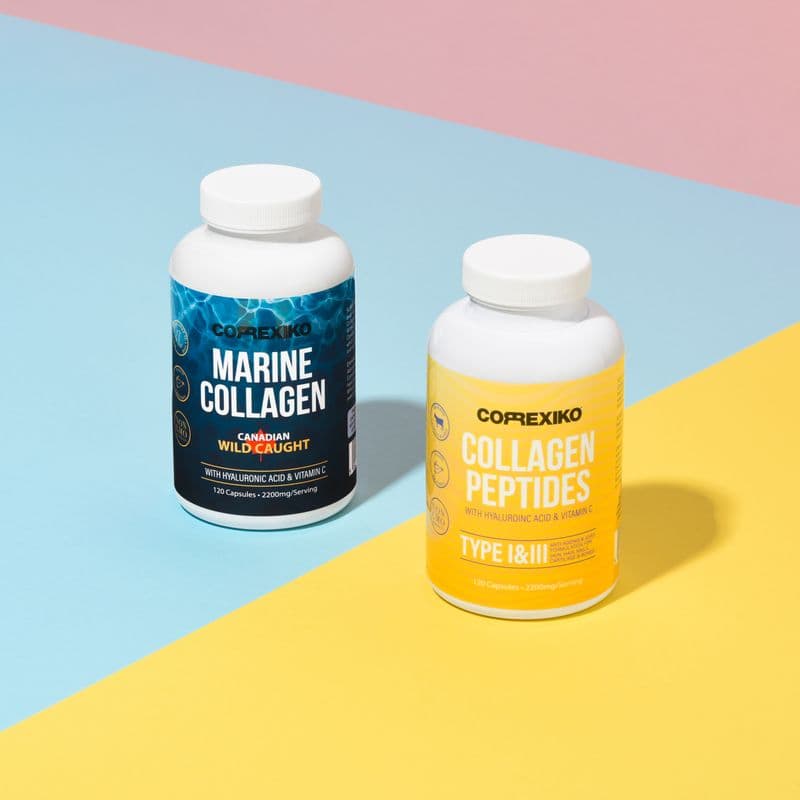
Can you take collagen and creatine together? Yes. They use different intestinal transporters (Pept-1 for collagen peptides, SLC6A8 for creatine), accumulate in different tissues (skin/joints vs muscle), and there's no evidence of absorption competition or harm from combining them. Different doors, different destinations — so yes, you can take collagen and creatine together without worrying about one blunting the other.
Can I mix collagen and creatine in the same shake? Yes. Both dissolve in water and taste neutral. If the creatine is gritty, switch to a micronized monohydrate. You can add protein powder for a 3-stack post-workout shake — whey + collagen + creatine is safe and practical.
When's the best time to take both? Post-workout is the most practical single window — one habit, both supplements, and creatine uptake may be slightly better with the carbs/protein in a post-workout shake. But timing is a minor lever; daily consistency is the major one, especially for creatine. Don't skip rest days.
Does collagen interfere with creatine absorption? No. Collagen peptides use the Pept-1 transporter; creatine uses SLC6A8. They're separate uptake routes, so there's no bottleneck. The "they compete because both are amino-acid-based" intuition sounds reasonable but is wrong — different molecules, different doors.
How much collagen and creatine should I take per day? For most adults: collagen 5–15 g/day plus creatine 3–5 g/day (maintenance). See the dosing table for goal-specific amounts. Creatine has an optional loading phase (20 g/day for 5–7 days, then 3–5 g/day); collagen does not. If you have a sensitive stomach, split the doses across the day.
Is the collagen + creatine stack safe during pregnancy or breastfeeding? Collagen is generally regarded as safe as a food-derived protein, but pregnancy-specific trial data is limited. Creatine lacks adequate human safety data for supplementation in pregnancy and lactation — it is not recommended without your OB/GYN's explicit sign-off. Don't extrapolate from animal studies here; talk to your clinician.
Does the stack make sense for women over 40? Yes — possibly the ideal demographic. Collagen targets skin and joints (which decline post-40), creatine targets muscle and strength (sarcopenia defense). They cover complementary aging pathways, which is why you'll see women in perimenopause reporting multi-system benefits when stacking both with resistance training.
Will taking them together cause bloating? Uncommon at normal doses. Creatine causes mild water retention inside muscle (not fat, not subcutaneous bloat) — that's the intended effect. If GI upset happens, it's usually from taking too much at once; split the doses and take them with meals.
The Bottom Line
Collagen and creatine are safe to take together — and the combination is one of the few supplement stacks that actually makes mechanistic sense, because the two do completely different jobs in completely different tissues. They don't compete for absorption (different transporters: Pept-1 vs SLC6A8), they don't compete for storage (skin/joints vs muscle), and there's no evidence of harm from combining them. The main mistake people make with this stack isn't combining the two — it's overthinking the timing.
Here's the practical order I'd work through:
- Mix them in the same shake if you want. There's no flavor or solubility problem, and adding protein powder for a 3-stack (whey + collagen + creatine) post-workout is perfectly fine.
- Post-workout is the most practical timing. One habit, both supplements, best compliance. But if a different time of day is what you'll actually stick to, that's better than a "perfect" time you skip half the time.
- Dose to your goal: collagen 5–15 g + creatine 3–5 g/day. Creatine is about daily consistency, not clever timing — don't skip rest days. See the dosing table for specifics.
- Pregnancy, breastfeeding, or kidney disease → talk to your clinician first. Creatine in particular lacks human pregnancy/lactation safety data; don't extrapolate from animal studies.
So: can you take collagen and creatine together? Yes — it's low-risk and, for most people (especially women over 40), addresses complementary aging pathways in a way that single supplements can't. The science is genuinely on your side here.
For the deep dive on what collagen does and why, see our Collagen Peptides Benefits: The Complete Science Guide. And for everything on creatine — dosing, myths, why it matters for women — read our Creatine for Women: Benefits, Dosage & Myths.
This article is for informational purposes only and is not a substitute for professional medical advice. Collagen and creatine can interact with underlying health conditions (especially kidney disease) and may not be appropriate during pregnancy or while breastfeeding. Talk to a healthcare professional before starting any supplement — particularly if you're pregnant, nursing, managing a kidney condition, or taking medications that affect kidney function.
References
- Smith DE, Clémençon B, Hediger MA. Proton-coupled oligopeptide transporter family SLC15: physiological, pharmacological and pathological implications. Mol Aspects Med. 2013;34(2-3):323-336. PMC4419090. https://pmc.ncbi.nlm.nih.gov/articles/PMC4419090/
- Iwai K, Hasegawa T, Taguchi Y, et al. Identification of food-derived collagen peptides in human blood after oral ingestion of gelatin hydrolysates. J Agric Food Chem. 2005;53(16):6531-6536. PMID: 16076145. https://pubmed.ncbi.nlm.nih.gov/16076145/
- Peral MJ, García-Delgado M, Calonge ML, et al. Human, rat and chicken small intestinal Na⁺-Cl⁻-creatine transporter: functional, molecular characterization and localization. J Physiol. 2002;545(Pt 1):133-144. PMID: 12433955. https://pubmed.ncbi.nlm.nih.gov/12433955/
- Bürkle B, Christensen H. The creatine transporter unfolded: a knotty premise in the cerebral creatine deficiency syndrome. Front Synaptic Neurosci. 2020;12:591433. PMC7644880. https://pmc.ncbi.nlm.nih.gov/articles/PMC7644880/
- Wyss M, Kaddurah-Daouk R. Creatine and creatinine metabolism. Physiol Rev. 2000;80(3):1107-1213. PMID: 10893433. https://pubmed.ncbi.nlm.nih.gov/10893433/
- Kreider RB, Kalman DS, Antonio J, et al. International Society of Sports Nutrition position stand: safety and efficacy of creatine supplementation in exercise, sport, and medicine. J Int Soc Sports Nutr. 2017;14:18. PMC5469049. https://pmc.ncbi.nlm.nih.gov/articles/PMC5469049/
- Kreider RB, Antonelli P, Kerksick CM, et al. Common questions and misconceptions about creatine supplementation: what does the evidence really show? J Int Soc Sports Nutr. 2021;18(1):Article 15. PMC7871530. https://pmc.ncbi.nlm.nih.gov/articles/PMC7871530/
- Forbes SC, Cordingley DM, Candow DG. The timing of creatine supplementation around exercise: a systematic review. J Int Soc Sports Nutr. 2021;18(1):Article 76. PMC8401986. https://pmc.ncbi.nlm.nih.gov/articles/PMC8401986/
- Smith-Ryan AE, Cabre HE, Eckerson JM, et al. Creatine supplementation in women's health: a lifespan perspective. Nutrients. 2021;13(3):877. PMC7998865. https://pmc.ncbi.nlm.nih.gov/articles/PMC7998865/
- Khan F, Akram W, Aamir M, et al. Effects of oral collagen for skin anti-aging: a systematic review and meta-analysis of 26 randomized controlled trials. Nutrients. 2023;15(9):2080. PMC10180699. https://pmc.ncbi.nlm.nih.gov/articles/PMC10180699/
- León-López A, Fuentes-Jiménez L, Bueno G, et al. Analgesic efficacy of collagen peptide in knee osteoarthritis: a systematic review and meta-analysis of randomized controlled trials. Aging Clin Exp Res. 2023;35(12):2517-2532. PMC10505327. https://pmc.ncbi.nlm.nih.gov/articles/PMC10505327/
- National Institutes of Health, Drugs and Lactation Database (LactMed). Creatine. Bookshelf ID: NBK501853. https://www.ncbi.nlm.nih.gov/books/NBK501853/
Magnesium Glycinate Dose for Restless Legs at Night: How Much, When, and Which Form Actually Helps
Next →Why Ashwagandha Makes You Tired, Lethargic, or Emotionally Flat — and What to Do


