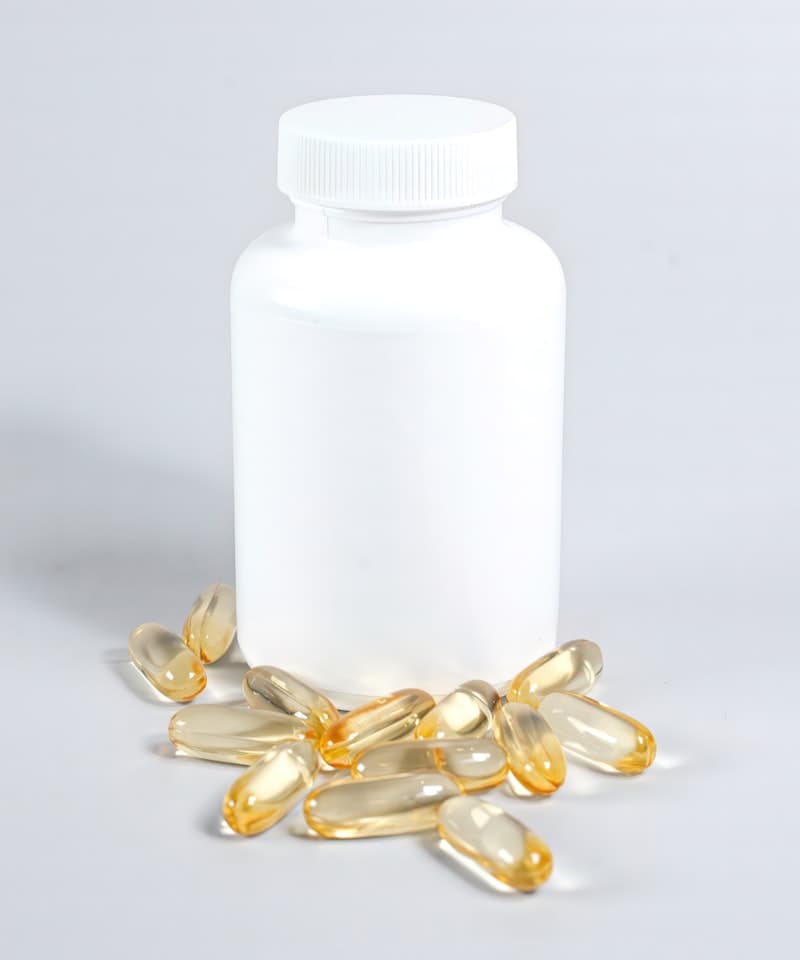
Does Fish Oil Go Bad? A 5-Point Rancidity Self-Test + Storage Matrix (Room Temp vs Fridge vs Freezer)
Does fish oil go bad? Run a 5-point rancidity self-test on your capsules and use the storage matrix to keep fish oil fresh in the cupboard, fridge, or freezer.
Does Fish Oil Go Bad? A 5-Point Rancidity Self-Test + Storage Matrix (Room Temp vs Fridge vs Freezer)
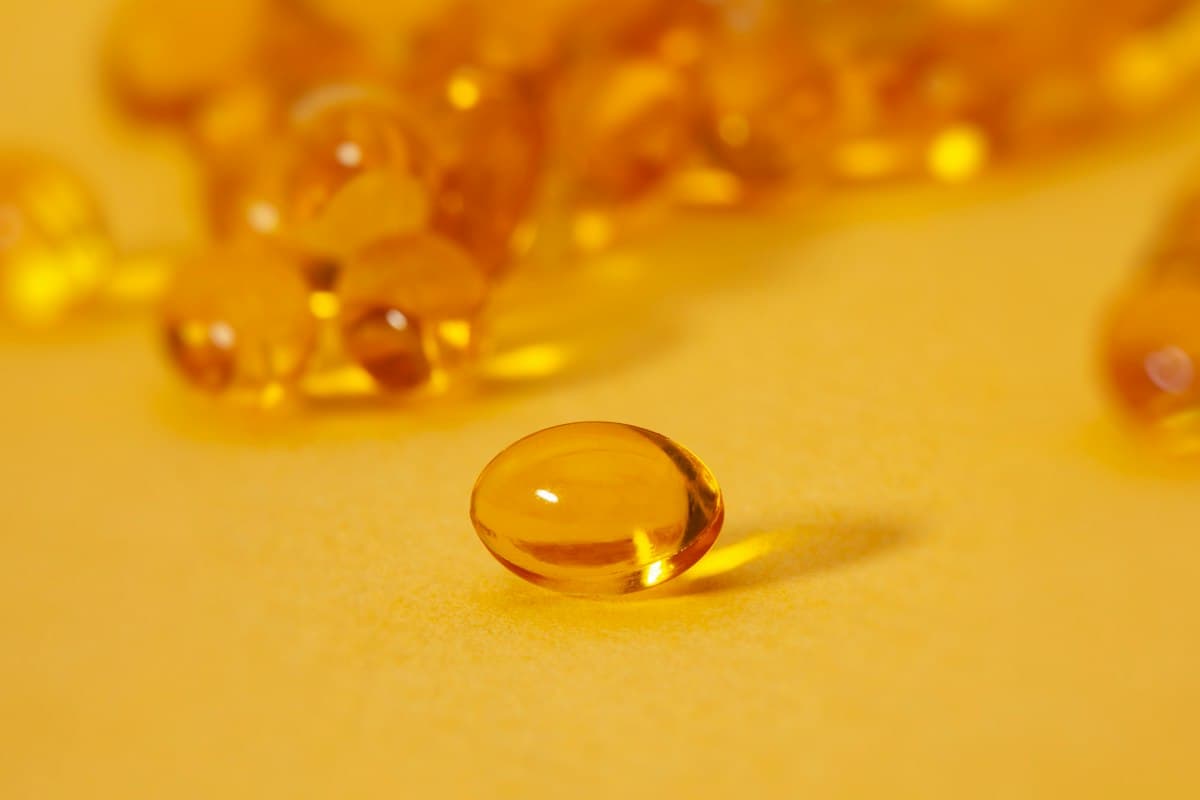
I still remember the exact moment. A Tuesday morning, coffee in one hand, and a bottle of fish oil capsules I'd bought months earlier in the other. I twisted the cap, and the smell hit me — not the mild ocean note I expected, but something closer to old paint and stale cooking oil. My first thought wasn't "is this bad for me?" It was simpler and more annoying: wait, does fish oil go bad at all?
If you've had that moment, you're in good company. It's one of the most repeated questions on supplement forums, and the answers you find online contradict each other freely. One site tells you fishy smell is completely normal. Another tells you any smell means the bottle is trash. Neither bothers to explain the actual chemistry, so you're left sniffing a bottle and guessing.
Here's a number that should sharpen your attention: when researchers at the George Washington University School of Medicine and Health Sciences ran a multi-year rancidity analysis of 72 marine and microalgal omega-3 supplements, roughly 45% of products tested positive for rancidity [1][2]. Nearly half the fish oil on shelves is already aging faster than the label suggests.
So this article does two things most guides don't. First, a 5-point rancidity self-test — a checklist you can run on the bottle in your kitchen in about sixty seconds. Second, a storage matrix that breaks down room temp vs fridge vs freezer, crossed with opened vs unopened, so you can stop guessing where the bottle belongs. (If you're new to fish oil altogether and wondering whether it's worth taking at all, start with our complete omega-3 and fish oil science guide.)
First, the Science: Why Fish Oil Goes Bad (Oxidation 101)
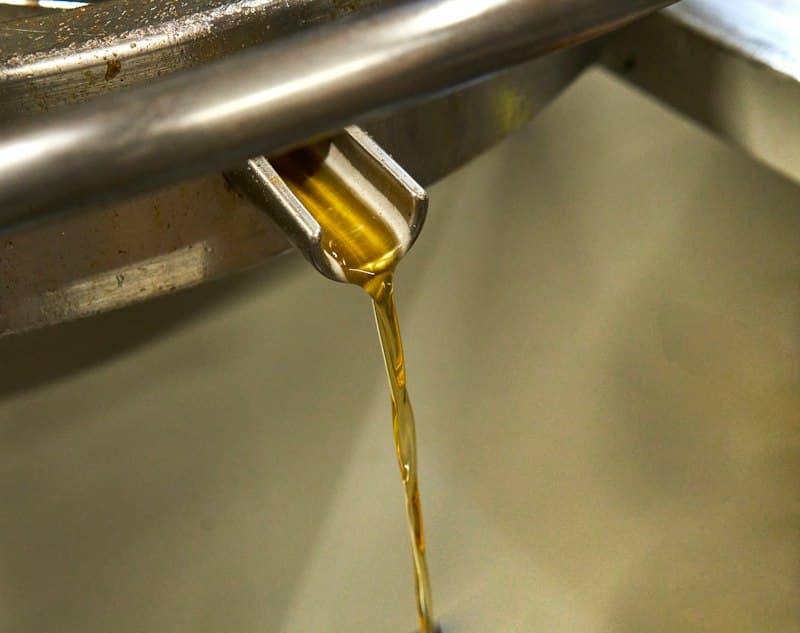
Fish oil is fragile by nature. EPA and DHA — the two omega-3 fatty acids you're paying for — are long-chain polyunsaturated fats. Every double bond in their structure is a weak point where oxygen can attack. The more double bonds, the faster the oil oxidizes, and DHA has six of them. This isn't a design flaw in your brand; it's basic lipid chemistry [3].
Oxidation happens in stages. First, oxygen latches onto those weak points and forms hydroperoxides — these are odorless, so the damage starts before you can smell anything. Then those hydroperoxides break down into secondary products: aldehydes, ketones, and the small volatile compounds that produce the paint-thinner, cardboard, or old-oil smell we associate with rancidity [3].
Four things speed the whole process up:
- Heat — higher temperature means faster reaction rates
- Light — UV energy directly drives lipid oxidation
- Air — every time you open the bottle, fresh oxygen gets in
- Time — the clock never stops, even in a sealed capsule
Labs measure this damage with oxidation markers. Peroxide value (PV) captures those early hydroperoxides; anisidine value (AV) captures the secondary breakdown products. Add them together and you get TOTOX, the industry's single-number freshness score. The Global Organization for EPA and DHA (GOED) sets a voluntary upper limit of TOTOX 26 — the bar that 68% of flavored supplements and 13% of unflavored ones failed in the GWU analysis [1].
One practical wrinkle from that same study: flavored products were more likely to exceed oxidation limits than unflavored ones [1][2]. Flavoring doesn't protect the oil — if anything, it masks the smell that would otherwise warn you. Something to remember if you buy lemon-flavored fish oil precisely because it doesn't taste fishy.
The 5-Point Rancidity Self-Test (Check Before You Swallow)
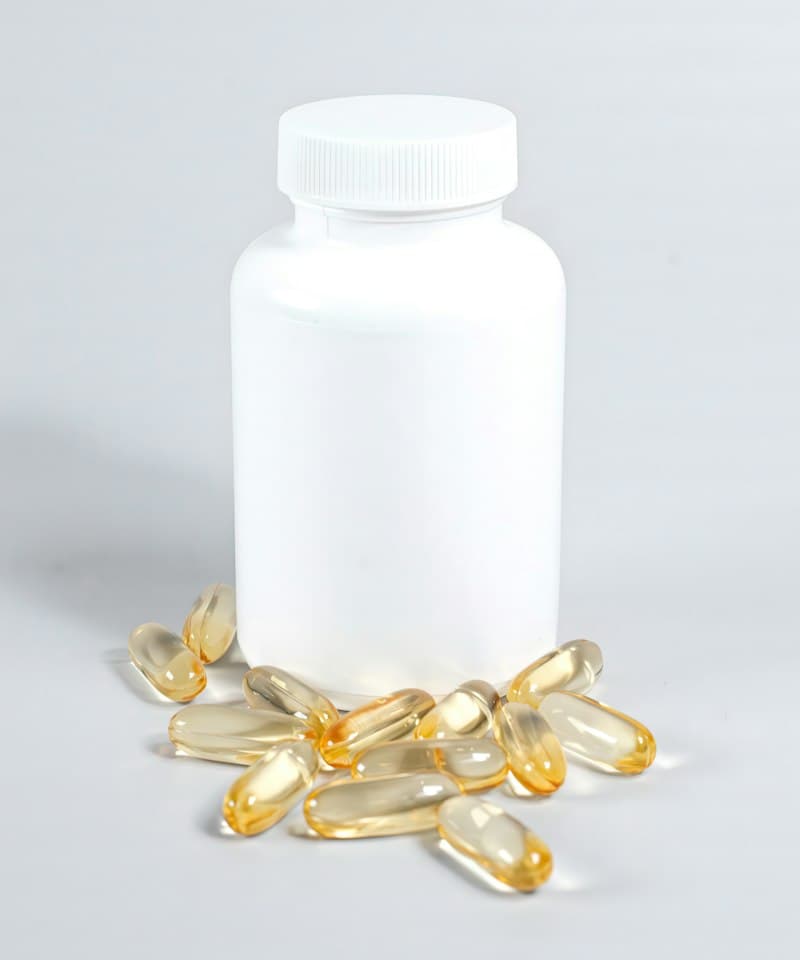
Time to open your bottle and actually evaluate it. Run these five checks in order. You don't need lab equipment — your nose and taste buds detect the volatile compounds that correlate with oxidation surprisingly well [3].
Point 1: Smell — Fishy Is Normal, Paint-Thinner Is Not
Cut one capsule open and smell the oil directly. Capsule shells block a lot of odor, so smelling the closed bottle understates what's inside.
The dividing line:
- A light, clean, ocean-like smell — normal. Fish oil comes from fish; a faint marine note is expected and not a defect.
- Paint thinner, old crayons, rancid cooking oil, wet cardboard — that's the smell of secondary oxidation products. The oil has degraded.
Don't panic over a mild fishy note. Do take paint-thinner seriously.
Point 2: Taste — the Bite Test
Squeeze a little oil from that cut capsule onto your tongue. Fresh fish oil tastes mildly oily and slightly fishy, sometimes a bit bland. Oxidized fish oil tastes bitter, sharply acrid, or scratchy at the back of the throat — some people describe it as a "burning" aftertaste.
This is the same reason cod liver oil traditions involved the "bite test" for centuries before lab assays existed. Bitterness in oils is a reliable human-detectable oxidation signal [3].
Point 3: Color and Clarity
Hold the oil to a light. Fish oil ranges from pale straw to light amber depending on the source and refinement. What you're watching for is change, since you may not know the original color:
- Cloudiness or visible suspended particles (in a product that started clear)
- A shift to dark amber or brown
- Any opacity that wasn't there before
Color alone isn't conclusive — some quality oils are naturally darker. Use it alongside points 1 and 2.
Point 4: Capsule Condition
Look at the capsules themselves:
- Stuck together in clumps — heat and moisture exposure; the oil inside has likely been through elevated temperatures
- Cloudy spots or bubbles in the shell — moisture has gotten in
- Cracked or brittle shells — dried out, poorly stored
- Soft, uniform, freely moving capsules — what you want to see
Sticking doesn't automatically mean rancid. It means the storage history is bad, which makes the smell and taste checks more important, not less.
Point 5: The Bottle Itself
The final check is the story of the bottle:
- How long since it was opened? (More than a few months of room-temperature storage after opening raises the odds.)
- Where has it been sitting? A sunny windowsill or the cabinet above the stove is a different universe from a cool dark drawer.
- Is the date on the label passed? (That's its own question — covered next.)
The Full Scorecard
| # | Signal | Verdict | Action |
|---|---|---|---|
| 1 | Light ocean smell vs. paint/crayons/old oil | Normal vs. rancidity suspected | If rancid-smelling: discard |
| 2 | Bitter, acrid, or scratchy taste on the bite test | High likelihood of oxidation | Discard |
| 3 | Cloudiness or darkening toward brown | Oxidation progressing | Discard if combined with #1 or #2 |
| 4 | Capsules stuck, cloudy shells, or cracks | Heat/moisture exposure | Decide based on smell and taste results |
| 5 | Long-opened bottle or hot storage history | Elevated risk, not proof | Run checks 1–3 before deciding |
Reading the table: any single positive from points 1 or 2 is enough to toss the bottle. Points 3–5 are risk factors — they tell you to look harder, not necessarily to discard. And "expired" is deliberately not on this list, because expiration and rancidity are different problems entirely.
Expired vs Rancid: They're Not the Same Thing
This distinction does the most work of anything in this article, so let's be precise.
The date on the label is a manufacturer's quality guarantee, not a safety cliff. Under U.S. regulation, dietary supplements don't even require an expiration date — 21 CFR Part 111 leaves shelf-life dating voluntary, and if a manufacturer prints one, the requirement is only that it be supported by data and not misleading [4]. The date means: up to here, we promise the labeled potency and quality. It says nothing definitive about the day after.
That means the two failure modes come apart completely:
- Expired but not rancid: a sealed bottle, stored cool and dark, a few months past its date — likely fine, though potency may have drifted down. Run the 5-point test; if it passes, it's your call.
- Not expired but rancid: a bottle opened six months ago and kept next to the stove, still "in date" — plausibly oxidized today. The date protects you from nothing here.
Forum threads on r/Supplements play out a version of this weekly: someone's capsules smell "off," the date says 2027, and commenters split between "it's fish oil, it always smells" and "throw it out." Both camps are half-right, because they're answering different questions. The date answers "is it within the guarantee period." The 5-point test answers "has the oil actually degraded." Only the second one matters at the moment of swallowing.
One honest caveat: oxidation is gradual, not binary. A bottle somewhere between fresh and clearly rancid gives ambiguous signals. When you're genuinely unsure after all five checks, the cost calculus is simple — a replacement bottle is cheaper than months of taking capsules you don't trust.
What Happens If You Take Rancid Fish Oil? (Honest Evidence Review)
Let's sort what's actually known from what's still being argued.
Reasonably well supported: rancid fish oil delivers less benefit. Omega-3s work by getting intact EPA and DHA into your tissues. Oxidation consumes and degrades those molecules. A heavily oxidized oil is, at minimum, a degraded product — the GWU researchers' own framing was that many supplements "may not be fresh enough to deliver the health benefit" on the label [1][2]. Paying full price for a partially oxidized bottle is paying EPA/DHA prices for breakdown products.
Genuinely debated: whether oxidized fish oil actively harms you. The short-term human evidence is more reassuring than the internet suggests. In a randomized controlled trial, healthy volunteers consumed oxidized fish oil and showed no change in established markers of oxidative stress compared with fresh oil [5]. A follow-up explorative study comparing oxidized versus high-quality fish oil found differences in gene-expression profiles in immune cells — a hint that quality matters at some biological level — but no acute harm signal [6]. And an RCT in overweight adults found oxidized fish oil had a less favorable effect on LDL and lipoprotein subclasses than high-quality oil — a downgrade, not a crisis [7].
Animal and in-vitro studies paint a scarier picture, which is why alarming headlines exist. But extrapolating high-dose animal oxidation data to your one bitter capsule is not sound reasoning. The honest summary: reduced benefit is supported; meaningful harm from typical real-world consumption is unproven and contested.
Clearly true: one dose is not an emergency. If you've been taking a slightly rancid bottle for weeks, you have not poisoned yourself. Stop taking it, replace it, and store the next one better. That's the whole intervention.
There's also a financial angle people miss: oxidized fish oil is a common reason people conclude "fish oil did nothing for me." Before you write off omega-3s entirely, check whether the bottle you were faithfully taking was fresh in the first place.
How to Store Fish Oil Capsules: The Storage Matrix

Now the preventive half. Where should the bottle live? The honest answer starts with a rule that annores people who want one universal instruction: the label wins. Formulations differ — antioxidant systems, capsule materials, oil types — and manufacturers test their own products. If the bottle says refrigerate, refrigerate. If it says store below 25°C away from light, do that.
With that caveat, here's the general matrix:
| Storage condition | Unopened (sealed) | Opened | Notes |
|---|---|---|---|
| Room temp, cool & dark (~21°C, cupboard away from stove/sun) | Through the printed date (manufacturer guarantee) | ~1–3 months is a sensible window | Heat, light, and air are the three accelerants; you're controlling all three |
| Room temp, warm spot (25°C+, humidity — kitchen shelf, near appliances) | Shortens shelf life | Accelerated oxidation — avoid | Higher temperature speeds chemical reaction rates; treat warm storage as fast-forward |
| Fridge (2–8°C) | Per label; fine for most products | ~3–6 months or more | Some labels warn about condensation — let the bottle warm before opening, keep the desiccant if included |
| Freezer (-18°C) | Long-term storage option | Oxidation nearly halted | Capsules can become brittle; condensation on thawing is the main risk — return to fridge, not room temp |
Read the "Opened" column as practical guidance rather than lab-verified constants — published shelf-life numbers are product-specific, which is why claims beyond manufacturer recommendations aren't honestly available. The directional facts are solid: colder is slower, darker is better, sealed is safer [3].
Room Temperature, Fridge, or Freezer?
- Room temperature is fine for an unopened bottle in a genuinely cool, dark spot. Not the cabinet over the refrigerator, which is warm from the compressor. Not the windowsill. A bedroom drawer beats most kitchen locations.
- The fridge is the best default once a bottle is opened. Cold slows oxidation dramatically, and most capsules tolerate it well.
- The freezer is for stockpilers. Bought three bottles on sale? Freeze two. Oxidation essentially stops at -18°C. The main caution is physical: capsules get brittle, and moving a frozen bottle in and out of humid kitchen air causes condensation — the moisture then works on the capsules. Freeze what you won't open for months, then thaw it once, in the fridge, and keep it there.
Opened vs Unopened — Why It Matters
An unopened bottle is a sealed system: oxygen is limited to the tiny headspace and whatever permeates the shell over time. The moment you break the seal, you introduce fresh oxygen every single time you open it, along with ambient moisture. That's why "opened" changes the storage math more than any other single factor — the countdown clock on an opened bottle runs faster than people intuitively expect.
Should Fish Oil Be Refrigerated? (Manufacturer Rules)
There is no universal answer, and anyone who tells you otherwise is overreaching. Some brands explicitly say refrigerate after opening. Others warn against it, citing condensation inside the bottle. This genuinely varies by formulation — capsule composition, antioxidant content, packaging. Read your label; it reflects stability testing on your actual product [4].
For liquid fish oil (not capsules), the answer collapses to "always refrigerate, use within the window on the label" — liquids have vastly more air contact per dose than encapsulated oil.
Buy Smarter: Picking Capsules That Stay Fresh Longer
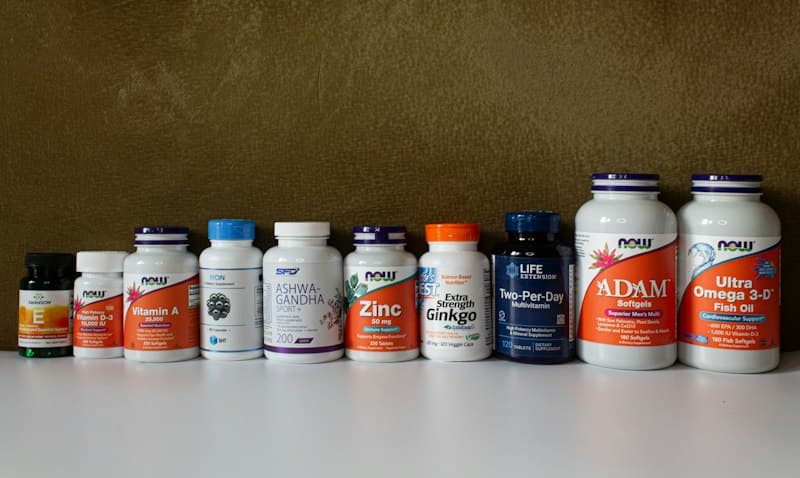
The best storage routine can't undo a bottle that was already oxidized at purchase [1]. A few label signals predict freshness before you buy:
- A printed TOTOX value, or third-party oxidation testing — brands that publish peroxide/anisidine values have usually measured them
- Antioxidants in the formula — vitamin E (tocopherols) or rosemary extract slow oxidation in the bottle
- Opaque or dark packaging — light is one of your three enemies; clear plastic bottles concede to it
- Individually sealed blister packs — each capsule stays sealed until you take it, eliminating the opened-bottle clock entirely
- Recent manufacture date — oxidation is cumulative; a bottle that sat in a warehouse for two years has already spent its freshness budget
These signals sit on top of the more fundamental label-reading skill: knowing how much actual EPA and DHA you're buying. A "1000 mg fish oil" softgel might contain only 300 mg of the fatty acids you're taking it for — we break down exactly how to decode that in our fish oil label guide.
Fresh, high-potency, properly stored. Get all three right and you're actually receiving what the research on omega-3s studied.
Quick Recap
Three things to take away:
- Run the 5-point test before you swallow. Smell and taste are the decisive checks — paint-thinner odor or a bitter bite means the bottle is done, expired or not.
- Expired ≠ rancid. The date is a quality guarantee, not a safety cliff; a sealed, well-stored bottle can outlive it, while a badly stored in-date bottle can be trash.
- Opened bottles belong somewhere cool and dark — check your label about the fridge. Your manufacturer's storage instruction outranks any general rule, including mine.
Your assignment, if you want it: go open the fish oil bottle in your kitchen right now and run the five checks. It takes a minute. Worst case, you learn something and buy a better bottle. Best case, you confirm you've been doing it right all along — and you stop sniffing at it suspiciously every morning.
For the bigger picture on what fish oil can and can't do for you, see our omega-3 science guide. And if you started taking fish oil for skin and noticed breakouts instead, that's a separate question with its own evidence — covered in does fish oil cause acne?
References
- Hands JM, Anderson ML, Cooperman T, Frame LA. A Multi-Year Rancidity Analysis of 72 Marine and Microalgal Oil Omega-3 Supplements. Journal of Dietary Supplements, 2024;21(2):195–206. https://pubmed.ncbi.nlm.nih.gov/37712532/
- George Washington University School of Medicine & Health Sciences. Tests Find Many Popular Omega 3 Supplements Are Rancid (news release), September 2023. https://smhs.gwu.edu/news/tests-find-many-popular-omega-3-supplements-are-rancid
- Cameron-Smith D, Albert BB, Cutfield WS. Fishing for answers: is oxidation of fish oil supplements a problem? Journal of Nutritional Science, 2015. https://pmc.ncbi.nlm.nih.gov/articles/PMC4681158/
- eCFR. 21 CFR Part 111 — Current Good Manufacturing Practice in Manufacturing, Packaging, Labeling, or Holding Operations for Dietary Supplements. https://www.ecfr.gov/current/title-21/chapter-I/subchapter-B/part-111
- Ottestad I, Vogt G, Retterstøl K, et al. Oxidised fish oil does not influence established markers of oxidative stress in healthy human subjects: a randomised controlled trial. British Journal of Nutrition, 2012. https://pubmed.ncbi.nlm.nih.gov/22136711/
- Myhrstad MCW, Ottestad I, Günther CC, et al. The PBMC transcriptome profile after intake of oxidized versus high-quality fish oil: an explorative study in healthy subjects. Genes & Nutrition, 2016. https://pmc.ncbi.nlm.nih.gov/articles/PMC4968435/
- Rundblad A, Holven KB, Ottestad I, et al. High-quality fish oil has a more favourable effect than oxidised fish oil on intermediate-density lipoprotein and LDL subclasses: a randomised controlled trial. British Journal of Nutrition, 2017. https://pubmed.ncbi.nlm.nih.gov/28558855/
How to Tell If NMN Is Working: The 3-Layer Signal Decoder (Trial Endpoints vs Body Feel vs Blood Tests)
Next →NMN on an Empty Stomach or With Food? Follow the Decision Tree (What Clinical Trials Actually Did)