Can You Drink Protein Shakes Without Working Out?
Protein shakes without working out aren't wasted — where those grams go depends on your calorie balance. Track one shake through 4 real scenarios.
Can You Drink Protein Shakes Without Working Out?
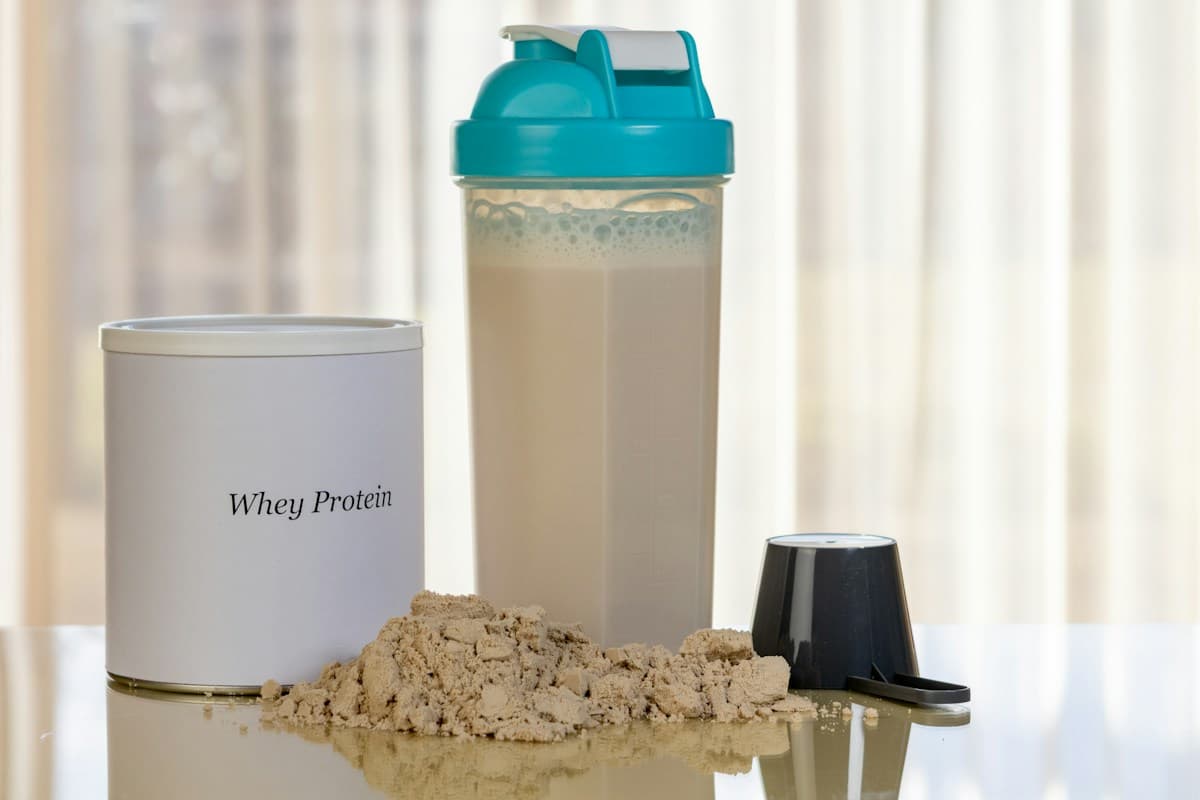
It's 9 p.m. and you're standing in front of the open fridge, shake bottle in hand. You bought the tub three weeks ago, back when you were going to the gym four mornings a week. Today became yesterday became the week before that. Work ate your schedule, or your knee started complaining, or you just... stopped. The question isn't really whether the shake tastes good. It's whether drinking it now—without the workout that was supposed to justify it—does anything. Does it turn to fat? Does it just pass through, wasted money down the drain? Should you put the bottle back?
If you've scrolled any fitness forum, you've seen every possible answer, usually stated with total confidence. "Unused protein becomes fat, obviously." "Your body can't even absorb it without training." "It's just food, who cares." All three are wrong in different ways, and the honest answer is more interesting than any of them.
So, can you drink protein shakes without working out? Here's the short version: protein you drink without training is neither wasted nor automatically stored as fat. Where those 30 grams actually go is decided by two things—your total calories for the day and how much repair work your body has queued up. What follows tracks one shake from your glass to your cells through four situations: a training day, a rest day, no exercise at all, and the calorie math that determines whether the scale moves.
One quick note on scope. Whether your body can absorb the protein in the first place is a separate question with its own messy mythology—the famous "30 grams per meal" limit—that we've already taken apart in our deep-dive on the protein absorption myth. Spoiler: absorption isn't the bottleneck. This article picks up after that, at the question that actually matters when you're standing at the fridge: once the amino acids are in your bloodstream, where do they go?
What Your Body Does With Protein, in Plain Terms
Protein isn't a single thing your body handles one way. When you drink a shake, digestion breaks the protein into amino acids, and from there your body essentially runs a dispatch system with three destinations.
Destination one: building and repair. Amino acids get assembled into new proteins—muscle fibers, yes, but also skin, hair, antibodies, digestive enzymes, hormones, and the constant renovation of organs. Your gut lining replaces itself every few days. Your immune system builds protein-based weapons on demand. Even if you never touched a barbell, a meaningful share of the protein you eat is quietly spent on infrastructure.
Destination two: burning. When intake exceeds what synthesis demands, your body oxidizes the leftover amino acids for energy, stripping out the nitrogen (excreted as urea) and feeding the carbon skeleton into energy metabolism. This is the default fate of surplus protein, and it's regulated: protein oxidation ramps up and down with how much protein you habitually eat, which is one reason the system doesn't just clog up (see [1] and [2] below—both human trials and reviews support this adaptability).
Destination three: storage as fat. This is the one everyone worries about, so let's be precise. Converting protein to fat directly—a pathway called de novo lipogenesis from amino acids—is a real biochemical process but a quantitatively minor route in humans ([3]). A 2019 overfeeding study did detect some de novo lipogenesis on a very high-protein diet ([4]), so it's not zero—but it is the metabolic equivalent of a dirt road, not a highway. The practical way protein makes you fatter is indirect: it's calories, and if your total intake exceeds your total burn, the overall energy surplus gets stored, mostly by sparing the fat you're already eating from being burned. Protein elbowing fat out of the furnace while fat gets stored—same result, different mechanism, and worth understanding because it changes what you actually need to fix.
So when someone asks what happens if you drink protein shakes without working out, the honest answer is "one of three things, depending on context." The four scenarios below show exactly how the dispatch shifts.
Scenario 1: Training Day — The Shake Works Like Interest on a Deposit
On a day you've trained, the picture is simple and well-studied. Resistance exercise creates microscopic damage in muscle fibers and, more importantly, flips the anabolic switch: for up to 24 hours after a hard session, your muscles are more sensitive to amino acids, directing a larger share of incoming protein toward muscle protein synthesis rather than oxidation ([5], [6]).
The shake lands in that window like a delivery truck showing up right after the order. Its amino acids are preferentially partitioned toward repair and growth. This is why a large meta-analysis of 49 studies and 1,863 participants found that protein supplementation significantly enhanced gains in muscle size and strength during resistance training—but with a ceiling effect, with benefits tapering off beyond roughly 1.6 g of protein per kg of body weight per day ([7]).
One caveat worth repeating since the myth won't die: you don't need to slam the shake inside a mythical 30-minute "anabolic window." A meta-analysis by Schoenfeld and colleagues found that when total daily protein is equalized, the timing of protein around a workout barely matters ([8]), and the sensitization window after training lasts the better part of a day anyway ([5]). The truck doesn't need to arrive at the exact minute the order is placed.
Here's how the same 30-gram shake gets roughly distributed across our four scenarios. These are reasoned estimates synthesized from the literature above—not measured values from a single study, so treat them as directional, not decimal-precise:
Table 1. One whey shake (30 g protein, ~120 kcal) — estimated metabolic fate by scenario
| Scenario | Toward muscle repair/synthesis | Burned (oxidized) | Contributing to fat storage |
|---|---|---|---|
| Training day (post-workout) | Highest — muscles are sensitized to amino acids for 24 h+ | Moderate | Minimal, unless day is a big calorie surplus |
| Rest day (trained yesterday) | Elevated — recovery is still underway | Moderate | Low, unless surplus |
| No exercise at all | Lowest — limited muscle stimulus; most goes to general body maintenance | Higher | Depends entirely on calorie balance |
| No exercise + calorie surplus | Low as above | Some, but surplus overall | Effectively yes — the shake's calories add to stored fat, indirectly |
The pattern to notice: exercise changes the ratio, calories change the last column. Those are two separate dials.
Scenario 2: Rest Days — The Shake Is Glue, Not Rocket Fuel
The day after a hard session, you're sore and you're not training. This is where a lot of people unnecessarily put the shaker bottle away, and it's worth pushing back on.
Muscle isn't built during the workout; the workout is the demolition order, and rebuilding happens over the following 24 to 48 hours—which means rest days are when much of the construction actually happens. The exercise-enhanced amino acid sensitivity described above persists for at least a day after training ([5]), so protein eaten on a rest day is still being preferentially routed into recovering muscle tissue. In that sense, protein shakes on rest days aren't wasted; they're supplying the raw material while the repair crew is on site.
That said, don't overthink the logistics. The same research on timing applies across the whole day: what matters most is hitting your total daily protein target, not spacing doses with lab-coat precision ([8], [9]). If you hit your protein goal with three meals and no shake, the rest-day shake is optional. If lunch was a sad desk salad and you're 50 grams short by evening, the rest-day shake is doing exactly what it was designed to do—topping off a shortfall.
Rule of thumb: on rest days, the shake is glue, not rocket fuel. It supports the structure being repaired; it doesn't launch anything on its own.
Scenario 3: You Don't Work Out at All — Protein Powder Without a Gym
Now the harder version of the question: what if you don't train at all? Not a rest day—a rest life. Is protein powder without a gym pointless?
No, but you have to be honest about what it's doing.
First, protein remains an essential nutrient whether or not you own a gym membership. The recommended dietary allowance is 0.8 g per kg of body weight per day just to cover baseline turnover—enzymes, immune proteins, hormones, structural maintenance ([10]). Your body runs on protein-dependent machinery that needs feeding regardless of your deadlift status.
Second, the honest part: without resistance training, a shake will not meaningfully build muscle. Muscle growth requires the anabolic signal from training, not just the raw material. Amino acids without that signal largely get used for general maintenance or oxidized—refer back to Table 1's third row. Drinking protein powder without a gym and expecting a physique change is like ordering lumber without a construction crew. It stacks neatly in the driveway and that's it.
Third—and this is the part internet commenters miss—there are plenty of legitimate reasons a non-exerciser uses protein powder:
- Older adults, whose protein needs and muscle-loss risks are higher and whose appetites are often smaller; higher intakes are associated with better muscle outcomes in this group ([11])
- People recovering from illness or surgery, with elevated repair demands
- Vegetarians and vegans who struggle to hit targets from food alone
- Anyone with a small appetite for whom a 120-calorie, 25-gram-protein shake is simply the easiest way to close a gap
In those cases the shake is a food, not a supplement in the performance sense. That framing—"food, not magic"—will come back in the decision guide below.
Scenario 4: The Calorie Math — Do Protein Shakes Make You Gain Weight Without Exercise?

Here's the question hiding under the fridge-light scenario: do protein shakes make you gain weight without exercise? The answer is the same as for any food: only if they push your total intake above your total burn. A typical scoop of whey runs 100–130 calories. Whether that matters depends entirely on what it replaces.
If the shake replaces food — breakfast, a vending-machine snack — the calories are roughly a wash and the protein often beats what it displaced. In that case, no, the shake doesn't make you gain weight; it may even help with appetite control, since protein is the most satiating macronutrient and triggers satiety hormones like GLP-1 and PYY ([1]).
If the shake is added on top of everything you already eat, it's a 120-calorie daily surplus—or more, if yours is the kitchen-sink kind with peanut butter, banana, and oat milk, which can quietly reach 400+. Sustained daily, an extra 250–300 calories a day is roughly a quarter kilo (half a pound) of fat per week in theory. Your body doesn't care that the calories are "healthy."
There's one genuine trap here, and it's specific to the liquid form: liquid calories are less satiating and less well compensated for than solid calories—meaning you drink a shake and your next meal barely shrinks to account for it ([12]). The same 30 grams of protein chewed instead of swallowed leaves you fuller afterward. Protein is filling; protein in liquid form is measurably less so.
To make the food-versus-shake tradeoff concrete, here's the same 30 grams of protein delivered three ways. Prices are typical US retail ranges; satiety ratings are qualitative, informed by the liquid-vs-solid literature ([12]):
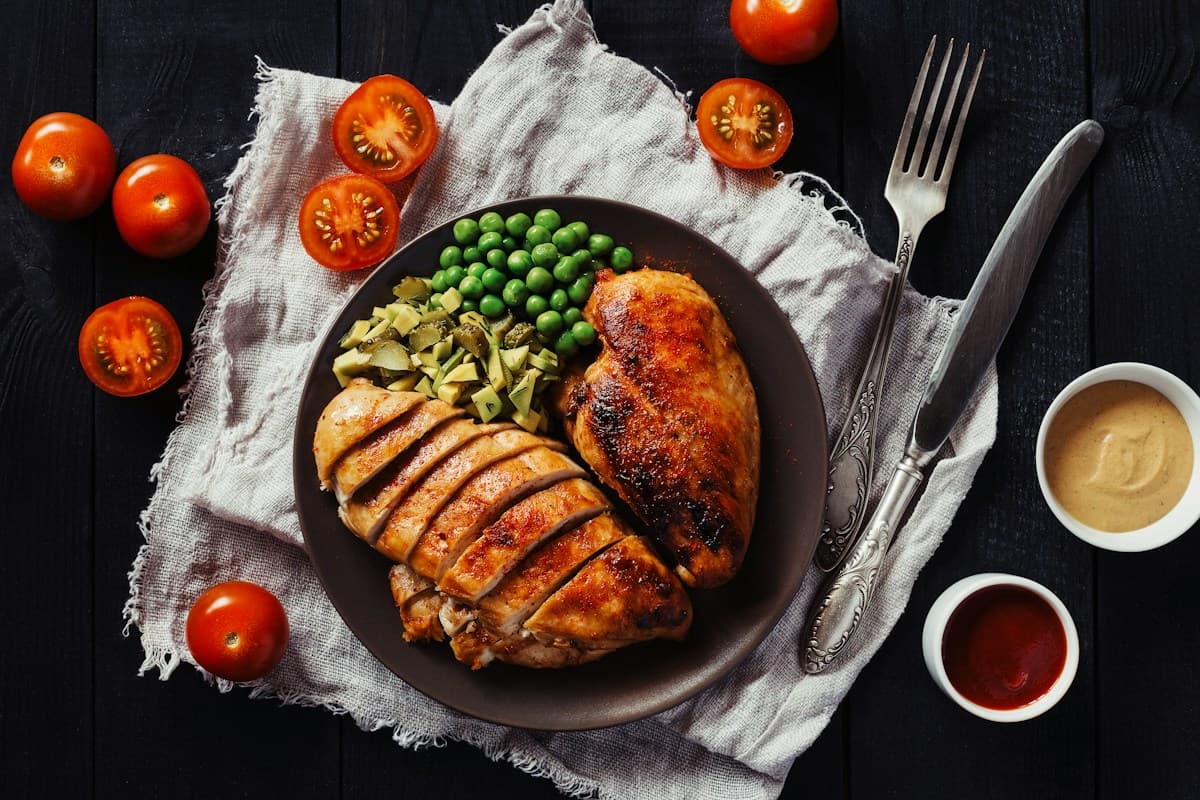
Table 2. Same 30 g of protein, three prescriptions
| Whey shake (1 scoop) | Chicken breast (~140 g cooked) | Greek yogurt, plain nonfat (~450 g) | |
|---|---|---|---|
| Calories | ~110–130 | ~230 | ~270 |
| Volume on the plate | A glass | A palm-and-a-half of solid food | A large bowl |
| Satiety per calorie | Lowest (liquid) | High | High |
| Rough cost per serving | $0.70–$1.50 | $1.50–$2.50 | $1.50–$2.50 |
| Prep time | 30 seconds | Cooked ahead or 15 min | None |
The pattern is worth staring at for a second. The shake wins on calories and convenience. Food wins on fullness. If you're trying to lose weight while eating adequate protein, that satiety column matters enormously—a solid-food bias helps you eat less without noticing. If you'd rather cover the gap with real meals, the science-backed high-protein foods guide lays out the best whole-food options gram for gram.
And if you want the full accounting: a shake's ~120 calories represent roughly 6% of a 2,000-calorie maintenance day for a 60 kg person with low activity, ~5.5% for a 75 kg office worker at ~2,200, and about 4.5% for a 90 kg person around 2,600. Meaningful in a surplus, trivial in a deficit, invisible if it displaces an equal-calorie snack. The math, not the macro, decides.
So, Should You Drink It? A 30-Second Decision
Everything above compresses into three checks. Work through them in order.
Check 1 — Are you below your daily protein target? For active adults, the evidence-supported zone for building and keeping muscle is roughly 1.2–1.6 g per kg of body weight per day ([7], [11])—the RDA's 0.8 g/kg is a floor to prevent deficiency, not a performance target ([10]). Quick formula: bodyweight in kg × 1.2–1.6 = your daily gram target. If today's food lands short and the shake closes the gap, drink it. Training day or not.
Check 2 — Are you over your calorie budget for the day? If yes and you still want the shake, make it replace something—a snack, part of a meal—rather than ride on top. Surplus calories are surplus calories regardless of their amino acid pedigree.
Check 3 — Are you already at both targets? Then the shake is a dessert with a fitness costume. Not harmful in any documented way for healthy adults at moderate intakes ([2]), just unnecessary.
A compact self-diagnostic, since Check 1 is the one people fumble most:
The one-minute self-check
- Weigh yourself in kg (or divide pounds by 2.2)
- Multiply by 1.2 if you're mostly sedentary, 1.4–1.6 if you train regularly
- That's your daily gram target — a 75 kg person training 3–4×/week lands around 90–120 g/day
- Tally yesterday honestly, food labels and all
- Short by more than ~20–30 g on typical days? The shake earns its shelf space. Hitting target already? It's optional
That's the whole decision tree. A shake is food—convenient, protein-dense food—and food is neither a sin nor a spell.
The Bottom Line
Back at the fridge, 9 p.m., bottle in hand. Here's what the dispatch system says about that decision:
- Worked out today? Drink it. Your muscles are in their most receptive state, and the protein is headed somewhere useful ([5], [7]).
- Worked out yesterday, resting today? Still useful—recovery is running and total daily protein is what matters ([8]).
- Not training at all? It's fine as food, useless as muscle magic, and worth it only if you're otherwise short on protein ([10], [11]).
- Worried about fat? The shake makes you fatter only by the same rule as every other calorie: total in versus total out ([3], [12]). Replace something or don't—just know which one you're doing.
The version of you standing at the fridge isn't asking a willpower question. You're asking a routing question—and the router doesn't care whether today had a workout in it. It cares about the day's totals.
If you've got your own rest-day shake ritual, or a reason you drink protein on non-training days that this article missed, drop it in the comments—the best corrections always come from people who actually live the question. And if you're rebuilding the habit rather than the shake routine, start with how much protein your body can actually use per meal and the whole-food options for hitting your daily target.
References
- van der Klaauw AA, et al. High protein intake stimulates postprandial GLP-1 and PYY release. Diabetes, Obesity and Metabolism, 2013. https://pubmed.ncbi.nlm.nih.gov/23666746/
- Wu G. Dietary protein intake and human health. Food & Function, 2016. https://pubmed.ncbi.nlm.nih.gov/26797090/
- Song Z, Xiaoli AM, Yang F. Regulation and metabolic significance of de novo lipogenesis in adipose tissues. Nutrients, 2018. https://pmc.ncbi.nlm.nih.gov/articles/PMC6213738/
- Charidemou E, et al. High protein feeding induces de novo lipogenesis in humans. JCI Insight, 2019. https://insight.jci.org/articles/view/124819
- Burd NA, et al. Enhanced amino acid sensitivity of myofibrillar protein synthesis persists for up to 24 h after resistance exercise in young men. The Journal of Nutrition, 2011. https://pubmed.ncbi.nlm.nih.gov/21289204/
- Reidy PT, Rasmussen BB. Role of ingested amino acids and protein in the promotion of resistance exercise-induced muscle protein anabolism. The Journal of Nutrition, 2016. https://pmc.ncbi.nlm.nih.gov/articles/PMC4725426/
- Morton RW, et al. A systematic review, meta-analysis and meta-regression of the effect of protein supplementation on resistance training-induced gains in muscle mass and strength. British Journal of Sports Medicine, 2018. https://pubmed.ncbi.nlm.nih.gov/28698222/
- Schoenfeld BJ, Aragon AA, Krieger JW. The effect of protein timing on muscle strength and hypertrophy: a meta-analysis. Journal of the International Society of Sports Nutrition, 2013. https://pmc.ncbi.nlm.nih.gov/articles/PMC3879660/
- Aragon AA, Schoenfeld BJ. Nutrient timing revisited: is there a post-exercise anabolic window? Journal of the International Society of Sports Nutrition, 2013. https://pmc.ncbi.nlm.nih.gov/articles/PMC3577439/
- National Research Council, Subcommittee on the 10th Edition of the Recommended Dietary Allowances. Protein and amino acids. In: Recommended Dietary Allowances, 10th ed. Washington, DC: National Academies Press, 1989. NCBI Bookshelf. https://www.ncbi.nlm.nih.gov/books/NBK234922/
- Lonnie M, et al. Protein for life: review of optimal protein intake, sustainable dietary sources, and the effect on appetite in ageing adults. Nutrients, 2018. https://pmc.ncbi.nlm.nih.gov/articles/PMC5872778/
- Allison DB. Liquid calories, energy compensation, and weight: what we know and what we still need to learn. British Journal of Nutrition, 2014. https://pmc.ncbi.nlm.nih.gov/articles/PMC4973863/
NMN on an Empty Stomach or With Food? Follow the Decision Tree (What Clinical Trials Actually Did)
Next →Can You Take NMN and Resveratrol Together? The Stack, Decoded by Evidence Strength