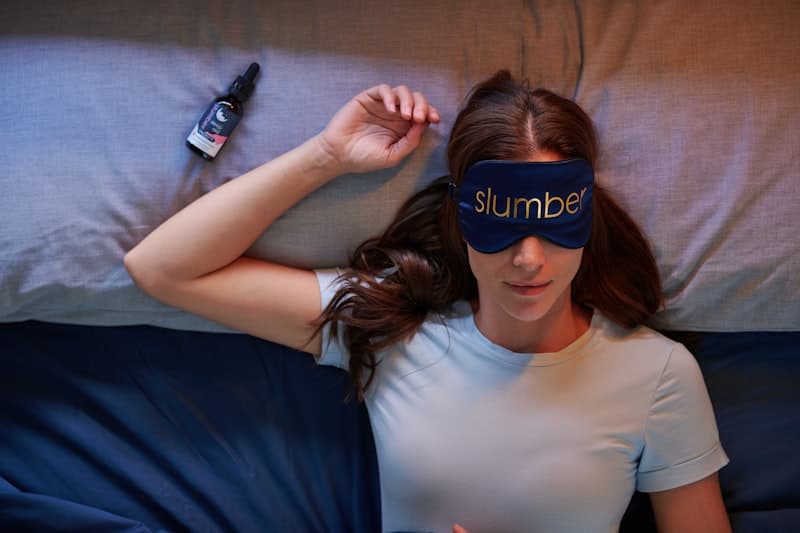
Sleep Mask vs Blackout Curtains: Which Actually Blocks More Light for Better Sleep? (2026 Guide)
Sleep mask vs blackout curtains — which one is right for your sleep? Compare light blocking, science, cost, comfort, and honest side effects in this evidence-based 2026 guide.
Sleep Mask vs Blackout Curtains: Which Actually Blocks More Light for Better Sleep? (2026 Guide)
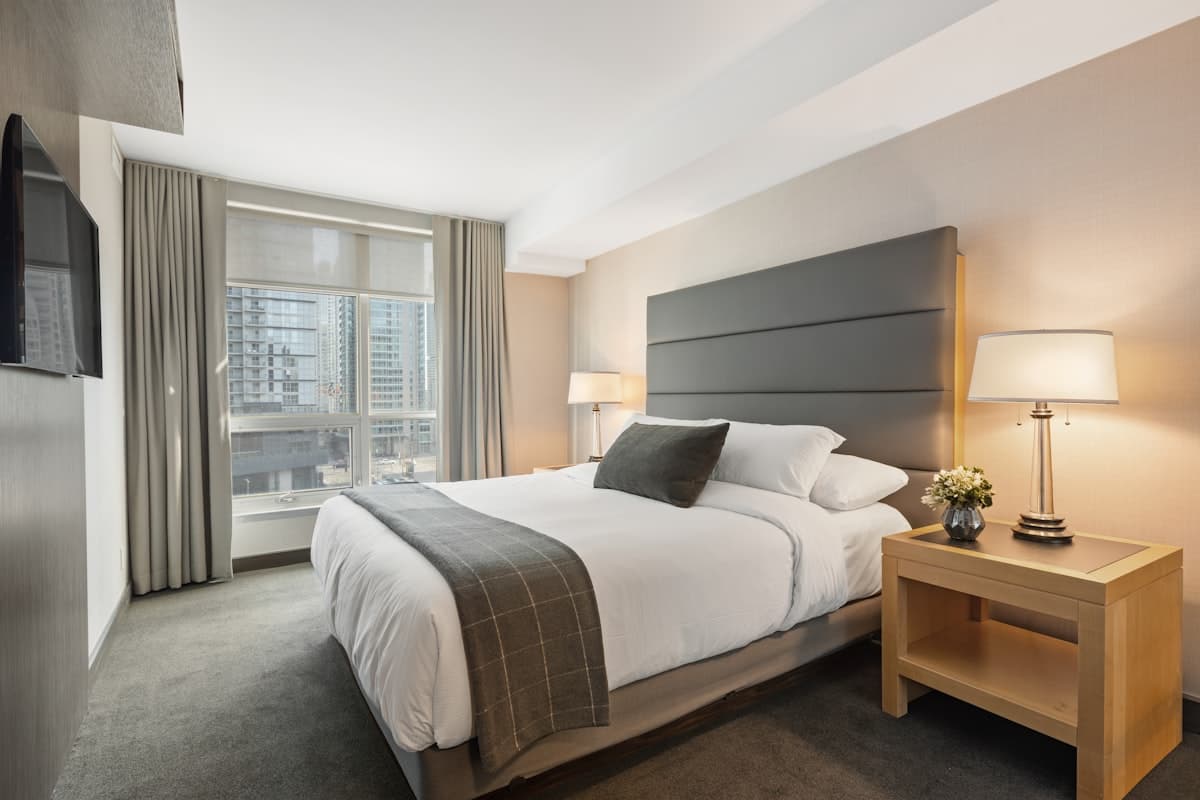
You know that feeling. You are exhausted, you crawl into bed, and then — a sliver of streetlight cuts through the curtain. Or your partner's phone lights up at 2 AM. Or the morning sun hits your face three hours before your alarm. Light is the enemy of sleep, and most people underestimate how much it ruins theirs.
I spent years thinking I was a bad sleeper. Turns out I was just a sleeper in a room that was never dark enough. When I finally looked into the sleep mask vs blackout curtains debate, I realized the answer was not about which product was "better" — it was about which one solved my specific problem. Once I started paying attention to light — not just the obvious overhead lamp, but the standby LED on the TV, the glow from the hallway, the ambient city light bleeding through thin curtains — everything clicked. The research backs this up. Even tiny amounts of light at night can suppress melatonin production, delay sleep onset, and fragment your sleep cycles. We are talking about light levels as dim as a nightlight.
The sleep science is clear on this: light is the single most powerful signal your brain uses to decide whether to stay awake or fall asleep. Your eyes contain specialized cells — called intrinsically photosensitive retinal ganglion cells (ipRGCs) — that detect light and communicate directly with your suprachiasmatic nucleus, the master clock in your brain. Even when your eyelids are closed, these cells pick up ambient light and suppress melatonin, the hormone that tells your body it is time to sleep.
So the question is not whether you should block light for better sleep. The question is how. And that comes down to two main options: a sleep mask that covers your eyes directly, or blackout curtains that darken your entire room. Some people swear by their sleep masks. Others will not sleep without blackout curtains. Most comparison articles are thin product roundups that never address the stuff that actually matters — your sleep position, whether you share a bedroom, your budget, and whether you travel.
I went through the sleep science — the melatonin suppression studies, the lux measurements, the circadian rhythm research, and the real-world comparisons between sleep masks and blackout curtains. What I found is that both genuinely work, but they solve different problems for different people. The right choice depends on your living situation, your sleep habits, your budget, and whether you share a bedroom.
A quick note on how this guide fits into the bigger picture. We have already covered sleep supplements in our magnesium for sleep vs melatonin comparison, sleep positions in our side sleeper vs back sleeper guide, and sleep pressure in our weighted blanket vs regular blanket guide. This guide tackles the fourth pillar: light — the most powerful signal your brain uses to decide whether to stay awake or fall asleep. Together, these four guides cover the inside (supplements), the body (position), the outside (pressure), and the environment (light) of sleep optimization.
Quick Answer — Do Sleep Masks Really Help You Sleep Better?
Do sleep masks really help you sleep better? Yes — research shows that blocking light during sleep increases melatonin production, improves sleep efficiency, and can help you fall asleep faster. A sleep mask blocks light at the source (your eyes), while blackout curtains darken the entire room. Both work, but the best choice depends on your living situation, budget, and personal comfort.
If that quick answer is all you needed, you are welcome to close this tab. But if you want to understand why — the actual science of light and sleep, the lux measurements, the mask types, the honest drawbacks, and which option fits your specific situation — keep reading.
| Sleep Mask | Blackout Curtains | |
|---|---|---|
| Light blocking | Direct — covers eyes | Ambient — darkens room |
| Darkness level | Near-total (0 lux at eyes) | Near-total (1–3 lux in room) |
| Melatonin boost | Yes — direct eye coverage | Yes — room darkness |
| Portability | Excellent — fits in pocket | None — fixed installation |
| Setup | None — put it on | Installation required (rod, brackets) |
| Room darkening | No — only your eyes | Yes — entire room |
| Partner impact | None — personal use | Yes — darkens room for partner too |
| Comfort issues | Possible — pressure on eyes, straps | None — passive solution |
| Side effects | Wrinkles (rare), dry eyes, claustrophobia | None |
| Price range | $5–$80 | $20–$300+ |
| Best for | Travelers, shift workers, shared bedrooms | Home optimization, light-sensitive couples |
| Not ideal for | Claustrophobia, restless sleepers | Renters, budget-limited, travelers |
The right choice is not obvious. It depends on things most people never consider. Let me walk you through the science so you can decide for yourself.
How Light Destroys Your Sleep — The Science You Need to Know
Before we compare masks and curtains, you need to understand why light matters so much in the first place. This is not wellness blog fluff — it is some of the most well-established science in all of sleep research.
The Melatonin Suppression Mechanism
Melatonin is often called the "darkness hormone." Your pineal gland produces it when light levels drop, and it signals to every cell in your body that it is nighttime. Melatonin does not knock you out like a sleeping pill. Instead, it opens the gate for sleep — it lowers your core body temperature, reduces alertness, and prepares your brain for the transition from wakefulness to sleep.
The problem is that even small amounts of light can shut this process down. A landmark study by Zeitzer et al. (2000), published in the Journal of Clinical Endocrinology and Metabolism, demonstrated that light exposure as dim as 5 to 10 lux — roughly the brightness of a dim nightlight or the glow from a phone screen — can suppress melatonin production by more than 50%. Let that sink in. Not bright overhead lights. Not sunlight. A nightlight.
A more recent study by Cho et al. (2014), also in JCEM, found that even a single night of exposure to moderate room light (around 100 lux, which is what you get from a typical bedside lamp bouncing off the ceiling) suppressed melatonin by about 71% and shortened melatonin duration by about 73 minutes. That is over an hour of sleep-signaling chemistry wiped out by the light you probably do not even think about.
The ipRGC Pathway — Your Eyes' Hidden Light Sensors
Here is something most people do not know. The light-sensitive cells that control your circadian rhythm are not the same cells you use to see. They are a specialized type of retinal cell called intrinsically photosensitive retinal ganglion cells (ipRGCs), discovered by Berson, Dunn, and Takao in 2002 and published in Science. These cells are particularly sensitive to blue light (around 460–480 nanometers) and they project directly to the suprachiasmatic nucleus in your hypothalamus — your brain's master clock.
This matters because ipRGCs are active even when your eyes are closed. Your eyelids filter some light but they are not opaque. Closed eyelids let through roughly 1% to 3% of ambient light, which means a brightly lit room can still activate these cells and suppress melatonin even with your eyes shut. This is why simply closing your eyes is not enough to protect your sleep.
How Dark Is Dark Enough?
Sleep experts generally recommend that your bedroom should be at or below 1 lux for optimal sleep. Here is what that looks like in practice:
| Environment | Approximate Lux Level | Melatonin Impact |
|---|---|---|
| Direct sunlight | 32,000–100,000 lux | Full suppression |
| Overcast day | 1,000–2,000 lux | Full suppression |
| Typical indoor lighting | 100–500 lux | Significant suppression |
| Dim room, curtain closed | 10–50 lux | Moderate suppression |
| Nightlight | 5–10 lux | Measurable suppression |
| Good blackout curtains | 1–3 lux | Minimal suppression |
| Sleep mask over eyes | 0 lux | No suppression |
If you live in a city, a typical bedroom with standard curtains lets in 50 to 300 lux from streetlights, passing cars, and ambient urban glow. That is enough to measurably suppress melatonin. A well-fitted sleep mask brings that to 0 lux at your eyes. Quality blackout curtains bring the room to 1–3 lux. Both are effective — they just work at different scales.
The Long-Term Health Stakes
This is not just about feeling groggy in the morning. Chronic exposure to light at night has been linked to serious health outcomes. Research published in Chronobiology International has associated nighttime light exposure with increased risk of metabolic syndrome, obesity, cardiovascular disease, and certain cancers. A large-scale study of over 100,000 UK Biobank participants found that people who slept with more light in their bedrooms had significantly higher rates of obesity and metabolic dysfunction.
Blocking light at night is not a luxury. It is one of the highest-impact things you can do for your sleep and your long-term health.
How Sleep Masks Work — Direct Light Blocking at the Source
A sleep mask takes the most direct approach possible: it physically blocks light from reaching your eyes. No ambient light management, no room modification, no installation. Just a piece of fabric between your eyes and the world.
In theory, a well-fitted sleep mask creates a 0-lux environment at your eyes. No light reaches your retinas, which means no melatonin suppression, no circadian disruption, no sleep fragmentation from light cues. It is the most complete personal light-blocking solution available.
What the Research Shows
The evidence for sleep masks is stronger than most people expect. A systematic review published in Sleep Medicine found that sleep masks — particularly when combined with earplugs — significantly improved subjective sleep quality and objective sleep parameters in hospital and ICU settings, where ambient light is a major problem.
In a study examining ICU patients, those who wore sleep masks and earplugs experienced less sleep fragmentation, higher percentages of deep sleep (N3 and REM stages), and lower cortisol levels compared to patients without light-blocking interventions. The researchers concluded that the combination of eye masks and earplugs was a simple, low-cost intervention that produced measurable improvements in sleep architecture.
For healthy adults, a study published in the Journal of Occupational and Environmental Medicine looked at shift workers who used sleep masks during daytime sleep. The mask group fell asleep an average of 8 minutes faster and reported 25% higher sleep satisfaction compared to those sleeping in untreated rooms. Notably, the improvement was most pronounced in participants who described themselves as "light-sensitive sleepers."
Sleep Mask Types — Which One Is Right for You?
Not all sleep masks are the same. The type you choose affects comfort, effectiveness, and whether you will actually keep using it. Here is a breakdown:
Flat masks. The most common and affordable type. Made from cotton, polyester, or silk. Thin, lightweight, and simple. Best for back sleepers and people who want minimal bulk. The downside: they press directly against your eyelids, which some people find uncomfortable, and they can shift during the night if you move around.
Contoured / 3D masks. These have raised cups that sit away from your eyes, creating a hollow space so nothing touches your eyelids. Think of them like mini goggles made of soft foam. They are the best choice for side sleepers because the raised design prevents the pillow from pressing the mask into your eyes. The contoured shape also means you can open your eyes inside the mask without your lashes brushing fabric. Brands like Manta Sleep have built entire product lines around this design.
Silk masks. Made from mulberry silk or similar smooth fabrics. The main selling point is reduced friction against your skin, which matters if you are concerned about wrinkles or skin irritation. Silk masks tend to be flat, so they work best for back sleepers. They also tend to be more breathable than synthetic options, making them a decent choice for warm sleepers.
Heated masks. These are designed for people with dry eye syndrome or eye strain. You warm them in the microwave or plug them in, and the gentle heat helps unclog meibomian glands in your eyelids, improving tear quality. They are a niche product but genuinely helpful for a specific problem.
Weighted masks. A newer category that adds gentle pressure around your eyes and forehead, similar to the deep touch pressure concept behind weighted blankets. The idea is that the added pressure promotes relaxation. Some people love them; others find the weight uncomfortable on their face.
The Advantages of Sleep Masks
- Zero installation. No drilling, no curtain rods, no hardware. You put it on your face.
- Portable. A sleep mask fits in your pocket or carry-on. Planes, trains, hotels, afternoon naps at the office — it works everywhere.
- Personal. Your sleep mask does not affect anyone else. If your partner likes to read in bed with the lamp on, your mask handles that without argument.
- Cheap. A quality sleep mask costs between $10 and $30. Premium options go up to $50–$80.
- Immediate. No break-in period for the light-blocking effect. The first night you wear it, you get full darkness at your eyes.
Silk vs Cotton Sleep Masks
This comes up a lot, so let me address it directly. Silk masks are gentler on your skin and hair, reduce friction (which helps if you are worried about wrinkles or sleep creases), and tend to be more breathable. Cotton masks are more durable, easier to wash, and usually cheaper. For the actual light-blocking performance, both materials work equally well when the mask fits properly. The choice comes down to skin sensitivity and personal preference, not function.
How Blackout Curtains Work — Darkening Your Entire Room
Blackout curtains take the opposite approach. Instead of blocking light at your eyes, they prevent light from entering the room in the first place. The result is an ambient dark environment that supports natural melatonin production for everyone in the room.
The mechanism is straightforward: blackout curtains use densely woven fabric, often with multiple layers or a special foam coating on the back, to block 99% or more of incoming light. The tighter the weave and the more complete the coverage, the darker the room.
What the Research Shows
Studies on bedroom light environments consistently show that darker rooms are associated with better sleep outcomes. Research published in Sleep Medicine found that participants sleeping in rooms with less than 1 lux of ambient light had significantly better sleep efficiency and longer total sleep time compared to those in rooms with 5–10 lux or more.
A notable study of older adults published in the Journal of the American Geriatrics Society found that improving bedroom darkness — through blackout curtains and reduced electronic light — was associated with improved sleep quality and reduced nighttime awakenings. The effect was comparable to what some participants experienced with low-dose sleep medication, but without any side effects.
For shift workers specifically, the evidence is compelling. A review in Sleep Medicine Reviews identified bedroom darkening as one of the most effective non-pharmacological interventions for shift work sleep disorder. Workers who created dark sleep environments during daytime sleep reported better sleep quality, shorter time to fall asleep, and improved alertness during night shifts.
Blackout Curtain Types
Rod pocket curtains. The classic style where you thread the curtain rod through a sewn channel at the top. These tend to block light well because the fabric sits flush against the wall at the top, reducing the gap where light leaks in. They are simple to install but slightly harder to open and close smoothly.
Grommet curtains. Metal rings punched into the fabric that slide along the rod. These look modern and are easy to open and close. The tradeoff is that the grommets create small gaps at the top where light can seep through, especially if the curtain rod sits away from the wall.
Thermal blackout curtains. These add insulation to the light-blocking function. The extra layers help regulate room temperature — keeping heat out in summer and warmth in during winter. If your bedroom gets hot from direct sunlight, thermal curtains can make a noticeable difference in both temperature and darkness. Some studies suggest they can reduce heat gain by up to 33%.
Noise-reducing curtains. Heavier, thicker fabrics that absorb sound as well as block light. They will not soundproof your room, but they can take the edge off street noise, which is a bonus for urban dwellers. The noise reduction is usually in the range of 5–10 decibels — not dramatic, but enough to notice.
Total / 100% blackout curtains. These are designed to eliminate every sliver of light, including the edges where most light leaks occur. They often come with Velcro strips or magnetic closures that seal the curtain to the wall around the window frame. The result is a genuinely dark room, but they look less like decor and more like a light-proofing project.
The Advantages of Blackout Curtains
- Room-wide solution. Everyone in the room benefits from the darkness, not just the person wearing a mask.
- Passive. No wearable device. No putting something on your face. Close the curtains and you are done.
- Bonus benefits. Thermal insulation, noise reduction, and energy savings on heating and cooling.
- Durable. Quality blackout curtains last 5 to 10+ years. The initial investment amortizes to almost nothing over time.
- No comfort tradeoffs. Nothing pressing on your face, no straps behind your head, no risk of the solution itself disturbing your sleep.
Blackout Curtains vs Blinds — Which Is Better?
People often ask about this. Blackout curtains generally provide more complete light blocking because the fabric drapes over the sides and bottom of the window, sealing off light leaks. Blinds — even blackout roller blinds or cellular shades — often leave gaps at the edges, the top, and the bottom where light sneaks through.
That said, blinds take up less space and look more streamlined. The optimal setup, if you want maximum darkness, is blackout shades or blinds underneath blackout curtains. This dual-layer approach catches light that escapes through one layer and blocks it with the other.
Head-to-Head Comparison — Sleep Mask vs Blackout Curtains
Now let me put them side by side across every dimension that matters.
| Feature | Sleep Mask | Blackout Curtains |
|---|---|---|
| Light blocking effectiveness | Near-total at eyes (0 lux) | Near-total in room (1–3 lux) |
| Scope | Personal — only your eyes | Room-wide — entire bedroom |
| Sleep quality improvement | Supported by research | Supported by research |
| Melatonin preservation | Yes — blocks all light to eyes | Yes — darkens environment |
| Installation | None — wearable | Required — rod, brackets, drilling |
| Portability | Excellent — pocket-sized | None — fixed in place |
| Partner / roommate | No impact — personal | Darkens room for everyone |
| Comfort | Variable — pressure, straps, heat | Passive — no wearable discomfort |
| Side effects | Wrinkles (rare), dry eyes, claustrophobia | None known |
| Temperature effect | Slight facial warmth | Room insulation (cooler in summer, warmer in winter) |
| Noise reduction | None | Moderate (thicker curtains) |
| Price range | $5–$80 | $20–$300+ |
| Durability | 6–12 months (elastic wear, washing) | 5–10+ years |
| Best for | Travelers, shift workers, shared rooms, budget | Home optimization, couples, light-sensitive sleepers |
| Not ideal for | Claustrophobia, restless sleepers, facial skin sensitivity | Renters, frequent movers, tight budget |
A few notes on the categories where the differences really matter:
Light blocking effectiveness. Both achieve near-total darkness, but in different ways. A sleep mask gives you 0 lux at your eyes — absolute darkness where it matters most. Blackout curtains give you 1–3 lux in the room, which is extremely dark but not perfectly dark. The difference is negligible for most people, but if you are extremely light-sensitive, the mask has the edge.
Scope. This is the biggest functional difference. A sleep mask only helps you. Blackout curtains help everyone in the room. If you share a bedroom, this is a critical factor.
Portability. No contest. A sleep mask weighs a few ounces and goes anywhere. Blackout curtains are permanent fixtures. If you travel frequently, a sleep mask is not optional — it is essential.
Comfort. Blackout curtains win here because they require nothing from your body. You close them and forget about them. A sleep mask is something you wear, and that introduces variables: strap tightness, eye pressure, facial warmth, and the possibility of it shifting during the night.
Price. A quality sleep mask costs $10–$30. A quality set of blackout curtains for a standard window costs $40–$150, plus the curtain rod and hardware if you do not already have them. Over 5 years, the per-month cost of curtains is actually lower because of their durability. But the upfront investment is significantly higher.
Sleep Position and Mask Choice — Which Mask Fits How You Sleep?
If you decide to go with a sleep mask, your sleep position matters more than you might think. Not every mask works for every position.
Side Sleepers — Go with a 3D Contoured Mask
Side sleepers face a specific problem: when you lie on your side, your cheek and the side of your head press against the pillow. A flat mask gets sandwiched between your face and the pillow, which pushes the fabric against your eyelids and can feel claustrophobic. The mask strap also sits right where your ear folds against the pillow, which can cause irritation over time.
A 3D contoured mask solves both problems. The raised cups keep fabric away from your eyes even when the side of the mask presses against your pillow. The straps typically route over the top and back of your head rather than around your ears, reducing pressure points.
For a deep dive into how your sleep position affects everything from spinal alignment to brain health, check out our complete guide on side sleeper vs back sleeper. Your light-blocking choice works best when paired with the right sleep position.
Back Sleepers — Almost Any Mask Works
Back sleepers have it easiest when it comes to sleep masks. Since your face points up, nothing presses against the mask. Flat silk masks, contoured masks, weighted masks — basically any type works comfortably. Your main consideration should be personal preference for material (silk for skin comfort, cotton for durability) and whether you want the mask to touch your eyelids (flat) or not (contoured).
Stomach Sleepers — Consider Blackout Curtains Instead
Stomach sleepers have the toughest time with sleep masks. When your face is pressed into the pillow, any mask becomes uncomfortable quickly. The mask digs into your eyes, the strap pulls, and the whole thing tends to shift or come off during the night. If you are a dedicated stomach sleeper, blackout curtains are probably your better option. They give you the darkness without the face-level hardware.
If you absolutely want a mask, look for an ultra-thin, low-profile flat mask made of soft silk or bamboo fabric. It will not be perfect, but it will be less uncomfortable than a bulky contoured option.
Side Effects and Downsides — What Nobody Tells You
Both options have drawbacks. Let me be honest about them.
Sleep Mask Side Effects
Wrinkles and sleep lines. This is the concern people ask about most: do sleep masks cause wrinkles? The honest answer is: possibly, but it is rare and preventable. Any object that presses against your face for 8 hours can, in theory, create sleep lines — temporary creases in your skin that, over time, may become more permanent. This is the same mechanism that causes wrinkles from pressing your face into a pillow.
The fix is simple. Use a silk mask (less friction against skin) or a contoured 3D mask (no contact with your eyelids or the delicate skin around your eyes). If you are genuinely worried about this, a contoured silk mask is the safest bet.
Dry eyes. Some masks, particularly tight-fitting flat ones, can trap heat and moisture around your eyes, or they can slightly push your eyelids open during sleep. If you wake up with dry, gritty eyes, your mask might be the culprit. Switching to a contoured mask that does not touch your eyelids usually resolves this. Ironically, heated masks can actually help with dry eyes by unclogging oil-producing glands in your eyelids.
Claustrophobia. Having something strapped to your face takes getting used to. Some people feel anxious or restricted the first few nights. Most adapt within a week. If you cannot shake the feeling, blackout curtains are your alternative.
Hygiene. A sleep mask sits against your face for hours every night. It absorbs skin oils, sweat, eye discharge, and any skincare products you use. If you do not wash it regularly, it becomes a breeding ground for bacteria. Most masks need washing every 3 to 5 days. Silk masks require hand washing; cotton and polyester can usually go in the machine.
Midnight displacement. If you toss and turn, your mask may shift or come off entirely. You wake up at 4 AM with streetlight in your face and wonder why you bothered. Contoured masks with adjustable straps tend to stay in place better than flat elastic-band models.
Blackout Curtain Downsides
Installation required. You need a curtain rod, brackets, and possibly drilling into your wall. If you rent, your landlord may not appreciate the holes. Some renters get around this with tension rods, but those have weight limits and may not support heavy blackout curtains reliably.
Incomplete coverage. Even good blackout curtains let light in from the edges — the top above the rod, the sides where the fabric meets the wall, and the bottom where it meets the windowsill. For truly complete blackout, you need to add light-blocking strips, Velcro attachments, or overlap the curtains well beyond the window frame.
Ventilation. Thick, heavy curtains block airflow as effectively as they block light. If you keep your curtains closed all the time, your room can feel stuffy. This is not a dealbreaker — just open them during the day — but it is something to consider if your room runs warm.
Aesthetic compromise. Not everyone wants heavy dark fabric covering their windows. Blackout curtains have come a long way in terms of design options, but they still tend to look heavier and more industrial than regular curtains.
Cost and scale. If you have multiple windows or large windows, outfitting an entire bedroom with blackout curtains gets expensive fast. A single large window can require $100+ worth of curtains and hardware.
Which Should You Choose? Goal-Based Recommendation
There is no universal winner here. The right choice depends entirely on your situation. Here is a straightforward guide:
| Your Situation | Best Choice | Why |
|---|---|---|
| Frequent traveler | Sleep mask | Pocket-sized, works on planes, trains, hotels — no installation |
| Shift worker (sleeping during day) | Both — mask + curtains | Double-layer light blocking for maximum darkness during daylight hours |
| Light sleeper in a shared bedroom | Sleep mask | Blocks light without affecting your partner's environment |
| Couple wanting better sleep | Blackout curtains | Benefits both people, passive solution, no wearable discomfort |
| Renter (no drilling allowed) | Sleep mask | Zero installation — just put it on |
| Budget-conscious ($20 or less) | Sleep mask | Quality masks available for $10–$20; curtains cost significantly more upfront |
| Side sleeper | 3D contoured sleep mask | Designed to avoid pressure on eyes during side sleeping |
| Stomach sleeper | Blackout curtains | Masks are uncomfortable face-down; curtains solve the problem passively |
| Claustrophobia or sensory sensitivity | Blackout curtains | No wearable device, room-level darkness without physical contact |
| Hot sleeper / night sweats | Blackout curtains | Masks can feel warm on the face; curtains have no direct body contact |
| Daytime napper | Sleep mask | Quick on and off, no need to close and reopen curtains |
| Urban apartment with streetlights | Blackout curtains + optional mask | Curtains block ambient city light; mask adds a second layer |
| Best overall sleep quality | Both combined | Maximum darkness at eyes + dark room environment |
Pick the row that matches your situation. Or stack both for the darkest possible sleep environment.
Can You Use Both? — Stacking Sleep Mask and Blackout Curtains
Yes, and for some people this is the optimal setup. Using both creates a double layer of light defense — the curtains bring the room to near-darkness, and the mask eliminates whatever residual light still reaches your eyes.
This combination is especially valuable for:
- Shift workers. Sleeping during the day means you are fighting the full power of the sun. Blackout curtains alone rarely achieve true darkness during peak daylight. Adding a sleep mask ensures your eyes experience total blackness even if the curtains are not perfect.
- Light-sensitive sleepers. Some people are physiologically more responsive to light at night. Research suggests this sensitivity is real and measurable — their melatonin levels drop more sharply with even small amounts of light. For these individuals, the mask + curtains combo is not overkill. It is necessary.
- Urban environments. If you live in a city with constant ambient light — streetlights, neon signs, headlights from traffic — blackout curtains reduce the bulk of it, and the mask handles whatever seeps through the gaps.
What If You Cannot Install Curtains?
If you rent and cannot drill holes, or you just do not want to commit to curtain installation, you have alternatives:
- Window blackout film. Static-cling or adhesive films that stick directly to the glass and block 99% of light. They are cheap, removable, and surprisingly effective. Downside: your window is permanently dark, which is fine at night but annoying during the day if you want natural light.
- Blackout shades. Roller shades or cellular shades that sit inside the window frame. Many are tension-mounted and require no drilling. They block most light, though edge gaps are still an issue.
- Blackout window covers. Magnetic or Velcro-attached fabric panels that seal over the entire window. These are about as close to 100% blackout as you can get without permanent installation.
Pair any of these with a sleep mask and you have a renters-friendly darkness setup that rivals permanent blackout curtains.
Light is the most powerful regulator of melatonin. Pairing light blocking with the right supplement — our magnesium for sleep vs melatonin guide covers which one supports your sleep chemistry — creates a one-two punch for better sleep. And for the full sleep environment optimization, combine light blocking with the right pressure input. Our weighted blanket vs regular blanket guide helps you optimize the physical comfort dimension of your sleep setup.
Frequently Asked Questions About Sleep Masks and Blackout Curtains
Do sleep masks actually improve sleep quality?
Yes, for people who sleep in environments that are not completely dark. Studies have shown that sleep masks improve sleep efficiency (the percentage of time in bed actually spent sleeping), reduce sleep onset latency (how long it takes to fall asleep), and help maintain higher melatonin levels throughout the night. The mechanism is straightforward: by preventing light from reaching your retinas, sleep masks protect your circadian rhythm from disruption. If you already sleep in a pitch-black room, a sleep mask will not add much. But if your room has any measurable light — and most bedrooms do — the improvement can be significant.
Are sleep masks backed by science?
Yes. The underlying mechanism — light suppression of melatonin — is one of the most well-established findings in sleep science, supported by decades of research published in journals like the Journal of Clinical Endocrinology and Metabolism and Sleep Medicine. Studies specifically testing sleep masks have been conducted in ICU settings, shift worker populations, and healthy adults, with consistently positive results for subjective sleep quality and objective measures like sleep onset time and sleep efficiency.
Are blackout curtains worth it?
For most people, yes — especially if you live in an urban area, work shifts, or have large windows facing east. Blackout curtains reduce ambient room light to near-zero levels, which supports natural melatonin production and circadian regulation. They also offer bonus benefits like thermal insulation and noise reduction. Quality blackout curtains last 5 to 10 years, which makes the per-year cost surprisingly low. The main exception: if your bedroom is already very dark at night, blackout curtains will not add meaningful benefit.
Can blackout curtains help shift workers?
They are almost essential for shift workers. Daytime sleep is inherently difficult because your circadian rhythm is programmed for wakefulness during daylight hours, and sunlight is powerful enough to penetrate standard curtains easily. Blackout curtains create an artificial night environment that makes daytime sleep possible. Research on shift work sleep disorder consistently identifies bedroom darkening as one of the most effective non-pharmacological interventions. The best setup for shift workers is blackout curtains plus a sleep mask for double-layer protection.
What is the best sleep mask for side sleepers?
A 3D contoured sleep mask. The raised cups create space between the mask and your eyes, so when you lie on your side and your face presses into the pillow, the mask does not mash against your eyelids. Look for one with an adjustable strap that routes over the top of your head rather than around your ears, which reduces pressure points. Flat masks tend to shift and press uncomfortably when you are on your side.
Blackout curtains vs blackout blinds — which is better?
Blackout curtains generally provide more complete light blocking because the fabric drapes over the edges of the window, covering the gaps where blinds tend to leak light. Blinds — even high-quality blackout roller shades — almost always have small gaps at the sides, top, and bottom that let slivers of light through. However, blinds are more space-efficient and look cleaner in modern interiors. The optimal solution is both: blackout blinds or shades underneath blackout curtains. This layered approach blocks light at two points and virtually eliminates leaks.
Can sleep masks cause wrinkles or damage eyes?
Wrinkles are a legitimate but uncommon concern. Any object that applies consistent pressure and friction to your skin for 8 hours can contribute to sleep lines over time. The risk is highest with tight-fitting flat masks that press against the thin skin around your eyes. The solution: switch to a silk mask (less friction) or a contoured 3D mask (no contact with your eyelids or surrounding skin). Eye damage is extremely rare. There are almost no published case reports of sleep masks causing actual eye injury. Dry eyes, however, are a more common complaint and are usually resolved by switching mask types.
How can I darken my bedroom without curtains?
Several alternatives work well if you cannot or do not want to install curtains. Window blackout film (static-cling or adhesive) blocks 99% of light directly on the glass. Blackout roller shades with tension mounts require no drilling. Cardboard or foam board cut to fit inside the window frame is cheap and effective but not attractive. Magnetic blackout panels seal over the window frame with Velcro or magnets. And of course, a sleep mask darkens your personal environment regardless of the room. The most practical renter-friendly combo is window film plus a sleep mask — total cost under $30, no tools required.
The Bottom Line
Sleep masks and blackout curtains are not competitors. They are different tools for the same job, and the right one depends entirely on your situation.
Need something portable, affordable, and personal? A sleep mask. It gives you total darkness at your eyes for under $20, works anywhere, and requires zero installation. Frequent travelers, shift workers, and people who share a bedroom should start here.
Want to optimize your entire sleep environment? Blackout curtains. They darken the room for everyone, add thermal and acoustic benefits, and last for years. Couples, homeowners, and anyone who wants a set-it-and-forget-it solution should go this route.
The science is clear on one thing: light destroys sleep. Even small amounts of nighttime light suppress melatonin, fragment your sleep cycles, and disrupt your circadian rhythm. Blocking that light is not optional for good sleep — it is foundational. Whether you use a mask, curtains, or both, the important thing is that you do something about the light in your bedroom.
This guide completes our four-pill approach to sleep optimization. For the internal pillar, see our magnesium for sleep vs melatonin guide. For the body pillar, see our side sleeper vs back sleeper guide. For the pressure pillar, see our weighted blanket vs regular blanket guide. And for the light pillar — you just read it.
Have you tried a sleep mask or blackout curtains? Did one change your sleep more than the other? Drop a comment below — I read every one.
Found this helpful? Share it with someone who can't sleep, and check out our other science-backed sleep guides below.
You might also like:
Robot Vacuum vs Stick Vacuum: Which One Should You Actually Buy? (2026 Guide)
Next →Weighted Blanket vs Regular Blanket: Which Actually Helps You Sleep Better? (Science-Backed 2026)