Sweet Potato vs White Potato: How Cooking Completely Changes the Glycemic Index (Boiled, Baked, Cooled — Actual GI Numbers)
Sweet potato vs white potato GI comparison — actual numbers by cooking method (boiled, baked, cooled), resistant starch, and diabetes-safe portions.
Sweet Potato vs White Potato: How Cooking Completely Changes the Glycemic Index (Boiled, Baked, Cooled — Actual GI Numbers)
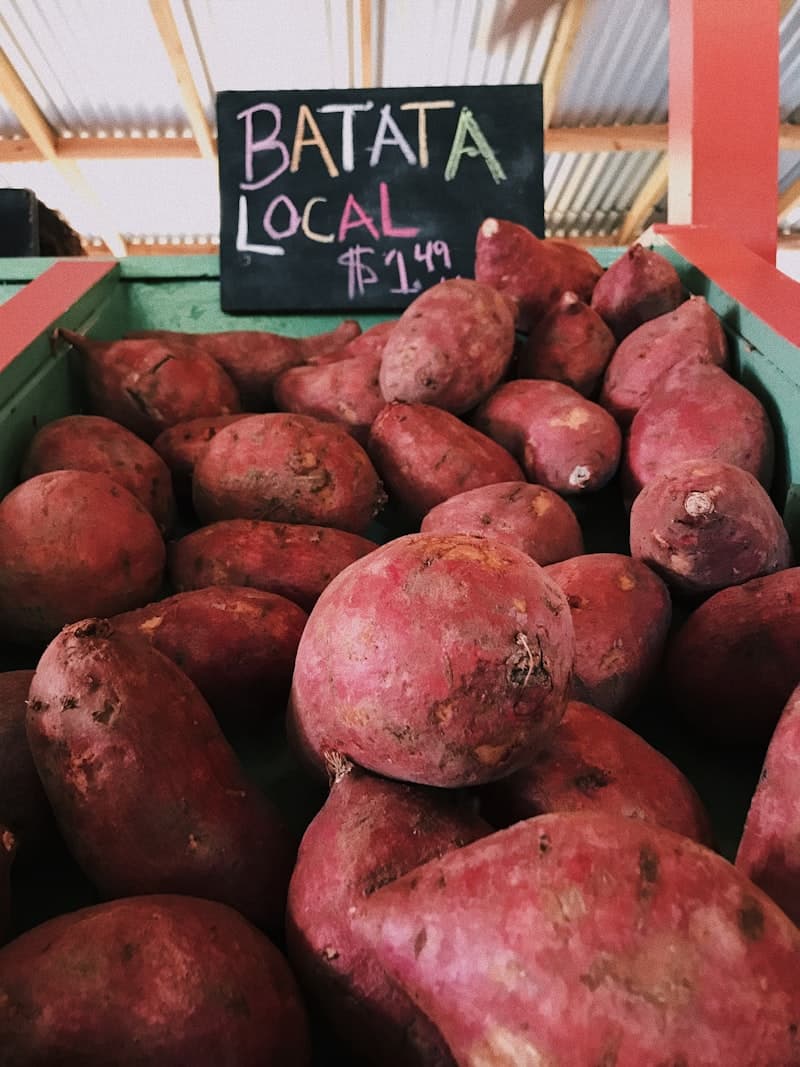
"Swap white potatoes for sweet potatoes." You have probably heard that advice from nutritionists, fitness influencers, your doctor, and basically every health article on the internet. Sweet potatoes are the "good" potato. White potatoes are the "bad" potato. Simple, right?
Not even close. If you have ever browsed Reddit's diabetes communities, you have likely seen posts that completely contradict the mainstream advice. People with continuous glucose monitors reporting that baked sweet potatoes spike their blood sugar to 200+ mg/dL, while boiled white potatoes barely move the needle. How is that possible if sweet potatoes are supposed to be so much better?
The answer is the one thing almost nobody talks about: how cooking method changes the glycemic index of sweet potato vs white potato is more important than which potato you choose. A boiled sweet potato has a glycemic index of 44 (low). Bake that same sweet potato, and its GI jumps to 94 -- higher than a baked white potato. The cooking method matters more than the potato type, and the difference is not small. It is enormous.
Most major health sites -- Healthline, Verywell, EatingWell -- conclude that "sweet potato is healthier than white potato" in broad strokes. None of them show you what happens to the glycemic index when you boil, bake, microwave, fry, or cool these potatoes. That gap matters, especially if you are managing type 2 diabetes, trying to lose weight, or simply trying to avoid the post-meal energy crash.
This article breaks down the actual GI numbers by cooking method, the science behind resistant starch formation when you cool potatoes, what Reddit users with diabetes actually report from their glucose monitors, and a clear portion guide. It is part of our carbohydrate comparison series -- if you found our brown rice vs white rice comparison useful, this one takes the same approach with root vegetables.
For building balanced meals, check out our high-protein foods guide and anti-inflammatory foods guide -- because what you eat with your potato matters as much as the potato itself. And if you are choosing beverages to go with your meal, our almond milk vs oat milk guide and coconut water vs sports drinks comparison cover the drink side of healthy eating.
Quick Answer -- Which Potato Has a Lower Glycemic Index?
The answer depends entirely on how you cook them. A boiled sweet potato has a glycemic index of 44 (low), making it an excellent choice for blood sugar control. But bake that same sweet potato, and its GI skyrockets to 94 -- higher than a baked white potato (GI 85 for Russet). The cooking method matters more than the potato type. If you cool either potato after cooking and eat it cold or reheated, resistant starch forms and the GI drops significantly -- sometimes by 25-55%.
| Sweet Potato | White Potato | |
|---|---|---|
| GI (Boiled) | 44 (Low) | 56 (Medium) |
| GI (Baked) | 94 (High) | 85 (High, Russet) |
| GI (Fried) | 54-64 (Medium) | 63-75 (Medium-High) |
| GI (Cooled, 24hrs) | ~30-35 (Low) | ~25-30 (Low) |
| Calories / 100g | 86 kcal | 77 kcal |
| Carbs / 100g | 20.1 g | 17.1 g |
| Fiber / 100g | 3.0 g | 1.3 g |
| Vitamin A | 14,187 IU (283% DV) | ~0 IU |
| Potassium | 337 mg (7% DV) | 328 mg (7% DV) |
| Resistant Starch (cooled) | 1-2 g / 100g | 2-4 g / 100g |
Bottom line: Boiled sweet potato (GI 44) is the best choice for blood sugar. But baked sweet potato (GI 94) is actually worse than baked white potato (GI 85). Cooling after cooking creates resistant starch and dramatically lowers GI for both. The way you prepare your potato matters far more than which potato you buy.
What Makes Sweet Potatoes and White Potatoes Different? (Origins, Varieties, and Nutrition Basics)
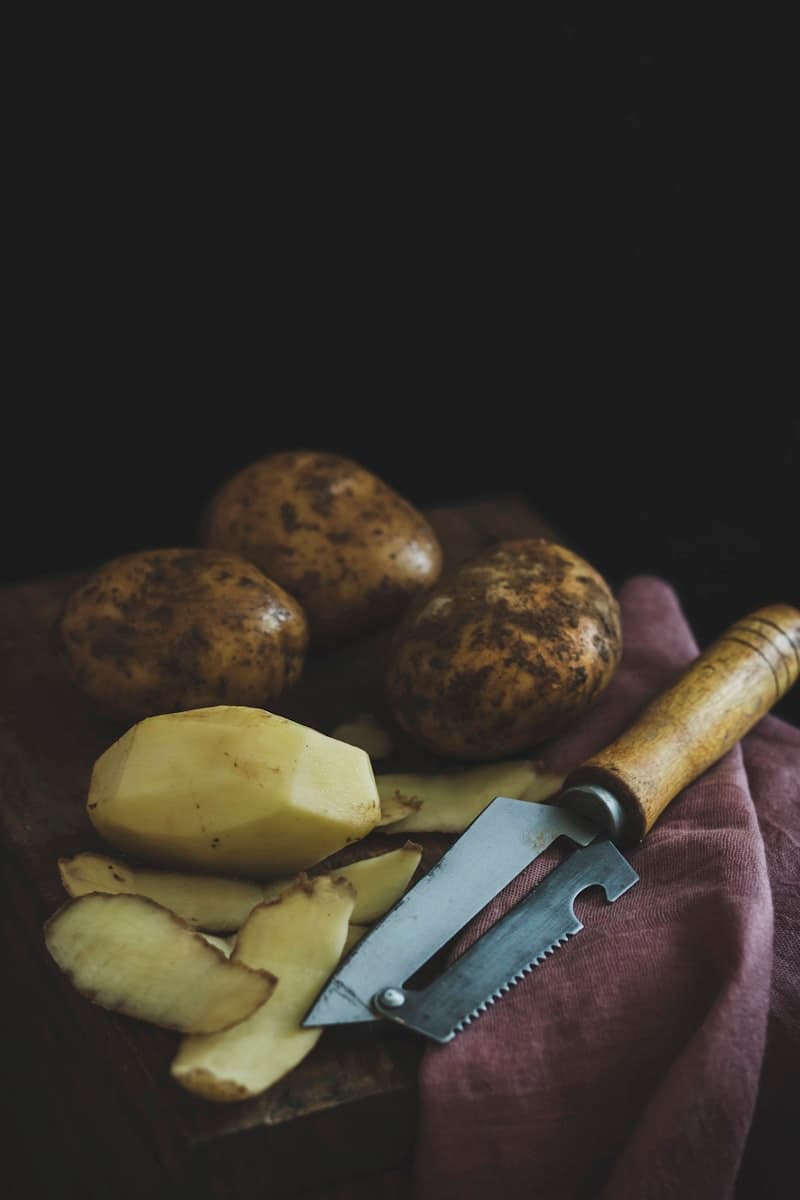
Before we get into glycemic index numbers, it helps to understand what these two vegetables actually are -- because they are not even related.
Sweet Potato -- The Orange Superfood (With a Catch)
Sweet potatoes (Ipomoea batatas) belong to the morning glory family (Convolvulaceae). They are completely unrelated to regular potatoes, despite the shared name. The most common varieties you will find in grocery stores are:
- Orange sweet potato -- the one most people picture. Rich in beta-carotene (the compound that gives it the orange color and converts to vitamin A in your body). Naturally sweet, soft when cooked.
- Purple sweet potato -- packed with anthocyanins, the same antioxidant found in blueberries. Slightly denser texture, earthier flavor.
- White sweet potato -- less sweet, starchier, and drier. Popular in Asian and Pacific Islander cuisine.
Per 100g (boiled, without skin):
- 86 calories, 20.1g carbohydrates, 3.0g fiber, 1.6g protein
- Vitamin A: 14,187 IU (283% of daily value) -- this is the standout. White potatoes have virtually zero vitamin A.
- Potassium: 337mg, Vitamin C: 2.4mg
- GI: 44 (boiled) to 94 (baked)
Beta-carotene is the headline nutrient here. One boiled sweet potato gives you nearly three times your daily vitamin A needs. That vitamin A supports immune function, eye health, and skin integrity. The catch? That benefit comes with natural sugars (4.2g per 100g) that white potatoes mostly avoid (0.6g per 100g). And as we will see, those sugars interact with heat in ways that can spike your blood sugar.
White Potato -- The Underrated Staple
White potatoes (Solanum tuberosum) belong to the nightshade family (Solanaceae) -- the same family as tomatoes, eggplants, and bell peppers. Common varieties include:
- Russet -- the classic baking potato. High starch, fluffy when baked, and unfortunately the highest GI when cooked that way.
- Yukon Gold -- buttery flavor and creamy texture. Medium starch. Versatile for boiling, roasting, and mashing.
- Red potato -- lower starch, waxy texture. Best for boiling, potato salad, and roasting. Generally lower GI than Russets.
- Fingerling -- small, elongated, nutty flavor. Good for roasting.
Per 100g (boiled, without skin):
- 77 calories, 17.1g carbohydrates, 1.3g fiber, 1.8g protein
- Vitamin C: 7.4mg (12% DV) -- actually higher than sweet potato
- Potassium: 328mg, Vitamin B6: 0.3mg
- GI: 56 (boiled) to 111 (baked Russet)
White potatoes have a surprising advantage: vitamin C. Most people do not think of potatoes as a vitamin C source, but a medium boiled white potato provides about 12% of your daily value. They also contain protease inhibitor 2, a compound that slows digestion and contributes to their remarkable satiety score (more on that in the weight loss section).
They Are Not Even Related -- Why That Matters
Since sweet potatoes and white potatoes come from completely different plant families, their nutrient profiles differ in important ways. Sweet potatoes dominate in vitamin A and fiber. White potatoes win on vitamin C, contain slightly more protein, and have fewer calories and sugars per 100g.
Neither is objectively "better." They are just different tools for different jobs. If you are interested in another carbohydrate comparison that reaches the same nuanced conclusion, our brown rice vs white rice guide breaks down another case where the "obvious" healthy choice is more complicated than it seems.
The Cooking Method Paradox -- Why Baked Sweet Potato Can Spike Blood Sugar More Than Boiled White Potato
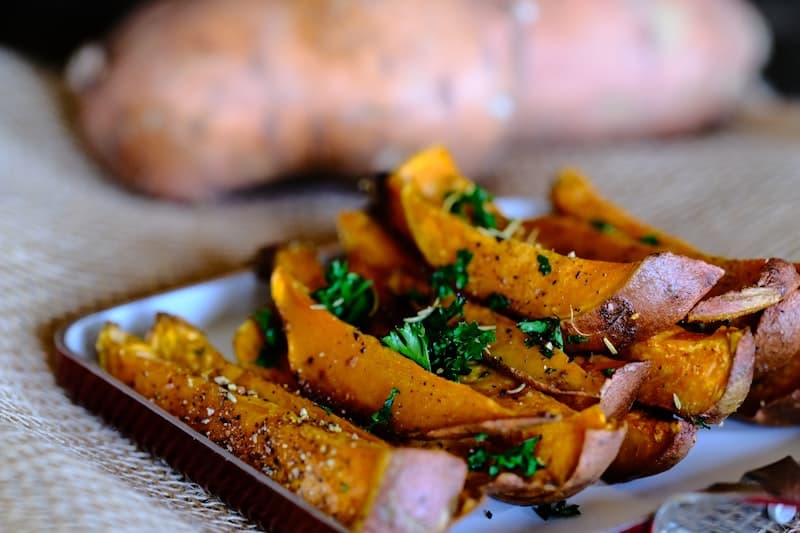
Most health articles skip this section. And it is the most important one.
Glycemic Index by Cooking Method -- The Actual Numbers
All GI values below are drawn from the International Tables of Glycemic Index and Glycemic Load Values 2021: A Systematic Review (Atkinson et al., American Journal of Clinical Nutrition), the most widely cited database for glycemic index research. Note that GI values for any single food vary considerably between published studies (different varieties, ripeness, and testing labs), so treat the numbers below as representative ranges rather than fixed constants.
| Cooking Method | Sweet Potato GI | White Potato GI | Blood Sugar Impact |
|---|---|---|---|
| Boiled | 44 (Low) | 56 (Medium) | Sweet potato wins |
| Baked | 94 (High) | 85 (High, Russet) | White potato wins |
| Microwaved | 82 (High) | 82 (High) | Tied |
| Fried (French fry) | 54-64 (Medium) | 63-75 (Medium-High) | Sweet potato slightly wins |
| Cooled after boiling (24hrs) | ~30-35 (Low) | ~25-30 (Low) | White potato slightly wins |
Read that table again. A baked sweet potato (GI 94) has a higher glycemic index than a baked white potato (GI 85). It also has a higher GI than a Snickers bar (GI 55), a banana (GI 51), or a can of soda (GI 63). The "healthy" potato, when baked, produces a faster and larger blood sugar spike than many foods people consider junk.
If you have diabetes and your doctor told you to "swap white potatoes for sweet potatoes," that advice is incomplete without the cooking method context.
Why Does Baking Skyrocket the GI?
Starch gelatinization is the mechanism behind this. When you apply dry heat (baking, roasting), the starch granules in the potato absorb energy and undergo structural changes. The long starch chains break into shorter, rapidly digestible fragments. Your digestive enzymes can attack these fragments much more quickly, which means glucose floods into your bloodstream faster.
Sweet potatoes feel this effect more strongly for two reasons. First, the starch structure in sweet potatoes is more sensitive to heat than the starch in white potatoes. Second, sweet potatoes contain natural sugars (sucrose, glucose, and fructose) that caramelize during baking, creating additional sugar breakdown products that contribute to the rapid glucose release.
Boiling, on the other hand, limits starch gelatinization because the moisture controls how much the starch granules can swell. The breakdown is slower, the release of glucose is more gradual, and the GI stays low. Water acts as a buffer.
Boiled vs Baked -- The Sweet Potato Self-Comparison
Here is what makes this so important: the same sweet potato can have a GI of 44 (boiled) or 94 (baked). That is more than a 2x difference from the exact same vegetable. Which is why the blanket statement "sweet potatoes are healthier" is genuinely misleading. If you bake your sweet potato -- which is how most people prepare them -- you are eating a high-GI food.
Reddit user reports from r/diabetes_t2 confirm what the lab data shows:
"I was eating baked sweet potatoes thinking they were low GI -- my blood sugar was spiking to 200+ mg/dL. Switched to boiled and it dropped to 130."
People follow the conventional advice, eat baked sweet potatoes, and see worse blood sugar readings than they expected. The cooking method is the missing variable. It shows up repeatedly in diabetes forums.
For another example of how preparation method changes carbohydrate metabolism, our brown rice vs white rice comparison covers how milling and cooking affect glycemic response in rice.
The Resistant Starch Hack -- Why Cooled Potatoes May Be Healthier Than Fresh Sweet Potatoes

If the baking data was surprising, this section might change how you think about leftovers.
What Is Resistant Starch and Why Does It Matter?
Resistant starch (RS) is exactly what it sounds like: starch that resists digestion. Instead of being broken down into glucose in your small intestine like normal starch, resistant starch travels intact to your large intestine, where it acts like dietary fiber. Your gut bacteria ferment it there and produce short-chain fatty acids -- particularly butyrate, which supplies roughly 70% of the energy used by the cells lining your colon and has been linked to reduced inflammation and improved insulin sensitivity.
The health effects are significant:
- Lower blood sugar response (GI drops)
- Improved insulin sensitivity over time
- Increased satiety (you feel fuller)
- Enhanced gut microbiome health
- Potential assistance with fat loss
There are several types of resistant starch, but the one that matters here is RS3 -- resistant starch formed through retrogradation, which happens when you cook a starchy food and then cool it.
Cooling Creates Resistant Starch -- The Science
Here is the process step by step:
- Cooking (heating): When you boil or bake a potato, the starch granules absorb water and undergo gelatinization. The ordered crystalline structure of the starch breaks down, making it easily digestible.
- Cooling (retrogradation): When you cool that cooked potato in the refrigerator (around 4 degrees Celsius) for 12-24 hours, the starch molecules begin to recrystallize into a new, tightly packed structure. This new structure -- RS3 -- resists attack by your digestive enzymes.
- The result: A significant portion of the starch that was fully digestible when hot becomes resistant starch when cold.
The GI impact is substantial. A controlled trial found that cooked-then-chilled potatoes contained more than double the resistant starch of freshly cooked potatoes (about 5.6 g vs 2.3 g per 100 g) and produced lower postprandial glucose and insulin spikes in women with elevated fasting glucose. The commonly cited GI ranges are:
- Boiled white potato GI 56 --> cooled GI ~25-30 (roughly a 45-55% drop)
- Boiled sweet potato GI 44 --> cooled GI ~30-35 (roughly a 20-30% drop)
White potatoes form more resistant starch during cooling because their starch composition (particularly in higher-amylose varieties) retrogrades more efficiently than sweet potato starch.
An important practical caveat about reheating: the evidence here is more mixed than is often claimed. A 2020 review of resistant starch in pre-prepared chilled foods (the SPUD project) notes that for potatoes specifically, reheating can reduce resistant starch back toward the level found in freshly cooked potatoes -- so reheating may erase much of the benefit. Cold storage reliably increases resistant starch; eating the potato cold (as in potato salad) is the most certain way to keep that benefit, while the gain from a reheated potato is less predictable.
For best results, cool your potatoes for a minimum of 12 hours, with 24 hours being optimal.
Cold Potato Salad vs Hot Baked Sweet Potato -- Which Is Better for Blood Sugar?
Let us put the numbers side by side. A serving of cold potato salad made from boiled, refrigerated white potatoes (GI ~25-30) versus a hot baked sweet potato (GI 94). The cooled potato salad has a GI roughly three times lower than the baked sweet potato.
That comparison flips the conventional wisdom on its head. The "healthy" sweet potato, baked fresh, produces a dramatically faster blood sugar spike than the "unhealthy" white potato, boiled and cooled.
Real user experiences back this up:
"I meal prep boiled potatoes on Sunday, keep them in the fridge, and eat them throughout the week. My blood sugar has been way more stable since I started." -- Reddit r/nutrition
Practical takeaway: if you want to maximize the blood sugar benefit of either potato, boil it, cool it in the refrigerator for at least 12 hours, and eat it cold or gently reheated. This simple step alone can cut the glycemic impact by a third to a half.
Sweet Potato vs White Potato for Type 2 Diabetes -- Which Is Actually Safer?
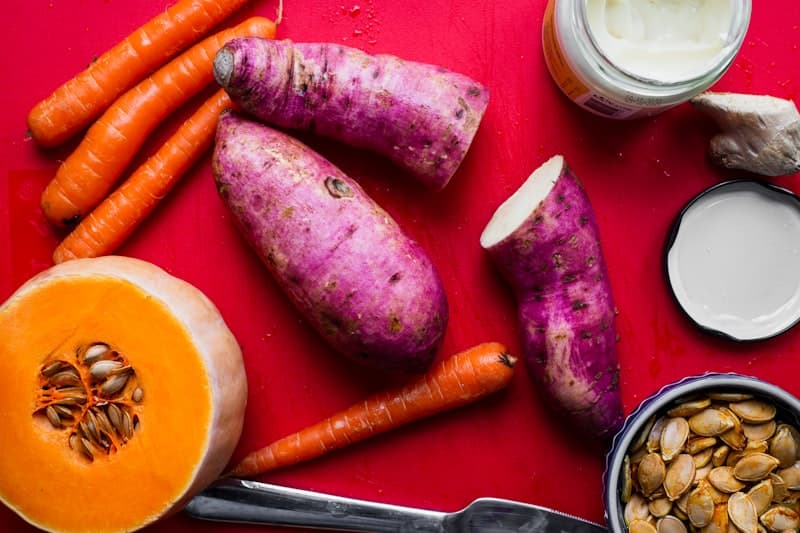
If you have type 2 diabetes, this section addresses the question you actually came here for. The answer requires looking beyond glycemic index to glycemic load, real-world blood sugar data, and practical portion sizes.
Glycemic Index vs Glycemic Load -- Why Both Matter
Glycemic index measures how quickly a food raises blood sugar, but it is based on a standardized portion containing 50 grams of available carbohydrates. In real life, you do not always eat that exact amount. Glycemic Load (GL) accounts for both the GI and the actual carbohydrate content per serving, giving you a more practical number. GL is calculated as: GI x carbohydrates per serving / 100.
| Cooking Method | Sweet Potato GL / 100g | White Potato GL / 100g |
|---|---|---|
| Boiled | 8 (Low) | 11 (Medium) |
| Baked | 17 (High) | 17 (High) |
| Cooled after boiling | ~6 (Low) | ~5 (Low) |
A GL of 10 or below is considered low, 11-19 is medium, and 20+ is high.
Notice that baked sweet potato and baked white potato have identical glycemic loads (17). The notion that sweet potato is automatically safer for diabetics does not hold up when you look at the GL data for baked preparations. The advantage only exists when both are boiled -- and even then, the gap narrows significantly after cooling.
What Reddit Users With Diabetes Actually Report
Online diabetes communities provide something that clinical studies often cannot: real-time, individual blood glucose data from people wearing continuous glucose monitors (CGMs). The patterns from r/diabetes_t2 are consistent and revealing:
"Baked sweet potato sends my blood sugar to 200+. Boiled white potato keeps me at 140."
"I switched to cooled potato salad and my A1C dropped from 7.2 to 6.8 in 3 months."
"Sweet potato in moderation is fine, but people assume it's a free pass. It's not."
"Cold boiled potatoes with vinegar (potato salad) barely moves my blood sugar."
That last quote highlights an underappreciated bonus. Adding vinegar to your potato salad does not just make it taste better. A 1998 study in the European Journal of Clinical Nutrition (Liljeberg and Björck) demonstrated that acetic acid -- the active compound in vinegar -- added to a starchy meal lowered the postprandial glucose and insulin response by roughly 30-35%, most likely by slowing gastric emptying rather than by acting on digestion in the small intestine. A cooled potato salad dressed with olive oil and vinegar is arguably one of the most blood-sugar-friendly carbohydrate meals you can eat.
Cooking method and portion size matter far more than potato type. Many people with diabetes report that their actual blood sugar readings contradict the "sweet potato is better" advice, specifically because they were baking their sweet potatoes.
Portion Guide for Diabetics
The American Diabetes Association recommends limiting carbohydrates to 15-45g per meal, depending on individual treatment plans. Here is how that translates to potato portions:
| Food | Recommended Portion | Carbs | GL | Expected Blood Sugar Impact |
|---|---|---|---|---|
| Boiled sweet potato | 1/2 medium (~100g) | 20g | 8 | Low rise |
| Baked sweet potato | 1/4 medium (~75g) | 15g | 13 | Moderate rise |
| Boiled white potato | 1/2 medium (~75g) | 13g | 8 | Low rise |
| Cooled potato salad | 1/2 cup (~100g) | 14g | 5 | Very low rise |
For diabetes management, the practical recommendations are:
- Choose boiling or steaming over baking
- Cool cooked potatoes for at least 12 hours before eating when possible
- Keep portions to half a medium potato or less
- Always pair with protein and healthy fat to slow glucose absorption
For protein pairing ideas, our high-protein foods guide covers the best protein sources to eat alongside carbohydrate-rich foods.
Sweet Potato vs White Potato for Weight Loss -- Calories, Fiber, and Satiety
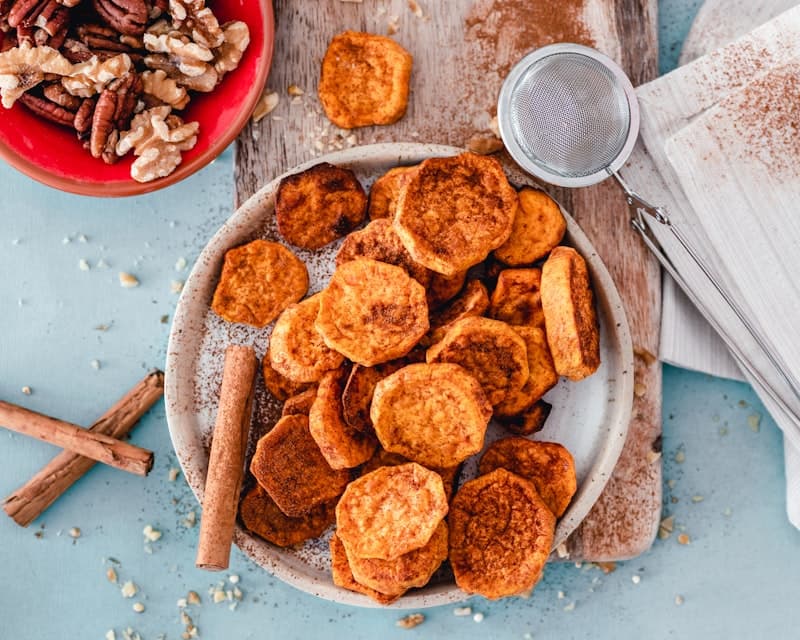
If weight loss is your goal, the sweet potato vs white potato comparison has a surprising twist.
Calories and Macronutrients -- Per 100g Comparison
All values below are for boiled preparations without skin, based on USDA FoodData Central data. (Individual database entries differ slightly depending on variety and whether the food is measured raw, boiled, or baked, so small variations from other sources are normal.)
| Nutrient | Sweet Potato (Boiled) | White Potato (Boiled) | Difference |
|---|---|---|---|
| Calories | 86 kcal | 77 kcal | White -9 kcal |
| Carbohydrates | 20.1 g | 17.1 g | White -3 g |
| Dietary fiber | 3.0 g | 1.3 g | Sweet +1.7 g |
| Sugars | 4.2 g | 0.6 g | White -3.6 g |
| Protein | 1.6 g | 1.8 g | White +0.2 g |
| Fat | 0.1 g | 0.1 g | Tied |
| Vitamin A | 14,187 IU (283% DV) | ~0 IU | Sweet dominant |
| Vitamin C | 2.4 mg (4% DV) | 7.4 mg (12% DV) | White +5 mg |
| Potassium | 337 mg (7% DV) | 328 mg (7% DV) | Nearly identical |
The calorie difference is 9 kcal per 100g. That is negligible. If you are choosing between them purely for calorie counting, it does not matter. What does matter is satiety -- how full you feel after eating.
Sweet potatoes have more fiber (3.0g vs 1.3g), which helps. But they also have significantly more sugar (4.2g vs 0.6g), which does not help with blood sugar stability or cravings. White potatoes have slightly more protein and fewer total carbohydrates.
The Satiety Factor -- Why White Potato Might Keep You Fuller
White potatoes have a genuine, research-backed advantage here that most people do not know about.
In 1995, Holt et al. published a landmark study in the European Journal of Clinical Nutrition that created the Satiety Index -- a ranking of how full people feel after eating 240-calorie portions of 38 different foods, with white bread as the baseline (100%). The results were striking:
- Boiled white potato: 323% -- the highest score of any food tested. Higher than steak, eggs, oatmeal, apples, brown rice, and every other food in the study.
- Sweet potato: 159% -- respectable, but roughly half the satiety score of white potato.
Why does white potato keep you so full? Researchers attribute it to several factors:
- Protease inhibitor 2 -- a naturally occurring compound in white potatoes that slows protein digestion, extending the feeling of fullness.
- High water content and low energy density -- you get a large volume of food for relatively few calories, which physically fills your stomach.
- Starch structure -- when boiled, the starch in white potatoes digests at a moderate pace, providing steady energy without a rapid spike and crash.
For weight loss, this matters more than most people realize. If a food keeps you full for hours, you are less likely to snack between meals. Over weeks and months, that reduction in snacking adds up to meaningful calorie savings.
Reddit users on r/loseit confirm this pattern:
"I swapped sweet potatoes for boiled white potatoes and I'm actually eating less because I stay full longer."
If satiety is your primary concern for weight management, boiled white potatoes may actually be the better choice. For a broader look at foods that support weight management through an anti-inflammatory eating pattern, see our anti-inflammatory foods guide.
Head-to-Head Comparison -- Full Specs Table
| Factor | Sweet Potato | White Potato |
|---|---|---|
| GI (Boiled) | 44 (Low) | 56 (Medium) |
| GI (Baked) | 94 (High) | 85 (High, Russet) |
| GI (Cooled after boiling) | ~30-35 (Low) | ~25-30 (Low) |
| Calories / 100g (boiled) | 86 kcal | 77 kcal |
| Carbohydrates / 100g | 20.1 g | 17.1 g |
| Fiber / 100g | 3.0 g | 1.3 g |
| Sugars / 100g | 4.2 g | 0.6 g |
| Protein / 100g | 1.6 g | 1.8 g |
| Vitamin A / 100g | 14,187 IU (283% DV) | ~0 IU |
| Vitamin C / 100g | 2.4 mg (4% DV) | 7.4 mg (12% DV) |
| Potassium / 100g | 337 mg | 328 mg |
| Magnesium / 100g | 25 mg | 20 mg |
| Resistant Starch (raw, RS2) | Minimal | Minimal |
| Resistant Starch (cooled, RS3) | 1-2 g / 100g | 2-4 g / 100g |
| Satiety Index | 159% | 323% (highest of all tested foods) |
| Glycemic Load / 100g (boiled) | 8 (Low) | 11 (Medium) |
| Best for diabetes | Boiled (GI 44) | Cooled boiled (GI ~25-30) |
| Best for weight loss | Good (more fiber) | Better (higher satiety) |
| Best cooking method for low GI | Boiling or steaming | Boiling then cooling |
| Common varieties | Orange, purple, white | Russet, Yukon Gold, Red, Fingerling |
| Cost / availability | Widely available, moderate price | Widely available, low price |
| Flavor | Sweet, moist, rich | Mild, starchy, versatile |
Key takeaways from the full comparison:
- Vitamin A is sweet potato's clear advantage -- 283% DV versus virtually zero in white potatoes. If you need vitamin A, sweet potato is the easy winner.
- Vitamin C goes the other direction -- white potatoes have three times more than sweet potatoes.
- Calories and macronutrients are similar enough that the difference is negligible for most purposes.
- Resistant starch after cooling is higher in white potatoes (2-4g vs 1-2g per 100g), giving them an edge for gut health and blood sugar when cooled.
- Satiety is white potato's hidden superpower -- the highest score of any food ever tested in the Holt et al. study.
What Reddit and Real Users Actually Say
Blood Sugar Reports From Diabetics on Reddit
One surprising report keeps surfacing from r/diabetes_t2: how many people experience higher blood sugar from sweet potatoes than from white potatoes:
"Baked sweet potato is a blood sugar bomb for me."
People who switched to sweet potatoes following conventional advice and then tracked their glucose with CGMs often found the opposite of what they expected. The baking method is usually the culprit.
On the other end:
"Cold boiled white potato barely moves my glucose."
Users who prepare white potatoes by boiling and cooling consistently report minimal blood sugar impact. The combination of lower initial GI and resistant starch formation makes cooled white potatoes one of the most blood-sugar-friendly carb sources available.
"My CGM shows sweet potato is worse than white rice."
Sweet potato outperforming even white rice on the glycemic scale shows up regularly. Again, it almost always involves baked sweet potatoes.
Weight Loss Experiences From Nutrition Communities
On r/loseit and r/nutrition, the discussion tends to focus on satiety:
"White potatoes keep me full longer than sweet potatoes."
Users who track their food intake often find they naturally eat less when they include boiled white potatoes in their meals.
"I eat potato salad (cold potatoes with olive oil and vinegar) for lunch every day -- lost 10 lbs in 2 months."
Boiled, cooled potatoes with olive oil and vinegar shows up as a consistent winner in weight loss communities. The resistant starch from cooling, the acetic acid from vinegar (shown to cut the glucose and insulin response to a starchy meal by roughly 30-35%), and the healthy fat from olive oil create a meal that is filling, blood-sugar-friendly, and sustainable.
The Consensus From Health Communities
Three conclusions dominate across diabetes, nutrition, and weight loss communities:
- "Cooking method matters more than potato type." Community members agree on this overwhelmingly.
- "If you have diabetes, boil your potatoes and cool them." The diabetes community overwhelmingly recommends this approach.
- "Pair with protein and healthy fat to blunt the spike." Adding protein and fat to any carbohydrate meal slows gastric emptying and moderates the glucose response.
For choosing the right cooking fat, our avocado oil vs olive oil comparison breaks down which oils work best for different cooking methods and health goals.
Your Decision Guide -- Which Potato for Your Goal?
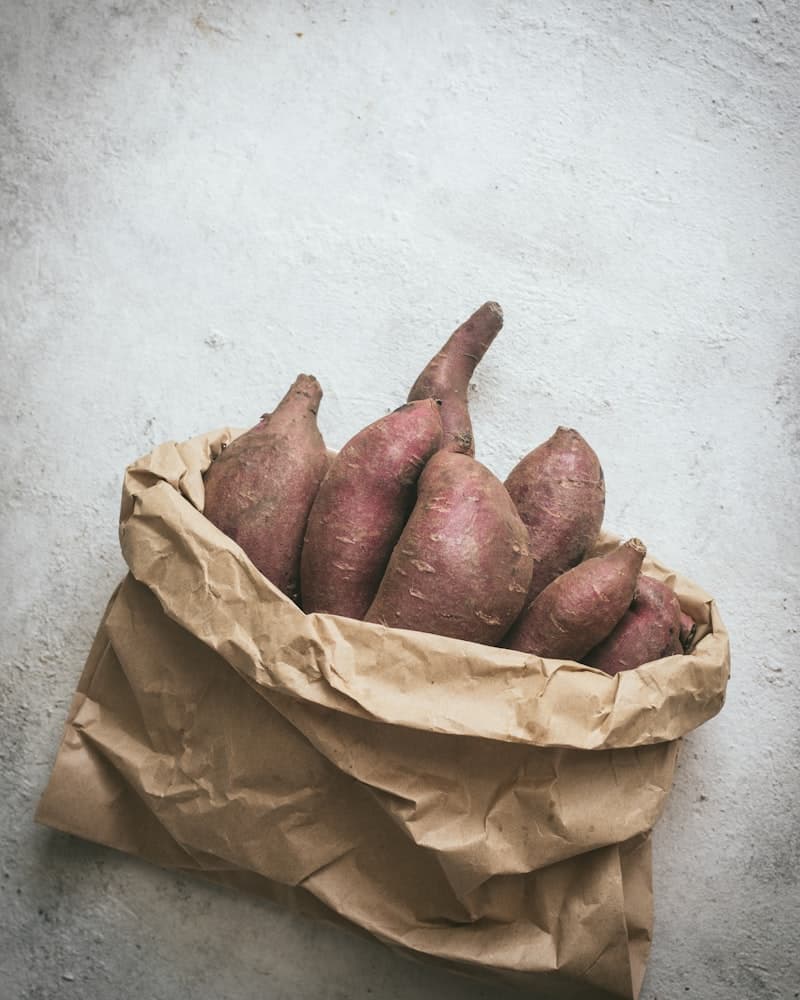
| Your Situation | Best Choice | Why |
|---|---|---|
| Type 2 diabetes (blood sugar management) | Boiled sweet potato (GI 44) or cooled boiled white potato (GI ~25-30) | Both are low GI. Cooled white potato has the edge due to more resistant starch |
| Weight loss (satiety-focused) | Boiled white potato | Highest Satiety Index score of any food tested. Keeps you full longest |
| Post-workout recovery | Baked sweet potato or baked white potato | High GI helps replenish muscle glycogen quickly. Sweet potato adds vitamin A and antioxidants |
| Vitamin A / antioxidant needs | Sweet potato (boiled) | 283% DV beta-carotene. Significant anti-inflammatory effect |
| Gut health (resistant starch) | Cooled white potato | Highest RS3 formation after cooling. More butyrate-producing potential |
| Simple calorie reduction | White potato (boiled) | 9 fewer kcal per 100g and significantly less sugar |
| Overall recommendation | Depends on cooking method | "How you cook it" matters more than "which one you buy" |
My Honest Recommendation
If you are managing diabetes or watching your blood sugar, the single most important takeaway from this entire article is this: how you cook your potato matters far more than which potato you choose.
A boiled sweet potato (GI 44) and a cooled boiled white potato (GI ~25-30) are both excellent low-GI options. A baked sweet potato (GI 94) is actually worse for your blood sugar than a boiled white potato. For weight loss, boiled white potatoes offer unmatched satiety. For overall nutrition, sweet potatoes deliver more vitamin A and fiber.
The best strategy? Eat both. Boil or steam them. Cool them overnight for resistant starch. Pair with protein and healthy fat. That combination -- not the choice between sweet and white -- is what will actually move the needle on your health.
Building a Blood-Sugar-Friendly Kitchen
A potato is just one component of a meal. What you put next to it determines how your body handles the carbohydrates. These guides can help you build a complete approach:
- Carb comparisons: Our brown rice vs white rice guide covers another staple carbohydrate and its glycemic impact.
- Protein pairing: The high-protein foods guide helps you choose proteins that slow glucose absorption when eaten with carbs.
- Anti-inflammatory eating: The anti-inflammatory foods guide explains how sweet potatoes and other foods fit into an inflammation-fighting diet.
- Healthy cooking fats: The avocado oil vs olive oil comparison helps you choose the right fat for roasting, sauteing, and dressing.
- Low-sugar beverages: The almond milk vs oat milk guide covers dairy-free options with minimal sugar impact.
- Hydration for activity: The coconut water vs sports drinks comparison helps you choose the right drink for workouts and recovery.
Frequently Asked Questions
Does sweet potato spike blood sugar more than white potato?
It depends entirely on how you cook them. A boiled sweet potato has a glycemic index of 44 (low), while a boiled white potato has a GI of 56 (medium) -- so boiled sweet potato causes a smaller blood sugar spike. However, a baked sweet potato has a GI of 94 (very high), which is actually higher than a baked Russet potato (GI 85). Many Reddit users on r/diabetes_t2 report that baked sweet potatoes spike their blood sugar significantly more than boiled white potatoes. The cooking method matters more than the potato type.
Can diabetics eat sweet potato every day?
Yes, but portion size and cooking method are critical. The American Diabetes Association considers sweet potatoes a diabetes-friendly food when boiled or steamed (GI 44). A safe daily portion for most diabetics is half a medium boiled sweet potato (approximately 100g, 20g carbs, GL 8). Avoid baked sweet potatoes (GI 94) or limit to a quarter of a medium potato. Pair with protein and healthy fat to slow glucose absorption. Monitor your individual blood sugar response, as it varies significantly from person to person.
How does cooling potatoes lower the glycemic index?
When you cook a potato and then cool it (refrigerator temperature, 12-24 hours), some of the digestible starch undergoes retrogradation -- the starch molecules recrystallize into a structure that resists digestion by enzymes in your small intestine. This resistant starch (RS3) acts like dietary fiber: it feeds beneficial gut bacteria, produces short-chain fatty acids like butyrate, and significantly reduces the glycemic impact. Studies show cooling can lower a potato's GI by 25-55%. Reheating the potato retains about 70-80% of the resistant starch, so you still get the benefit even with warm food.
Is sweet potato really healthier than white potato?
Not necessarily. Sweet potatoes have more vitamin A (283% DV from beta-carotene), more fiber (3g vs 1.3g per 100g), and more natural sugars (4.2g vs 0.6g). White potatoes have more vitamin C (12% DV vs 4% DV), slightly fewer calories (77 vs 86 per 100g), and scored highest on the Satiety Index (323% vs 159%) -- meaning they keep you fuller for longer. Both are nutritious whole foods. The "healthier" choice depends on your specific goals: blood sugar management, weight loss, vitamin A intake, or satiety.
How much resistant starch is in a cooled potato vs sweet potato?
Cooled white potatoes contain approximately 2-4g of resistant starch per 100g, while cooled sweet potatoes contain approximately 1-2g per 100g. White potatoes produce more resistant starch during cooling because their starch structure (higher amylose content in some varieties) retrogrades more efficiently. For maximum resistant starch, boil potatoes, cool them in the refrigerator for at least 24 hours, and eat them cold or gently reheated. Adding vinegar (as in potato salad) can further reduce the glycemic impact by an additional 20-35%.
What is the best cooking method for potatoes if you have diabetes?
Boiling or steaming, followed by cooling for at least 12 hours, is the best method for blood sugar management. Boiled sweet potato (GI 44) and cooled boiled white potato (GI ~25-30) are both excellent choices. Avoid baking (GI 85-94 for both) and deep-frying. If you must bake, choose a lower-starch variety like red potatoes instead of Russet. Always pair your potato with protein (chicken, fish, tofu) and healthy fat (olive oil, avocado) to slow glucose absorption.
Can I eat potatoes and still lose weight?
Absolutely. Despite their reputation, boiled white potatoes have the highest satiety score of any food tested (Holt et al., 1995) -- higher than steak, eggs, oatmeal, or apples. High satiety means you eat less at subsequent meals, which can lead to lower overall calorie intake. The key is preparation: boil or steam (don't fry), keep portions to 150-200g, and pair with vegetables and protein. Cooled potato salad with olive oil and vinegar is one of the most weight-loss-friendly carbohydrate sources available.
Why does my blood sugar go up more with sweet potato than white potato?
Two factors usually explain this: cooking method and individual variation. If you are eating baked or roasted sweet potatoes (GI 94), the intense heat breaks down the starch into rapidly digestible form, causing a faster and higher blood sugar spike than a boiled white potato (GI 56). Individual gut microbiome differences also play a role -- your specific mix of digestive enzymes and gut bacteria may process sweet potato starch differently. Many people on r/diabetes_t2 with continuous glucose monitors (CGMs) report that boiled white potatoes cause lower glucose readings than baked sweet potatoes.
References
- Atkinson FS, Brand-Miller JC, Foster-Powell K, Buyken AE, Goletzke J. International tables of glycemic index and glycemic load values 2021: a systematic review. The American Journal of Clinical Nutrition, 2021.
- Holt SHA, Brand-Miller JC, Petocz P, Farmakalidis E. A satiety index of common foods. European Journal of Clinical Nutrition, 1995;49(9):675-690.
- Liljeberg H, Björck I. Delayed gastric emptying rate may explain improved glycaemia in healthy subjects to a starchy meal with added vinegar. European Journal of Clinical Nutrition, 1998;52(5):368-371.
- Sonia S, et al. Chilled Potatoes Decrease Postprandial Glucose, Insulin, and Glucose-dependent Insulinotropic Peptide Compared to Boiled Potatoes in Females with Elevated Fasting Glucose and Insulin. Nutrients, 2019.
- Patterson MA, et al. Resistant Starch Production and Glucose Release from Pre-Prepared Chilled Food: The SPUD Project. Nutrition Bulletin, 2020.
- Liu H, Wang J, et al. Short Chain Fatty Acids in the Colon and Peripheral Tissues: A Focus on Butyrate, Colon Cancer, Obesity and Insulin Resistance. Nutrients, 2017.
- USDA FoodData Central. U.S. Department of Agriculture, Agricultural Research Service.
The Bottom Line
"Sweet potato is healthier than white potato" is an oversimplification that ignores the single most important variable: how you cook them.
The glycemic index data tells a clear story. Boiled sweet potato (GI 44) and cooled boiled white potato (GI ~25-30) are both excellent choices for blood sugar management. But baked sweet potato (GI 94) is worse for your blood sugar than boiled white potato (GI 56). The ranking by GI looks like this: boiled sweet potato < boiled white potato < baked white potato < baked sweet potato. Cooling after cooking drops the GI for both by 25-55%.
For weight loss, white potatoes have a genuine advantage: they scored highest on the Satiety Index of any food ever tested. They keep you full, which helps you eat less overall.
The best approach is not to pick one and declare it the winner. It is to use both strategically: boil or steam them, cool them overnight for resistant starch, and pair them with protein and healthy fat. That formula works regardless of which potato you start with.
Both sweet potatoes and white potatoes are nutritious whole foods. Neither is the enemy. The enemy is the oversimplified advice that tells you to blindly swap one for the other without considering how you prepare them.
Have you noticed a difference in your blood sugar between sweet potatoes and white potatoes? Which cooking method works best for you? Drop a comment and share your experience -- real-world data helps everyone make better decisions.
This article is for informational purposes only and is not intended as medical advice. If you have diabetes or blood sugar management concerns, consult your healthcare provider or registered dietitian for personalized dietary guidance.
Related guides:
- Carb comparison: Brown rice vs white rice -- which is actually healthier?
- Build balanced meals: High-protein foods backed by science
- Fight inflammation: Anti-inflammatory foods guide
- Choose the right cooking fat: Avocado oil vs olive oil
- Low-sugar drinks: Almond milk vs oat milk
- Stay hydrated: Coconut water vs sports drinks
Kefir vs Yogurt for IBS and Bloating: Which Probiotics Actually Work Better? (CFU Count, Lactose, Science-Based)
Next →Almond Milk vs Oat Milk: Which Is Healthier? Nutrition, Taste & Environmental Impact (2026 Guide)
Related Posts

Brown Rice vs White Rice: Which Is Actually Healthier? What Science Says (2026 Guide)

Himalayan Pink Salt vs Sea Salt: Does It Actually Lower Blood Pressure? (Minerals Per Teaspoon, Science-Based)
