KSM-66 vs Sensoril Ashwagandha: Which Extract for Sleep vs Anxiety?
KSM-66 vs Sensoril ashwagandha: root-only ~5% vs root+leaf ~10% withanolides. Which fits sleep, anxiety, or training? Studies, dosage, Reddit reports.
KSM-66 vs Sensoril Ashwagandha: Which Extract for Sleep vs Anxiety?
On Reddit and most supplement communities, a single line gets repeated until it hardens into dogma: KSM-66 is for the day, Sensoril is for the night. You'll see it phrased as "KSM-66 is stimulating, Sensoril is relaxing," or "Sensoril hits harder." It's a clean rule. The problem is it's only partially true — and following it blindly can land you with afternoon drowsiness from KSM-66, or morning grogginess from a Sensoril dose that was too high for daytime anxiety.
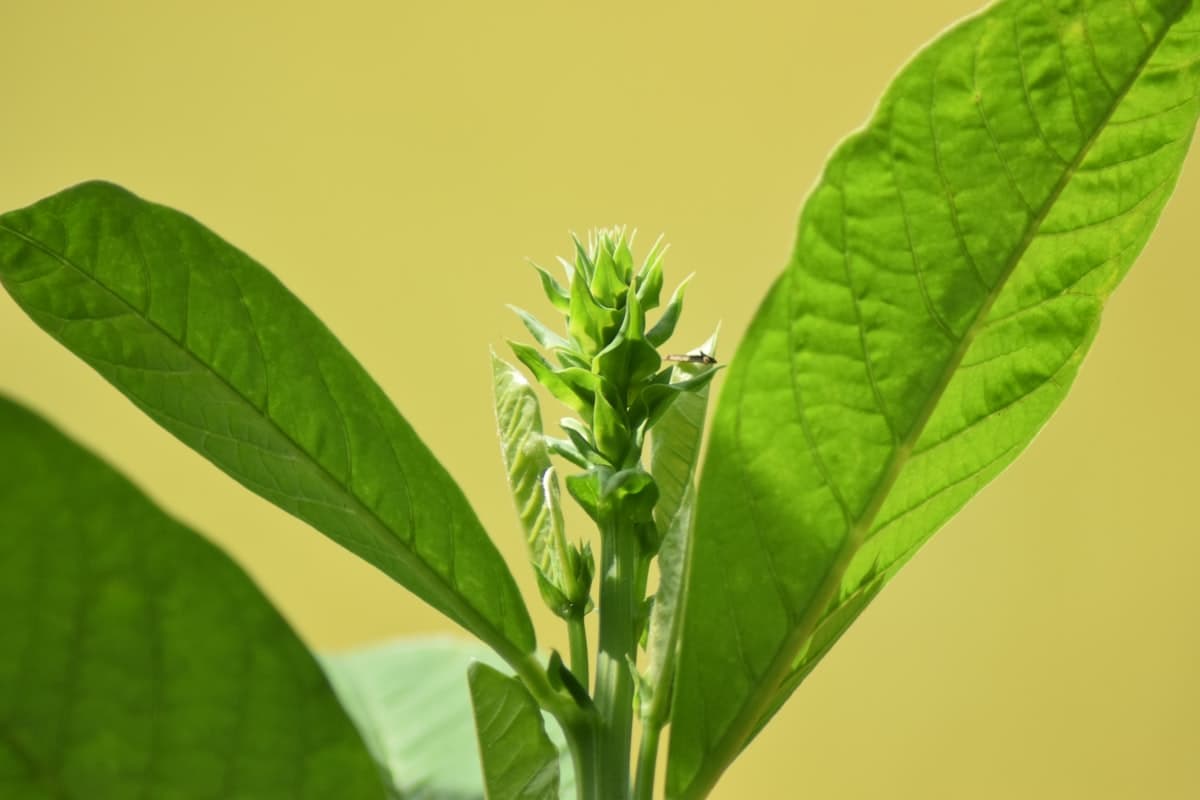
Both extracts come from the same plant, Withania somnifera. The split is in the part of the plant used and how aggressively it's standardized: KSM-66 is a root-only extract standardized to ~5% withanolides, while Sensoril uses root + leaf and is standardized to ~10% withanolides (including a higher fraction of withaferin A, a compound concentrated in the leaf). That single difference in chemistry is why the two extracts don't behave identically.
This guide does three things most comparison articles skip. First, a side-by-side spec table so you can see the actual differences (not the marketing). Second, a decision tree that maps your goal — sleep, daytime anxiety, training, testosterone — to the right extract. Third, a breakdown of what the major Reddit subs actually report, since the community has run the largest uncontrolled "trial" of these two extracts that exists.
Quick answer
- Sleep and strong sedation are the priority → Sensoril, evening, 125–250 mg.
- Daytime function, training, or stress resilience → KSM-66, morning/lunch or pre-workout, 300–600 mg.
- Anxiety but you have to keep working / driving / studying → KSM-66 is usually the more practical choice (Sensoril risks daytime drowsiness).
- "Sensoril is stronger" is a statement about withanolide percentage, not about whether it fits your goal. Strength ≠ fit.
Details, with the actual studies, in the comparison table and decision tree below.
The "KSM-66 for Day, Sensoril for Night" Myth — and Where It Holds Up
The day/night shorthand didn't come from nowhere. It's the distilled version of what users report in r/Nootropics threads going back years, and there's a plausible pharmacological reason underneath it.
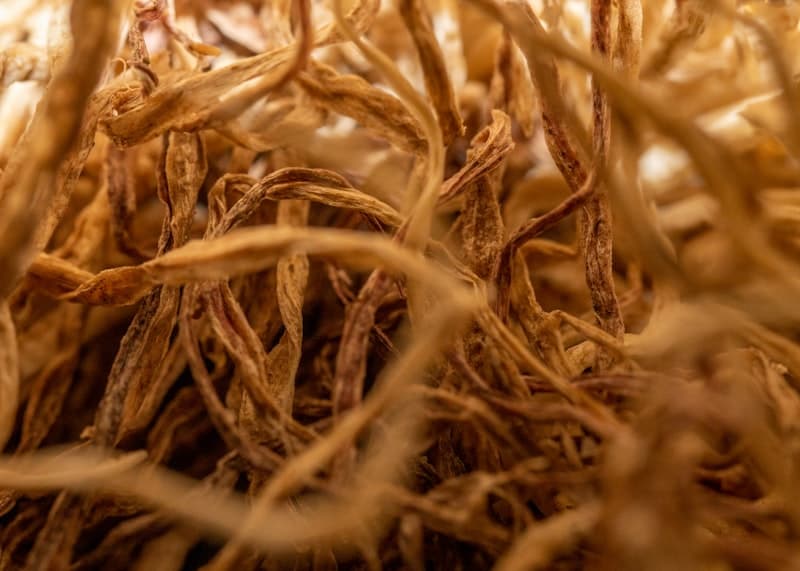
The reason holds up in general. KSM-66, being root-only, has a lower withaferin A load (withaferin A is concentrated mainly in aerial parts of Withania somnifera — leaf and stem — while the root is richer in withanolide A) [Singh et al., 2023, Frontiers in Plant Science]. That makes it the extract people tolerate better in the daytime, and the one most clinical trials for stress, sport, and hormones have used. Sensoril, with the leaf included, delivers a broader, higher-potency withanolide spectrum — including more withaferin A — which lines up with the stronger sedative reports.
Where the rule breaks down is the assumption that it applies to everyone, in every situation. It doesn't. Anxiety with daytime obligations, training goals, and individual cortisol reactions all bend the rule. The rest of this article is about when the shorthand holds and when you should ignore it.
For a wider look at ashwagandha's mechanisms and full evidence profile, see our ashwagandha benefits science guide; this article focuses narrowly on which extract to pick.
KSM-66 vs Sensoril at a Glance — The Comparison Table
The numbers below are the ones that actually matter when choosing. Withanolide percentages reflect what each extract is standardized to; dosages reflect the ranges used in published trials and commonly recommended by manufacturers.
| Spec | KSM-66 | Sensoril |
|---|---|---|
| Plant part used | Root only | Root + leaf |
| Withanolide standardization | ~5% | ~10% |
| Withaferin A load | Low (leaf excluded) | Higher (leaf included) |
| Best-studied use | Stress, cortisol, resistance training, male hormones | Sleep, anxiety, antioxidant support |
| Typical daily dose | 300–600 mg (often split twice daily) | 125–250 mg |
| Onset profile | Daytime-tolerant; energy/recovery angle | Stronger sedation; sleep/relaxation angle |
| Commonly reported side effects | Mild GI, headache, rare drowsiness in sensitive users | Dose-dependent drowsiness, GI upset |
| Pregnancy / autoimmune / thyroid | Not recommended (both extracts) | Not recommended (both extracts) |
| Developed / branded by | Ixoreal Biotech (KSM-66) | Natreon (Sensoril) |
A few things to flag before you read the table as gospel. The "~5%" and "~10%" are the standardization targets each brand markets — actual withanolide content varies batch to batch. And "best-studied use" reflects which trials used which extract, not a hard claim that one extract can't help with the other goal. A root extract can improve sleep, and a root+leaf extract can lower stress — the evidence just isn't evenly distributed across them.
Why the Extracts Differ — Root-Only vs Root + Leaf (Withanolides & Withaferin A)
This is the section that decides whether you understand the choice or just memorize the brand names.
KSM-66 — root-only, ~5% withanolides, the "standardized root" profile
KSM-66 is produced from the root alone, using a milk-extraction process designed to minimize solvent residue and preserve the full withanolide spectrum native to the root. It's standardized to roughly 5% withanolides.
The reason it's earned a "daytime" reputation is mostly about what it lacks: because the leaf is excluded, the withaferin A content is low. Withaferin A is the most pharmacologically active — and at high doses, the most potentially reactive — of the withanolides. Keeping it low widens the safety margin for daily, longer-term use, which is exactly the scenario where most stress and training studies run. Comprehensive phytochemistry reviews note that withanolide A (neuroactive, root-rich) and withaferin A (leaf-rich) have meaningfully different pharmacological profiles [Saleem et al., 2020, PMC7811807].
Sensoril — root + leaf, ~10% withanolides, the "high-potency" profile
Sensoril (originally patented under the name Natreon) is extracted from both root and leaf and standardized to roughly 10% withanolides — about double the concentration of KSM-66. The inclusion of leaf means a higher withaferin A fraction, which is the compound most studied for anti-inflammatory, antioxidant, and anti-cancer activity [Withaferin A review, Molecules 2021].
This is where the popular line "Sensoril is stronger" comes from, and at the level of withanolide percentage, it's accurate. But higher concentration is why Sensoril's effective dose is roughly half of KSM-66's — 125–250 mg vs 300–600 mg. The manufacturers aren't saying the two are interchangeable at the same dose.
On safety: withaferin A itself has a wide therapeutic margin in preclinical work — acute oral LD₅₀ in mice exceeds 2000 mg/kg, and at therapeutic doses it has shown hepatoprotective (not liver-toxic) effects in animal models [Gupta et al., 2022, PMC9742883; Xia et al., 2022, PMC9132099]. The "toxicity" reputation is largely overstated. That said, idiosyncratic liver injury from whole ashwagandha extracts has been reported rarely, and Australia's TGA formally flagged a "very rare risk of liver injury" in 2026 [TGA safety update]. This applies to both extracts — it is not a Sensoril-specific problem.
"Stronger" doesn't mean "better for your goal"
This is the single most useful idea in the article. Withanolide percentage measures intensity. It does not measure fit.
If your goal is training, testosterone, or daytime stress resilience, a lower-withaferin-A root extract (KSM-66) is what the relevant trials actually used. Doubling the withanolide dose with Sensoril doesn't double the training benefit — it just changes the side-effect profile. If your goal is strong sedation or sleep support, the higher-potency root+leaf profile (Sensoril) lines up better with the sleep evidence — but that's about matching the profile to the goal, not about one being objectively better.
If Sleep Is the Goal — When Sensoril Wins (and When It Doesn't)
The sleep case for higher-potency ashwagandha extracts rests on a handful of randomized trials. The most cited is Langade et al. (2019), a 10-week RCT in 60 adults with insomnia that found a standardized ashwagandha root extract (300 mg twice daily) significantly improved sleep quality and shortened sleep onset latency compared to placebo [Langade et al., 2019, PMID 31728244]. A follow-up by the same group replicated the finding, concluding that "Ashwagandha root extract can improve sleep quality and can help in managing insomnia" [Langade et al., 2021, PMID 32818573]. A systematic review and meta-analysis of five RCTs (400 participants) confirmed a small but significant effect on overall sleep, with the benefit more pronounced in people diagnosed with insomnia, at doses ≥600 mg/day, and over ≥8 weeks [Cheah et al., 2021, PMC8462692].
Two honest caveats before you assume Sensoril is automatically your sleep answer.
First, these trials generally used standardized root extracts — not necessarily Sensoril's specific root+leaf spec. The evidence supports high-quality ashwagandha root extract for sleep; Sensoril is a reasonable match because of its potency, but it's a category claim, not a brand-specific one.
Second, KSM-66 is not useless for sleep. Plenty of users report better sleep on it, particularly when stress is the thing keeping them awake (the cortisol-lowering path that follows). The day/night shorthand is a default, not a law.
"KSM-66 makes me sleep 10 hours" — why some users get the opposite effect
Here's the wrinkle that complicates the rule. A meaningful minority of users report that KSM-66 — the "daytime" extract — knocks them out cold, leaves them lethargic the next day, or blunts their emotions. Scan r/Nootropics and r/Supplements and you'll see the same phrases over and over: "slept 10 hours and still tired," "felt emotionally flat," "motivation cratered."
The plausible mechanism: a too-rapid drop in cortisol. KSM-66's flagship trial showed serum cortisol falling ~27.9% in chronically stressed adults at 600 mg/day [Chandrasekhar et al., 2012, PMC3573577]. For someone whose baseline cortisol is already low — or whose dose is too high for their body — that drop can feel like a crash. The fix is rarely "switch to Sensoril" (which would increase the withanolide load). The more rational first move is lowering the KSM-66 dose or shifting the timing before assuming the extract itself is wrong.
For the wider discussion of why ashwagandha can cause tiredness, lethargy, and emotional flatness — and what to do about it — see why ashwagandha makes you tired, lethargic, and emotionally flat.
If Anxiety or Stress Is the Goal — Both Work, But the Profile Differs
This is where the day/night rule is most often misapplied. People hear "anxiety" and default to Sensoril, assuming more potent = better for nerves. That's not always right.
KSM-66 has the deepest evidence base for stress and cortisol reduction. The Chandrasekhar 2012 trial — 64 chronically stressed adults, 300 mg twice daily for 60 days — produced a 27.9% drop in serum cortisol and a 44% reduction in perceived stress scores, with no significant adverse effects [Chandrasekhar et al., 2012, PMC3573577]. If your anxiety is stress-driven and you still have to function during the day — work, drive, parent, study — KSM-66 is usually the more practical starting point.
Sensoril has shown anxiety and chronic-stress benefits in its own trials, but its stronger sedative profile means the daytime-drowsiness risk is real. For pure evening anxiety or someone whose anxiety specifically prevents sleep, it can be the better match. For daytime generalized anxiety, the sedation can become a new problem.
The corrected rule: "anxiety = Sensoril" is an oversimplification. If the anxiety is daytime and you need to keep functioning, KSM-66 is often the better default. If sleep-onset anxiety is the issue, Sensoril in the evening is a reasonable choice.
If you're stacking for anxiety or sleep, ashwagandha pairs well with magnesium — see our ashwagandha + magnesium stack guide for sleep and anxiety for how to combine them safely.
If Training, Energy, or Testosterone Is the Goal — KSM-66 Has the Edge
For sport, recovery, and male hormone outcomes, the evidence leans clearly toward KSM-66. The defining trial is Wankhede et al. (2015): 8 weeks of resistance training in men, with the ashwagandha group taking 300 mg of KSM-66 twice daily (600 mg/day, 5% withanolides). The KSM-66 group saw significantly greater gains in bench press and leg extension strength, larger increases in muscle mass, a greater rise in testosterone, and a larger drop in post-exercise creatine kinase (a marker of muscle damage) compared to placebo [Wankhede et al., 2015, PMC4658772].
Why KSM-66 and not Sensoril for this goal? Two reasons. First, this is the extract the training trials actually used — the evidence base is here. Second, the lower withaferin A load of root-only extracts is hypothesized to be better suited to long-term daily use, which is exactly the dosing pattern training adaptations require. Sensoril's withaferin A has its own research base — mostly in oncology and inflammation — but that's a different goal.
The practical timing most lifters settle on: KSM-66 in the morning or pre-workout, 300–600 mg/day. Some split it AM and early afternoon to mirror the trial design.
"Sensoril is stronger, so it must be better for gains" is a misconception. Withanolide percentage doesn't map onto ergogenic outcomes.
The Decision Tree — Which Extract for Your Goal?
Work through this in order. The first match is usually your answer.
-
Sleep is the #1 priority, and you can tolerate evening sedation → Sensoril, evening, 125 mg to start (titrate up to 250 mg if needed).
-
Anxiety is present, but daytime work / driving / studying matters → KSM-66, morning or lunch, 300–600 mg/day. The sedation risk is lower.
-
Training performance, recovery, or testosterone is the goal → KSM-66, morning or pre-workout, 300–600 mg/day.
-
Chronic stress + poor sleep, both need addressing → KSM-66 in the day + Sensoril in the evening is a workable split, but watch total withanolide load. Most people do better starting with one extract at a time before stacking.
-
KSM-66 made you paradoxically drowsy, lethargic, or flat → Drop the KSM-66 dose first (try 300 mg instead of 600 mg) or shift timing. Then, if the reaction persists, try Sensoril. Switching extracts without fixing the dose often just trades one problem for another.
-
KSM-66 did nothing after 4–6 weeks at a real dose → A trial switch to Sensoril is reasonable — the higher withanolide percentage and broader spectrum may suit non-responders. Just start at 125 mg; the percentage difference is real.
Dosage and Side Effects — Which Extract Is Safer?
KSM-66: 300–600 mg/day, typically split into two doses. Short-term RCTs (8 weeks) report a clean safety profile — mild GI upset, headache, and occasional drowsiness in sensitive users are the most common complaints [Chandrasekhar et al., 2012, PMC3573577].
Sensoril: 125–250 mg/day. Because the withanolide concentration is roughly double, the effective dose is about half of KSM-66's. Drowsiness and GI upset are dose-dependent — start low.
Common cautions that apply to both extracts (this is not extract-specific):
- Pregnancy and breastfeeding — not recommended; risk of uterine stimulation and miscarriage.
- Autoimmune disease (rheumatoid arthritis, lupus, Hashimoto's, Graves') — ashwagandha can stimulate immune activity.
- Thyroid disorders — it may raise T3/T4 and interfere with thyroid medication dosing.
- Sedatives, immunosuppressants, blood sugar, and blood pressure medications — additive or counteracting interactions are possible.
The NCCIH (NIH) explicitly advises against ashwagandha use in pregnancy, autoimmune disease, thyroid disorders, and pre-surgical contexts [NCCIH, Ashwagandha: Usefulness and Safety]. If you take levothyroxine, immunosuppressants, or diabetes medication, talk to a doctor before either extract.
Long-term tolerance and cycling — whether you need to take breaks, and for how long — is its own topic and outside this article's scope. We'll cover it in a future post.
What Reddit Actually Says — Community Patterns by Subreddit

These are patterns, not statistics. Reddit threads are self-selected anecdotes, and a few vocal posters can skew the impression of any sub. Treat the table as a starting hypothesis, not evidence.
| Subreddit | Recurring pattern | Typical context | Common endpoint |
|---|---|---|---|
| r/Nootropics | "KSM-66 is mildly stimulating, Sensoril is relaxing" is the dominant framing | Daytime cognitive use | Lean KSM-66 |
| r/Supplements | Reports of KSM-66 causing drowsiness/flatness → switching to Sensoril or Shoden helps | Dose-sensitive users | Often switch to Sensoril |
| r/Biohackers | Training/testosterone goals = overwhelming KSM-66 preference | Male, training-focused | KSM-66 fixed |
| r/NootropicsDepot | "Sensoril is stronger (%)" vs "strength ≠ fit" debate coexists | Spec-literate crowd | Goal-based split dosing |
Two things stand out across all four subs. First, the people who hate KSM-66 are almost always the ones who took 600 mg on day one with no titration — dose, not extract, is the usual culprit. Second, the people who do best on Sensoril for sleep almost always take it in the 125–250 mg range, not more. More is not better with either extract, but the penalty for overdoing Sensoril (next-day grogginess) is steeper.
A representative r/Nootropics thread on the comparison is here; a deeper discussion of brand/extract equivalence is here. Short excerpts only — read the threads directly for the full range of reports.
FAQ — Quick Answers to Common Questions
Can I take KSM-66 and Sensoril together? Yes, but split them by time and goal — KSM-66 in the day, Sensoril in the evening. The catch is total withanolide load: stacking both at full dose is a lot. Most people who do this well use KSM-66 AM and a low Sensoril dose (125 mg) PM, then reassess after a couple of weeks.
Is Sensoril really "stronger"? At the level of withanolide percentage (~10% vs ~5%), yes. But "stronger" describes concentration, not whether it fits your goal. For training or daytime function, the "weaker" extract is the better match.
I tried KSM-66 and felt nothing. Will Sensoril work? Possibly. The broader withanolide spectrum and higher withaferin A load reach receptors KSM-66's root-only profile touches less. But first audit the trial: were you at 300–600 mg/day? For 4–8 weeks? Most "non-responders" were underdosing or quit too early. Fix those before switching.
Is KSM-66 useless for sleep? No. Especially when stress is what's keeping you awake, the cortisol-lowering pathway helps sleep too. KSM-66 just isn't the first pick when pure sedation is the goal.
Where does Shoden fit? Shoden (another branded extract, ~35% withanolides) is outside this article's scope. It's the most potent of the three and the least-studied in human trials. We cover it briefly in the main ashwagandha guide.
I'm on thyroid medication / antidepressants. Is either extract safe? Talk to your doctor. Both extracts can interact with thyroid hormones, sedatives, and serotonergic drugs. This isn't a KSM-66-vs-Sensoril question — it's an ashwagandha question, and the answer depends on your specific medication.
The Takeaway
- "KSM-66 for day, Sensoril for night" is a useful default, not a law. Individual goal and individual reaction override it.
- Sleep and strong sedation → Sensoril (125–250 mg, evening). Daytime function, stress, training, testosterone → KSM-66 (300–600 mg, morning/pre-workout). These are the evidence-aligned starting points.
- The two extracts are the same plant processed differently — root-only vs root+leaf, ~5% vs ~10% withanolides. Once you understand that, the "which one?" question answers itself for most people.
If you've tried both, share which one fit better and for what goal in the comments — the more real-world data points out there, the less people have to rely on the day/night shorthand.
This article is for informational purposes only and is not medical advice. Ashwagandha can interact with thyroid medication, sedatives, immunosuppressants, and blood sugar medications; talk to a healthcare professional before starting either extract, especially if you are pregnant, nursing, or managing a chronic condition.
References
- Chandrasekhar K, Kapoor J, Anishetty S. A prospective, randomized double-blind, placebo-controlled study of safety and efficacy of a high-concentration full-spectrum extract of ashwagandha root in reducing stress and anxiety in adults. Indian Journal of Psychological Medicine. 2012;34(1):68-77. PMC3573577
- Wankhede S, Langade D, Joshi K, Sinha S, Bhattacharyya S. Examining the effect of Withania somnifera supplementation on muscle strength and recovery: a randomized controlled trial. Journal of the International Society of Sports Nutrition. 2015;12:43. PMC4658772
- Langade D, Kanchi S, Salve J, Debnath K, Ambegaokar D. Efficacy and safety of ashwagandha (Withania somnifera) root extract in insomnia and anxiety: a double-blind, randomized, placebo-controlled study. Cureus. 2019. PMID 31728244
- Langade D, Thakkar A, Kanchi S, Kelgane S. Clinical evaluation of the pharmacological impact of ashwagandha root extract on sleep in healthy volunteers and insomnia patients: a double-blind, randomized, parallel-group, placebo-controlled study. 2021. PMID 32818573
- Cheah KL, Norhayati MN, Husniati Yaacob L, Abdul Rahman R. Effect of ashwagandha (Withania somnifera) extract on sleep: a systematic review and meta-analysis. PLOS One. 2021. PMC8462692
- Saleem M, Muhammad I, Hussain M, Altaf M, Bukhari S. Withania somnifera L.: insights into the phytochemical profile and pharmacological activities. Iranian Journal of Basic Medical Sciences. 2020. PMC7811807
- Singh et al. Estimating the production of withaferin A and withanolide A in Withania somnifera (Jawahar-20 and Poshita varieties). Frontiers in Plant Science. 2023. Frontiers
- Gupta SK, Jadhav S, Gohil D, et al. Safety, toxicity and pharmacokinetic assessment of oral withaferin-A in mice. Toxicology Reports. 2022;9:1204-1212. PMC9742883
- Xia Y, Gonzalez FJ, Yan T. Withaferin A in the treatment of liver diseases: progress and pharmacokinetic insights. Drug Metabolism and Disposition. 2022;50(5):685-693. PMC9132099
- Bungau S, et al. Withaferin A — a promising phytochemical compound with multiple results in dermatological diseases (review). Molecules. 2021;26(9):2407. MDPI
- National Center for Complementary and Integrative Health (NCCIH/NIH). Ashwagandha: Usefulness and Safety. NCCIH
- Therapeutic Goods Administration (Australia). Withania somnifera (ashwagandha) and the very rare risk of liver injury. 2026. TGA safety update
Does Collagen Break a Fast? It Depends on Your Goal (Autophagy, Insulin, Weight Loss, Gut Rest)
Next →Magnesium Glycinate Kept Me Up All Night — Why the Sleep Supplement Backfires for Some People


