Strength Training for Beginners: Complete Science-Backed Guide (2026)
New to lifting? This strength training for beginners guide covers benefits, best exercises, weekly plans, and recovery tips -- all science-backed.
Strength Training for Beginners: Complete Science-Backed Guide (2026)
If you walked into a gym ten years ago, the weight room was mostly young guys chasing bigger arms. Not anymore. Strength training has become the most popular form of exercise in the country, and the fastest-growing group of new lifters? Complete beginners -- many of them over 30, many of them women, and almost all of them wondering the same thing: where do I even start?
We get it. Walking into a weight room for the first time is intimidating. The equipment looks complicated. People around you seem to know exactly what they're doing. And the internet is full of conflicting advice about sets, reps, splits, and supplements.
That's exactly why we wrote this guide. Strength training for beginners doesn't need to be complicated. In fact, the research is pretty clear on what works: focus on a handful of fundamental exercises, follow a simple plan, eat enough protein, and recover properly. Do that consistently, and the results take care of themselves.
Here's what we'll cover:
- Why strength training matters -- the health benefits go far beyond looking better
- How to start -- a step-by-step onboarding process that removes the guesswork
- The best beginner exercises -- organized by movement pattern, with gym and home options
- A ready-to-use 3-day weekly plan -- two alternating workouts you can start this week
- Home training options -- no gym membership required
- Strength vs cardio -- which one is actually better for fat loss?
- Nutrition and supplements -- what to eat, and which supplements earn their place
- Recovery -- the missing piece most beginners ignore
- Common mistakes -- five pitfalls that trip up new lifters, and how to avoid them
Every claim in this guide is backed by published research. Let's get into it.
Why Strength Training Matters (More Than You Think)
Most people start strength training because they want to look better. That's a fine reason. But the strength training benefits go much deeper than aesthetics, and the research supporting them is hard to ignore.
A 2022 systematic review and meta-analysis published in the British Journal of Sports Medicine pooled cohort data and found that people who regularly performed muscle-strengthening activities had roughly a 10-17% lower risk of all-cause mortality, cardiovascular disease, total cancer, and diabetes compared to those who didn't. (For all-cause mortality specifically, the reduction was about 15%.) That's not a marginal difference -- and the benefit was independent of aerobic activity.
And that's just the headline. Here's what else the research shows:
| Benefit | What the Research Shows |
|---|---|
| Metabolism | Adding lean muscle modestly raises resting metabolic rate -- though the effect is smaller than fitness marketing often claims (roughly 6-10 kcal per pound of muscle per day) |
| Bone density | Weight-bearing exercise slows bone loss and reduces fracture risk -- especially important for women and adults over 40 |
| Mental health | A 2018 meta-analysis in JAMA Psychiatry found resistance training significantly reduced depressive symptoms across randomized trials |
| Longevity | ~10-17% lower risk of all-cause mortality and major chronic disease with regular muscle-strengthening activity |
| Blood sugar | Improves insulin sensitivity and glucose uptake in muscle cells, lowering type 2 diabetes risk |
Let's pause on a few of these.
Bone density. This is one of the most underrated benefits, especially for strength training over 40 beginners. As we age, we naturally lose bone mass. Resistance training places controlled stress on bones, signaling them to become denser and stronger. For women in particular -- who face higher rates of osteoporosis after menopause -- this matters a lot.
Mental health. The JAMA Psychiatry meta-analysis of randomized clinical trials found that resistance exercise training significantly reduced depressive symptoms -- and, notably, the effect held regardless of participants' health status, the total volume of training prescribed, or whether they actually got stronger. In other words, you don't need to set personal records to get the mental health benefit. Just showing up and lifting regularly is enough.
Metabolism. Muscle tissue is metabolically active -- it burns calories even when you're sitting on the couch. But be skeptical of claims that a few pounds of muscle will dramatically transform your metabolism. Resting muscle burns only about 6-10 calories per pound per day, so adding 2-3 kg of lean muscle (a realistic first-year target) raises daily burn modestly, not dramatically. The bigger metabolic wins come from the training sessions themselves and from preserving muscle while you diet.
And no, strength training isn't just for young men. Research consistently shows that strength training benefits for women are at least as pronounced -- and in areas like bone density, arguably more important. If you're a woman curious about supplements that support training, our creatine guide covers the full science.
Strength training also works better when paired with adequate protein. If you want a complete breakdown of the best protein sources ranked by science, see our High Protein Foods guide.
How to Start Strength Training (Step-by-Step)
If you're looking for a clear path into strength training for beginners, this section removes the guesswork. One of the biggest barriers to how to start strength training is simple: most beginners don't know what to do first. They walk into a gym, feel overwhelmed, and leave. Or they search online, find twelve conflicting programs, and give up before starting.
Let's fix that. Here's a clear, step-by-step process to get going.
1. Define your goal. What do you actually want? General health and fitness? Build some muscle? Lose body fat? Get stronger for daily life? Your goal doesn't need to be dramatic -- it just needs to be yours. Everything else flows from here.
2. Choose your setting. Gym, home, or a mix of both. All three work for beginners. Gyms offer more equipment. Home workouts remove the commute and the intimidation factor. The best option is the one you'll actually stick with.
3. Learn five fundamental movements. Every strength exercise falls into a handful of movement patterns: squat, hinge, push, pull, and carry. Learn these five and you've essentially covered your entire body.
4. Start light. We mean really light. Bodyweight. An empty barbell. The lightest dumbbells on the rack. Your only job in the first few weeks is to learn proper form. Ego has no place here.
5. Follow a structured plan. Random workouts produce random results. Pick a plan (we've got one for you below) and commit to it for at least 8-12 weeks before changing anything.
6. Track your progress. Write down what you lift each session. Aim to add a small amount of weight or an extra rep over time. This principle -- progressive overload -- is the single most important driver of strength and muscle gains. It's not complicated: do a little more than you did last time, and your body adapts by getting stronger.
That's it. Six steps. No complexity required.
Best Strength Training Exercises for Beginners
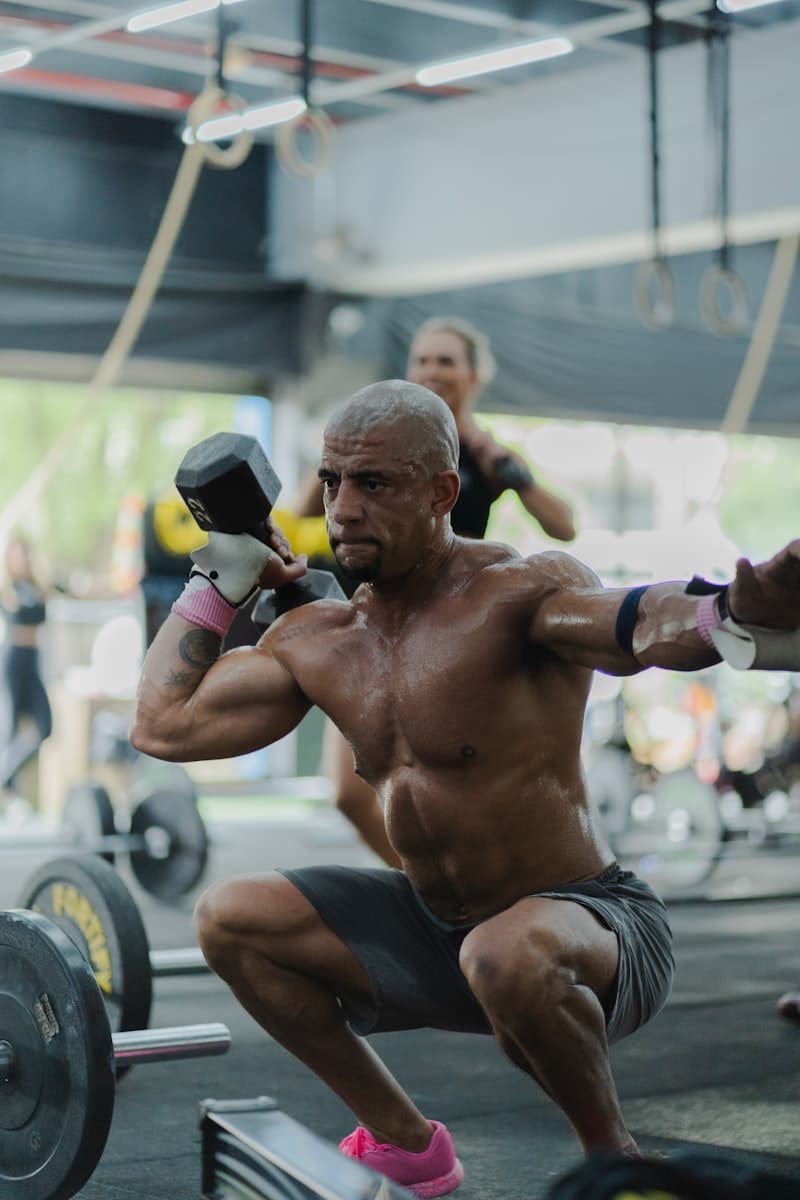
If you're looking for the best exercises to start strength training, the answer is simpler than most fitness influencers make it sound. You don't need a dozen isolation exercises. You need a small set of compound movements that work multiple muscle groups at once.
Here are the six fundamental movement patterns, with gym and home variations for each:
| Movement Pattern | Gym Exercise | Home Alternative | Primary Muscles |
|---|---|---|---|
| Squat | Goblet Squat | Bodyweight Squat | Quads, glutes, core |
| Hip Hinge | Romanian Deadlift | Glute Bridge | Hamstrings, glutes, lower back |
| Upper Push | Dumbbell Bench Press | Push-Up (or knee push-up) | Chest, shoulders, triceps |
| Upper Pull | Dumbbell Row | Resistance Band Row | Back, biceps, rear delts |
| Core | Plank | Plank | Transverse abdominis, obliques |
| Lunge | Reverse Lunge | Reverse Lunge (bodyweight) | Quads, glutes, balance |
Let's walk through each one with quick form cues.
Goblet Squat. Hold a dumbbell vertically against your chest, elbows pointing down. Sit back and down as if you're lowering into a chair. Keep your chest up and your knees tracking over your toes. Press through your heels to stand. This is arguably the best beginner squat variation because the front-loaded weight naturally encourages good posture.
Romanian Deadlift (RDL). Hold a dumbbell in each hand in front of your thighs. With a slight bend in your knees, hinge at your hips and lower the weights along the front of your legs until you feel a stretch in your hamstrings. Squeeze your glutes to return to standing. The RDL teaches the hip hinge pattern, which is essential for both performance and lower back health.
Dumbbell Bench Press. Lie on a flat bench with a dumbbell in each hand at chest level. Press both weights up until your arms are extended, then lower with control. If you don't have a bench, the floor press works too -- just lie on the floor, which also protects your shoulders by limiting range of motion.
Dumbbell Row. Place one hand and one knee on a bench, back flat. Hold a dumbbell in the other hand and pull it toward your hip, squeezing your shoulder blade back. Lower with control. This is one of the best strength training exercises for building a strong back.
Plank. Rest on your forearms and toes, body in a straight line from head to heels. Brace your core like someone is about to poke you in the stomach. Hold. Simple but effective.
Reverse Lunge. Step backward into a lunge, lowering your back knee toward the floor. Push off your front foot to return to standing. Reverse lunges are easier on the knees than forward lunges, making them a better choice for beginners.
When it comes to progressive overload and improving performance over time, creatine is one of the most well-researched supplements available -- over 500 studies support its safety and effectiveness.
Beginner Strength Training Plan (3 Days/Week)

If you're wondering how often should beginners lift weights, the research points to three days per week as the sweet spot. It's enough volume to drive progress, with enough rest built in for recovery.
This beginner strength training plan uses an alternating Day A / Day B format. Each session targets the full body. You train three non-consecutive days per week -- for example, Monday, Wednesday, and Friday.
Day A
| Exercise | Sets | Reps | Rest |
|---|---|---|---|
| Goblet Squat | 3 | 8-12 | 90s |
| Dumbbell Bench Press | 3 | 8-12 | 90s |
| Dumbbell Row | 3 | 8-12 | 60s |
| Romanian Deadlift | 3 | 8-12 | 90s |
| Plank | 3 | 20-30s | 60s |
Day B
| Exercise | Sets | Reps | Rest |
|---|---|---|---|
| Reverse Lunge | 3 | 8-12/leg | 90s |
| Overhead Press (dumbbell) | 3 | 8-12 | 90s |
| Lat Pulldown (or band pull-down) | 3 | 8-12 | 60s |
| Glute Bridge | 3 | 10-15 | 60s |
| Side Plank | 3 | 15-20s/side | 60s |
Weekly Schedule
| Week | Monday | Wednesday | Friday |
|---|---|---|---|
| Week 1 | Day A | Day B | Day A |
| Week 2 | Day B | Day A | Day B |
This alternating pattern continues, so you're hitting every movement pattern at least twice per week. Each session should take roughly 30-45 minutes including warm-up.
How to Progress
Here's the part most beginners miss: you need to gradually increase the challenge. This is progressive overload, and it's the engine that drives results.
- Week 1-2: Focus entirely on form. Use weights that feel easy. You should finish every set feeling like you could do 3-4 more reps.
- Week 3-4: Start adding weight in small increments (1-2 kg for upper body, 2-4 kg for lower body). If you can't complete 8 reps with good form, the weight is too heavy.
- Week 5+: Aim to add weight or reps each session. If you hit 12 reps across all 3 sets, increase the weight next time.
Don't overthink it. The goal is to do a little more than last time. That's it.
Strength Training at Home (No Equipment Needed)

You don't need a gym membership to start strength training for beginners at home. Bodyweight exercises can build meaningful strength, especially in your first few months. The key is knowing how to make them progressively harder over time.
Here's a simple progression ladder for the fundamental movements:
Squat progression:
- Bodyweight squat (both feet on the floor)
- Pause squat (hold the bottom position for 2-3 seconds)
- Split squat (one foot forward, one back)
- Bulgarian split squat (back foot elevated on a chair or couch)
Push progression:
- Wall push-ups (hands on a wall, feet close)
- Incline push-ups (hands on a sturdy table or counter)
- Knee push-ups (hands on the floor)
- Full push-ups
Pull progression:
- Doorway row (grab a doorframe, lean back, pull forward)
- Towel row (loop a towel around a sturdy pole or handle)
- Resistance band row
- Inverted row (under a sturdy table)
Hinge progression:
- Glute bridge (both feet on the floor)
- Single-leg glute bridge
- Glute bridge with a 2-second pause at the top
- Nordic curl (advanced -- hold for when you're ready)
Minimal Equipment Worth Buying
If you want to invest a small amount, these three items cover most of what you need:
- Resistance bands ($15-25) -- versatile, portable, and effective for pull exercises at home
- A single pair of adjustable dumbbells ($40-80) -- opens up a huge range of exercises
- A yoga mat ($15-20) -- makes floor exercises more comfortable
You don't need all three to start. Even a single set of resistance bands makes strength training without equipment much more effective by adding a pulling element that's hard to replicate with bodyweight alone.
The home/gym hybrid approach works well too: start at home to build confidence and basic strength, then transition to a gym when you feel ready. There's no rush.
Strength Training vs Cardio for Fat Loss
This is one of the most debated questions in fitness: strength training vs cardio for fat loss -- which one wins?
The short answer is that both matter, but they work in different ways. And if you're only doing one, you're leaving results on the table.
Here's the key distinction:
| Factor | Strength Training | Cardio |
|---|---|---|
| Calorie burn during session | Moderate | High |
| Calorie burn after session | Elevated for hours (EPOC effect) | Returns to baseline quickly |
| Muscle preservation | Preserves and builds lean muscle | May break down muscle if excessive |
| Long-term metabolism | Increases (more lean mass = higher resting calorie burn) | Minimal effect |
| Best for fat loss | Combined with cardio | Combined with strength |
Cardio burns more calories during the session. A 30-minute jog might burn 250-350 calories, while a 30-minute strength session might burn 150-250. But strength training triggers something called EPOC (excess post-exercise oxygen consumption) -- your body continues burning extra calories for hours after the session as it repairs muscle tissue.
More importantly, does strength training help you lose weight? Yes, but largely by changing your body composition rather than by burning huge numbers of calories during the session. Resistance training is particularly good at preserving (and building) lean muscle while you lose fat -- something that pure dieting or excessive cardio can undermine. Controlled trials show that both resistance and aerobic training reduce visceral fat (the metabolically harmful fat around your organs), with the best results typically coming from combining the two -- as in this 12-month randomized trial in adults with prediabetes where supervised resistance training significantly reduced visceral adipose tissue.
There's also the concept of body recomposition -- losing fat while simultaneously gaining muscle. For beginners, this is not only possible, it's the expected outcome during the first 3-6 months of consistent training. Your body is responding to a new stimulus and has plenty of room to adapt.
Our recommendation: 3 days of strength training per week, plus 1-2 days of moderate cardio (walking, cycling, swimming). You don't need to choose one over the other. Together, they work better than either one alone.
For reducing exercise-induced inflammation and supporting recovery between sessions, omega-3 fatty acids have strong evidence behind them.
Nutrition and Supplements for Beginner Lifters

You can't out-train a bad diet. Nutrition doesn't need to be complicated, but there are a few basics every beginner lifter should know. When it comes to strength training for beginners, what you eat is just as important as how you train.
Protein: Your Top Priority
If there's one nutritional change that makes the biggest difference for strength training for beginners, it's eating enough protein. The IOC consensus review by Phillips and Van Loon (2011) and a large 2018 meta-analysis by Morton and colleagues in the British Journal of Sports Medicine both support roughly 1.6 grams of protein per kilogram of body weight per day as the point where added muscle benefits plateau, with a practical target range of about 1.6-2.2 g/kg for those training hard. (The Morton analysis pinpointed a breakpoint near 1.62 g/kg above which extra protein produced no further gains in lean mass.)
For a 70 kg (154 lb) person, that's roughly 112-154 grams per day. Spread it across meals -- aim for 25-40 grams per meal to maximize muscle protein synthesis.
For a complete list of protein-rich foods ranked by science, see our High Protein Foods guide.
Pre and Post-Workout Nutrition
The "anabolic window" -- the idea that you must consume protein within 30 minutes of training -- is wider and less critical than people think. A meta-analysis by Schoenfeld and colleagues in the Journal of the International Society of Sports Nutrition found that total daily protein intake matters far more than precise timing for muscle gains.
That said, eating something 1-2 hours before training (carbs + protein) gives you energy, and eating a protein-containing meal within a few hours after training supports recovery. Don't stress the exact timing. Just don't train on an empty stomach if you can help it, and eat a real meal sometime after.
Supplements Worth Considering
Most supplements are unnecessary for beginners. But a few have enough evidence to be worth mentioning:
- Creatine monohydrate -- the most studied sports supplement in history. 3-5 grams per day. Safe, effective, and cheap. Our Creatine for Women guide covers the full science, dosage, and common myths.
- Protein powder -- not mandatory, but convenient. A scoop after training or in a morning smoothie helps you hit your daily target without extra cooking.
- Omega-3 (fish oil) -- supports exercise recovery and reduces inflammation. Our Omega-3 guide explains the evidence and how to choose a quality product.
- Magnesium -- involved in over 300 enzymatic reactions, including muscle contraction and relaxation. Also supports sleep quality, which is when your body actually recovers. See our comparison guide to find the right form of magnesium for you.
Quick nutrition checklist for beginners:
- Eat 1.6-2.2 g protein per kg body weight, spread across meals
- Have a carb + protein meal 1-2 hours before training
- Eat a protein-containing meal within a few hours after training
- Stay hydrated -- aim for at least 2-3 liters of water per day
- Don't overthink supplements -- protein, creatine, and maybe omega-3 cover the basics
Recovery Tips Every Beginner Needs
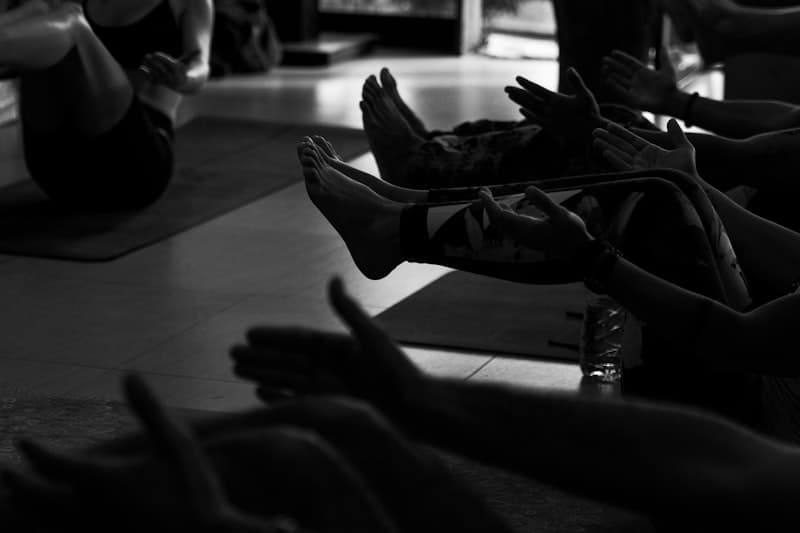
Here's something most beginners don't realize: muscles don't grow during training. They grow during recovery. Your workout is the stimulus. Sleep, nutrition, and rest are where the actual adaptation happens.
Sleep. This is non-negotiable. A 2025 systematic review in Sleep and Breathing found that sleep loss and sleep deprivation tend to impair muscle strength, power, and endurance (though results across studies are mixed), likely by raising cortisol and lowering anabolic hormones. Aim for 7-9 hours per night. If you're consistently getting less than 6, you're likely undermining your training regardless of how hard you work in the gym.
Rest days. The 3-day-per-week plan above intentionally spaces sessions at least 48 hours apart. Use your rest days for light activity -- walking, stretching, or nothing at all. Your body needs that time to repair muscle tissue and replenish energy stores.
Active recovery. Gentle movement on rest days -- a 20-minute walk, some light stretching, or foam rolling -- can reduce muscle soreness and improve circulation without adding stress to your system.
Cold and heat therapy. Cold water immersion and sauna use are increasingly popular among lifters for reducing inflammation and speeding recovery. Our Cold Plunge vs Sauna guide breaks down the science behind both approaches.
Don't ignore pain. Muscle soreness (DOMS) is normal, especially in the first 1-2 weeks. Sharp pain, joint pain, or pain that worsens during an exercise is not normal. If something hurts in a way that feels wrong, stop and assess. Pushing through real pain leads to injuries that can set you back weeks or months.
Common Beginner Mistakes (and How to Avoid Them)
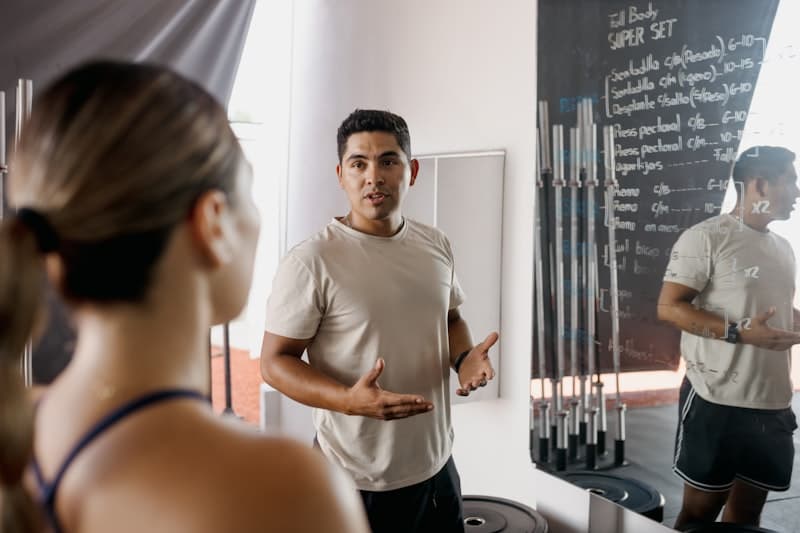
We've seen the same patterns repeat over and over with new lifters. Here are five of the most common -- and what to do instead.
Mistake 1: Starting Too Heavy
You walk into the gym, see someone loading plates onto a barbell, and think you should do something similar. Don't.
Do this instead: Start with weights that feel almost too light. Your first 2-3 weeks are for learning form, not testing strength. If you can't complete every rep with proper technique, the weight is too heavy. Period.
Mistake 2: Skipping Warm-Ups
Cold muscles and joints are injury magnets. Five minutes of dynamic movement -- arm circles, leg swings, bodyweight squats, walking lunges -- is all it takes.
Do this instead: Treat your warm-up as part of the workout. Start with 2-3 minutes of light cardio (brisk walk, rowing machine, cycling), then do a few dynamic stretches that mimic the exercises in your session. It takes five minutes and prevents problems that can last for months.
Mistake 3: Program Hopping
You try a program for two weeks, see a different one on Instagram, switch to that, then find another one a week later. Sound familiar?
Do this instead: Pick one program and commit to it for at least 8-12 weeks. Consistency beats variety every time. Your muscles need repeated exposure to the same stimulus to adapt. Jumping between programs prevents that adaptation from happening.
Mistake 4: Ignoring Recovery
More is not always better. Training 6 days a week as a beginner doesn't make you dedicated -- it makes you tired.
Do this instead: Train hard 3 days per week and recover hard the other 4. Sleep well, eat enough protein, and let your body do its job. As we covered earlier, muscles grow during rest, not during training.
Mistake 5: Comparing Yourself to Others
The person next to you squatting 100 kg has probably been training for years. Comparing your week-one lifts to their year-three lifts is a recipe for frustration.
Do this instead: Track your own progress. If you're lifting more than you were last month -- even a little -- you're winning. Strength training is a personal progression. The only person you need to beat is who you were last week.
References
- Momma H, et al. Muscle-strengthening activities are associated with lower risk and mortality in major non-communicable diseases: a systematic review and meta-analysis of cohort studies. British Journal of Sports Medicine, 2022.
- Gordon BR, et al. Association of Efficacy of Resistance Exercise Training With Depressive Symptoms: Meta-analysis and Meta-regression Analysis of Randomized Clinical Trials. JAMA Psychiatry, 2018.
- Khalafi M, et al. Effect of 12-Month Resistance Training on Changes in Abdominal Adipose Tissue and Metabolic Variables in Patients with Prediabetes: A Randomized Controlled Trial. Journal of Diabetes Research, 2019.
- Phillips SM, Van Loon LJC. Dietary protein for athletes: from requirements to optimum adaptation. Journal of Sports Sciences, 2011.
- Morton RW, et al. A systematic review, meta-analysis and meta-regression of the effect of protein supplementation on resistance training-induced gains in muscle mass and strength in healthy adults. British Journal of Sports Medicine, 2018.
- Schoenfeld BJ, Aragon AA, Krieger JW. The effect of protein timing on muscle strength and hypertrophy: a meta-analysis. Journal of the International Society of Sports Nutrition, 2013.
- Implications of sleep loss or sleep deprivation on muscle strength: a systematic review. Sleep and Breathing, 2025.
Getting Started Today
Let's bring it all together.
Strength training for beginners comes down to this: learn a handful of fundamental exercises, follow a simple plan three days per week, eat enough protein, sleep well, and be patient. That's the formula. It's not flashy, but decades of research confirm it works. The beauty of strength training for beginners is that you don't need to be an athlete or spend hours in the gym. You just need to start.
The research is clear on the benefits. You'll build muscle. You'll strengthen your bones. You'll improve your mental health. You'll boost your metabolism. And if you stick with it, you'll reduce your risk of chronic disease and add years to your life.
Here's what we'd suggest as your next step: pick Day A from the plan above. Do it this week. Start light, focus on form, and write down what you did. Then do Day B two days later. Repeat. Don't overthink it -- just start.
Consistency beats intensity. Showing up three times per week for six months will change how you look and feel more than any complicated program or expensive supplement ever could.
A few resources to support your journey:
- Build your meals around high-protein foods -- our guide makes it easy
- Support your training with creatine, magnesium, and omega-3 -- three supplements with the strongest evidence
- Recovery matters as much as training -- see our Cold Plunge vs Sauna guide for science-backed recovery protocols
Pick a day. Start. You'll be glad you did.
High Protein Foods: Complete Science-Backed Guide (2026)
Next →Dehumidifier vs Clothes Dryer: Complete Comparison Guide (2026)


