Air Fryer vs Microwave: Which Is Actually Healthier? What Science Says (2026 Guide)
Air fryer vs microwave: which is healthier? Compare nutrition, taste, energy, and safety in this science-backed 2026 guide.
Air Fryer vs Microwave: Which Is Actually Healthier? What Science Says (2026 Guide)

If you own a kitchen, you have probably asked yourself this question at least once: "Should I use the air fryer or the microwave?" Maybe you are staring at last night's pizza, wondering which button to press. Maybe you are trying to eat healthier and wondering if that air fryer you bought on impulse was actually worth it. Or maybe your counter space is limited and you are deciding which appliance deserves the prime real estate.
Over 60% of American households now own an air fryer, and more than 90% have a microwave. That means the air fryer vs microwave question is playing out in millions of kitchens every single day. And unlike a lot of kitchen debates, this one actually has a scientifically interesting answer -- because these two appliances cook food in fundamentally different ways, and those differences matter for nutrition, taste, safety, and your electricity bill.
As part of our ongoing home appliance comparison series -- where we have already tackled robot vacuums vs stick vacuums -- this guide takes a deep, science-backed look at how air fryers and microwaves really compare. No marketing fluff, no tribal loyalty to either appliance. Just the facts, the research, and an honest assessment of which one wins in different situations.
Quick Answer -- Which One Is Actually Healthier?
Air fryers produce crispier, lower-fat food by circulating hot air at high speed -- think of it as a compact convection oven on steroids. Microwaves heat food by vibrating water molecules with electromagnetic radiation at 2.45 GHz, which is extremely fast but does not brown or crisp anything. On health metrics, air fryers win for reducing fat content and producing fewer harmful compounds in starchy foods, while microwaves actually preserve certain nutrients better due to shorter cooking times. Neither appliance makes food dangerous to eat. The "healthier" choice depends entirely on what you are cooking and what you care about most.
If you want the nuance behind that summary -- and you should, because the details are genuinely surprising -- keep reading.
| Air Fryer | Microwave | |
|---|---|---|
| Best for | Crispy texture, lower-fat cooking, roasting, baking | Speed, reheating, liquids, energy efficiency |
| Cooking mechanism | Rapid hot air circulation (convection) | Electromagnetic radiation (2.45 GHz) |
| Typical power | 1,400--1,800 W | 700--1,200 W |
| Cooking time (typical) | 10--25 minutes | 30 seconds--5 minutes |
| Nutrient retention | Good (moderate heat, no water) | Excellent (very fast, minimal heat exposure) |
| Fat reduction | Excellent (up to 70--80% less than deep frying) | N/A (no fat reduction effect) |
| Texture quality | Crispy, golden, Maillard browning | Soft, sometimes soggy, no browning |
| Carcinogen risk | Moderate (acrylamide possible at high temps) | Low (minimal high-heat exposure) |
How Do They Actually Work? (The Science Behind Each Method)

Before we compare health effects, taste, or energy costs, you need to understand what is happening inside each appliance. The cooking mechanisms are completely different, and those differences drive everything else.
How an Air Fryer Cooks
An air fryer is, at its core, a small convection oven with a powerful fan. A heating element warms the air inside the cooking chamber, and a mechanical fan forces that hot air to circulate rapidly around the food at high speed. This fast-moving hot air accomplishes two things simultaneously:
- It transfers heat efficiently to the food surface through convection, cooking the outside quickly.
- It blows away the layer of moisture that naturally surrounds hot food, which allows the surface to dry out and crisp up.
This process triggers the Maillard reaction -- a chemical reaction between amino acids and reducing sugars that occurs at temperatures above roughly 280 degrees F (140 degrees C). The Maillard reaction is what gives browned food its distinctive flavor, golden color, and appealing aroma. It is the same reaction that makes toast taste like toast and seared steak taste like steak.
Most air fryers operate between 350 degrees F and 400 degrees F (175--200 degrees C), with some models reaching 450 degrees F. A thin layer of oil -- sometimes just a light spray -- is enough to accelerate browning and crispiness because oil transfers heat far more efficiently than air alone. But you are using a fraction of the oil that deep frying requires, which is where the health claims come from.
How a Microwave Cooks
A microwave oven works on a completely different principle. Inside every microwave is a device called a magnetron, which generates electromagnetic radiation at a frequency of 2.45 GHz -- that is 2.45 billion cycles per second. These microwaves bounce off the metal interior of the oven and penetrate the food, where they are absorbed primarily by water molecules.
When water molecules absorb this energy, they vibrate rapidly. That vibration creates friction between molecules, and friction generates heat. The heat then spreads through the food by conduction -- from the heated outer layers inward. This is why the FDA notes that microwaves do not actually cook food "from the inside out," which is a common misconception. The outer layers heat first via microwave energy, and then that heat conducts inward.
The key characteristics of microwave cooking:
- Extremely fast because energy is deposited directly into the water molecules throughout the food, not just at the surface
- No browning or crisping because the temperature rarely exceeds the boiling point of water (212 degrees F / 100 degrees C), well below the Maillard reaction threshold
- Uneven heating is common because microwaves do not penetrate deeply -- typically only 1 to 1.5 inches. Thicker foods can develop cold spots, which is a food safety concern the FDA specifically warns about
| Feature | Air Fryer | Microwave |
|---|---|---|
| Heat transfer method | Convection (hot air circulation) | Radiation (electromagnetic wave absorption) |
| Temperature range | 175--230 degrees C (350--450 degrees F) | Max ~100 degrees C (212 degrees F) in food |
| Browning (Maillard reaction) | Yes -- excellent | No |
| Penetration depth | Surface only (heat conducts inward) | 1--1.5 inches (water molecule vibration) |
| Primary benefit | Texture and flavor | Speed |
| Cooking speed | Moderate (10--25 min) | Fast (30 sec--5 min) |
Health Comparison: Is Air Fryer Actually Healthier Than Microwave?
This is the question that brings most people here, so let us break it down into the four factors that actually matter: nutrient retention, fat reduction, carcinogen formation, and chemical leaching from containers.
Nutrient Retention
Both the FDA and the World Health Organization have stated that microwave cooking does not reduce the nutritional value of food any more than conventional cooking methods. In fact, because microwaves cook food quickly and often without added water, they can actually preserve certain heat-sensitive nutrients -- particularly vitamin C and B vitamins -- better than methods that involve longer exposure to heat or boiling in water.
A study published in the International Journal of Food Sciences and Nutrition found that microwave cooking retained significantly more vitamin C in vegetables compared to boiling, because vitamin C is water-soluble and degrades with prolonged heat exposure. Short cooking time plus minimal water equals better vitamin C retention.
Air fryers also preserve nutrients reasonably well because they do not use water (no water-soluble vitamin leaching) and the cooking time is shorter than a conventional oven. However, the higher temperatures involved -- often 375--400 degrees F -- can cause some degradation of heat-sensitive vitamins at the food surface. For most nutrients, this is a minor effect.
Bottom line on nutrients: Microwaves have a slight edge for preserving heat-sensitive, water-soluble vitamins. Air fryers are still good. The difference is small enough that it should not drive your appliance choice unless you are cooking vegetables multiple times a day.
Fat Reduction -- Where Air Fryers Shine
This is the air fryer's clearest health advantage. Deep frying typically requires food to be submerged in oil heated to 350--375 degrees F. That oil is absorbed into the food, dramatically increasing calorie and fat content. A serving of deep-fried chicken wings can contain 15--20 grams of fat.
Air frying the same wings with just a light spray of oil produces a similar crispy texture with 70--80% less fat. Research published in the Journal of Food Science has confirmed that air-fried foods contain significantly less fat than their deep-fried counterparts while maintaining comparable sensory quality.
Microwaves do not reduce fat content in any meaningful way. They simply heat whatever fat is already present in the food. If you are trying to cut calories and reduce dietary fat -- particularly saturated fat from fried foods -- the air fryer is the clear winner.
Acrylamide and Carcinogen Formation
Here is where the picture gets more nuanced.
Acrylamide is a chemical compound classified as a "probable human carcinogen" by the International Agency for Research on Cancer (IARC). It forms in starchy foods -- potatoes, bread, crackers -- when they are cooked at high temperatures (above 248 degrees F / 120 degrees C) through the Maillard reaction. The longer and hotter the cooking process, the more acrylamide forms.
Research published in Food Chemistry has shown that air fryers do produce acrylamide in starchy foods like French fries, though at levels significantly lower than deep frying. A study found that air-fried French fries contained approximately 30--50% less acrylamide compared to deep-fried ones, largely because less oil means lower overall thermal load.
Microwaves, on the other hand, rarely reach temperatures high enough to trigger significant acrylamide formation. Since microwave heating typically stays near the boiling point of water, starchy foods cooked in a microwave have very low acrylamide levels. This is one of the microwave's genuine health advantages.
However -- and this matters -- most people are not eating microwave French fries because the results are terrible (more on that in the taste section). The real-world comparison is usually "air fryer fries vs deep-fried fries" or "air fryer fries vs oven-baked fries," and in both of those comparisons, the air fryer produces less acrylamide than the alternatives that actually taste good.
BPA and Plastic Leaching -- The Microwave Container Problem
This is a legitimate concern that does not get enough attention. When you heat food in a plastic container in the microwave, certain chemicals -- including bisphenol A (BPA) and phthalates -- can leach from the plastic into your food. Research published in Environmental Health Perspectives has linked BPA exposure to endocrine disruption, reproductive problems, and increased cancer risk.
The FDA has stated that BPA-containing food containers approved for microwave use are safe at current exposure levels, but many health researchers and the American Academy of Pediatrics have expressed concerns about cumulative low-level exposure, particularly for children and pregnant women.
The solution is straightforward: use glass or ceramic containers in the microwave, and avoid any plastic that is not explicitly labeled "microwave safe." Air fryers do not have this issue because food is cooked in a metal basket or on a perforated tray -- no plastic contact.
| Health Factor | Air Fryer | Microwave |
|---|---|---|
| Nutrient retention | Good (short cook, no water leaching) | Very good (fast cook, minimal heat damage) |
| Fat reduction | Excellent (70--80% less fat vs deep frying) | No effect |
| Acrylamide formation | Moderate (lower than deep frying) | Very low (temps stay near boiling) |
| BPA/plastic leaching | No risk (metal basket) | Risk if using plastic containers |
| HCAs and PAHs | Low (no direct flame or smoke) | Very low |
Radiation Safety: Should You Worry About Your Microwave?
Here is the truth about microwave radiation. A lot of people are quietly nervous about it. The word "radiation" sounds alarming, and there is no shortage of internet articles claiming that microwaves cause cancer, destroy nutrients, or make food radioactive. Let us sort the facts from the fear.
What Kind of Radiation Are We Talking About?
This distinction is critical. There are two broad categories of electromagnetic radiation:
- Ionizing radiation -- X-rays, gamma rays, ultraviolet (UV) radiation. These have enough energy to knock electrons out of atoms, damage DNA directly, and cause cancer. This is the dangerous kind.
- Non-ionizing radiation -- Visible light, radio waves, infrared, and microwaves. These do not have enough energy to ionize atoms or damage DNA. Their primary effect on biological tissue is heating.
Microwave ovens use non-ionizing radiation at 2.45 GHz -- a frequency that is very good at making water molecules vibrate and generate heat. According to the FDA, microwaves "do not make food radioactive or contaminated." The WHO confirms this, stating explicitly that microwave energy does not remain in the food or the oven cavity after the oven is switched off. It behaves like light: turn off the light, and the light is gone.
Regulated Safety Standards
The FDA has regulated microwave oven manufacturing since 1971. Federal standard 21 CFR 1030.10 limits microwave leakage to no more than 5 milliwatts per square centimeter (mW/cm2) at approximately 2 inches from the oven surface. This limit is far below the level known to cause harm to people. Furthermore, microwave energy drops off dramatically with distance -- at 20 inches away, you would receive roughly 1/100th of the radiation measured at 2 inches.
All microwave ovens sold in the United States must have two independent interlock systems that stop microwave production the instant the door is opened, plus a monitoring system as a backup. The FDA tests ovens in its own laboratories and evaluates manufacturer quality control programs.
The Real Risks
The documented injuries from microwave ovens are overwhelmingly thermal burns from hot food, super-heated water erupting from cups, and steam burns -- not radiation exposure. The FDA receives reports of burns from overheated liquids and exploding foods like eggs in shells, but radiation injuries are exceedingly rare and almost always linked to damaged or improperly serviced ovens.
The bottom line on microwave safety: Your microwave is not giving you cancer. It is not making your food radioactive. The radiation it produces cannot damage DNA. The real safety concerns are the same as any hot appliance -- do not burn yourself, and do not use it if the door seal is damaged.
Air fryers have their own safety considerations, by the way. The exterior surfaces get extremely hot during operation, and reaching into the basket immediately after cooking can cause contact burns. Both appliances require basic common-sense precautions.
Taste, Texture, and Frozen Food Results: Why Your Food Tastes Different
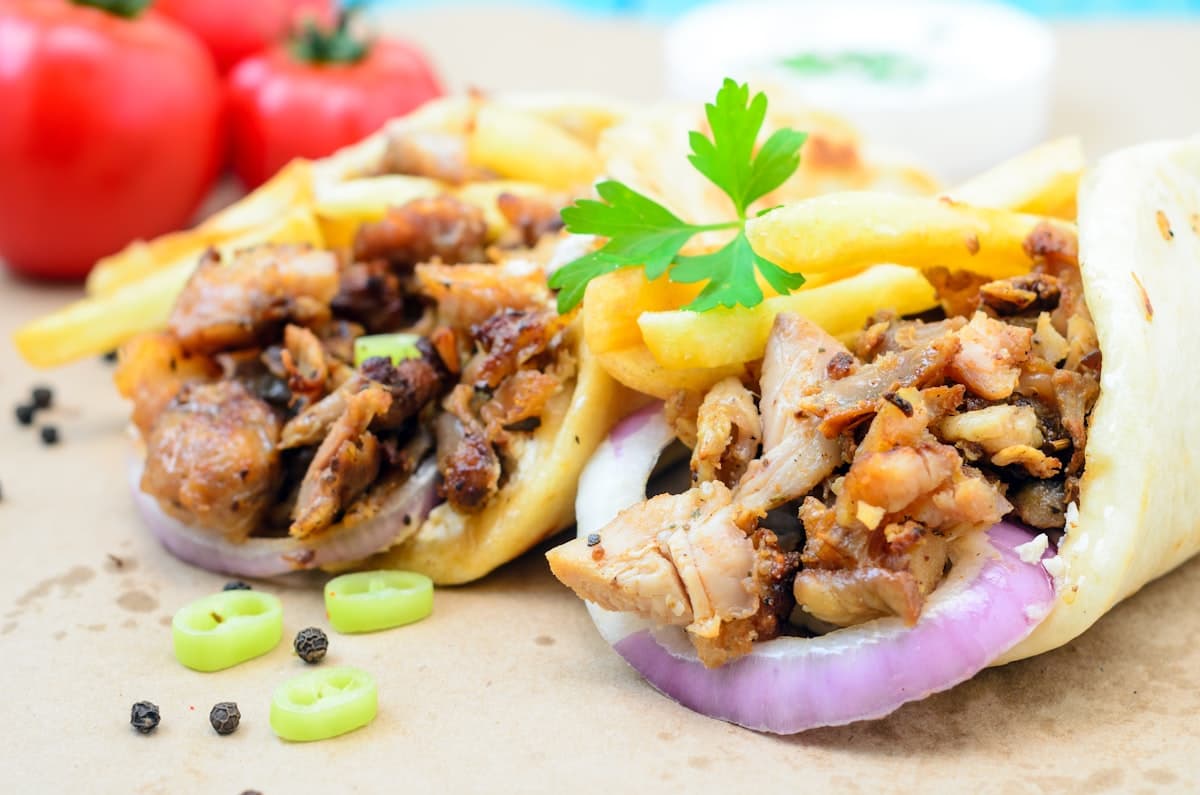
If health were the only factor that mattered, we would all be eating steamed broccoli for every meal. But taste and texture matter -- a lot. And this is where the air fryer vs microwave comparison gets decisive for most people.
Why the Air Fryer Makes Food Crispy
The air fryer's rapid hot air circulation strips away surface moisture and triggers the Maillard reaction. This produces a golden-brown crust that is genuinely similar to deep frying -- not identical, but surprisingly close. The outside is crispy and slightly caramelized, while the inside stays moist if you time it right.
This works brilliantly for:
- French fries and potato wedges -- crispy outside, fluffy inside
- Chicken wings and thighs -- golden, crackly skin
- Breaded foods -- fish sticks, chicken tenders, mozzarella sticks
- Roasted vegetables -- slightly charred edges with tender centers
- Reheated fried foods -- leftover pizza and fried chicken regain their crunch
Why the Microwave Makes Food Soggy
Microwaves heat by vibrating water molecules. As those water molecules heat up, they turn to steam. But because the microwave is an enclosed space with no airflow, that steam has nowhere to go -- it condenses right back onto the food surface. The result is a soft, often soggy exterior.
This is why pizza reheated in the microwave has a floppy, damp crust. It is why fried chicken comes out with rubbery skin. It is why French fries turn limp and sad. The microwave excels at heating food through, but it is fundamentally incapable of creating or maintaining a crispy texture.
However, the microwave has its own textural strengths. It excels at:
- Steaming vegetables -- perfectly tender-crisp if timed right
- Melting butter and chocolate -- smooth and even
- Heating soups and liquids -- the microwave's killer feature
- Softening brown sugar -- a slice of bread and 30 seconds works magic
- Cooking grains and oats -- quick oatmeal in 2 minutes
Food-by-Food Comparison
| Food | Air Fryer Result | Microwave Result | Winner |
|---|---|---|---|
| French fries | Crispy, golden | Soggy, limp | Air fryer |
| Pizza (reheat) | Crispy crust, melted cheese | Floppy crust, rubbery cheese | Air fryer |
| Fried chicken | Crispy skin restored | Rubbery, wet skin | Air fryer |
| Frozen mozzarella sticks | Golden, crunchy breading | Split open, cheese leaking | Air fryer |
| Soup / chili | Not suitable (open basket) | Piping hot in 2 minutes | Microwave |
| Steamed broccoli | Roasted, slightly charred | Tender, bright green | Tie (different styles) |
| Melted butter | Too hot, browns the butter | Perfectly melted | Microwave |
| Frozen burrito | Crispy tortilla, hot filling | Soft tortilla, possible cold spots | Air fryer |
| Leftover rice | Slightly crunchy edges | Steaming hot, fluffy | Microwave |
| Bread / rolls | Crusty exterior, warm center | Soft but sometimes tough | Air fryer |
Cooking Time: Speed vs Quality Trade-Off
If speed is your top priority, the microwave wins and it is not close. Here is how typical foods compare:
| Food | Microwave Time | Air Fryer Time | Speed Winner |
|---|---|---|---|
| Reheat leftover pizza | 45--60 seconds | 3--4 minutes | Microwave (5x faster) |
| Heat a bowl of soup | 2--3 minutes | Not recommended | Microwave |
| Cook frozen French fries | Not practical | 12--15 minutes | Air fryer (only option) |
| Reheat fried chicken | 1--2 minutes (soggy) | 4--5 minutes (crispy) | Depends on your priority |
| Cook chicken breast | 6--8 minutes (uneven) | 18--22 minutes | Microwave (faster) |
| Melt butter | 20--30 seconds | Not recommended | Microwave |
| Reheat a full dinner plate | 2--3 minutes | 5--7 minutes | Microwave |
| Cook frozen mozzarella sticks | Not practical | 6--8 minutes | Air fryer (only option) |
| Roast vegetables | Not practical | 10--15 minutes | Air fryer (only option) |
The pattern is clear: the microwave is 3 to 10 times faster for reheating and basic heating tasks. The air fryer takes longer, but for foods where texture matters, it delivers dramatically better results. The question is whether you value your 3 extra minutes or your crispy pizza crust more.
One practical note: air fryers typically require 2--3 minutes of preheating, which adds to the total time. Some newer models skip preheating for certain foods, but for best results, especially with breaded items, preheating makes a real difference.
Energy Consumption: Which One Saves More on Your Electricity Bill?

This comparison requires looking at both the power rating of each appliance and how long it runs. A 1,500-watt air fryer running for 20 minutes uses more total energy than a 1,000-watt microwave running for 2 minutes, even though the air fryer's wattage is only 50% higher. Time is the multiplier.
Let us do the math with average U.S. electricity rates (approximately $0.16 per kWh as of early 2026):
| Metric | Air Fryer | Microwave |
|---|---|---|
| Typical wattage | 1,400--1,800 W | 700--1,200 W |
| Average cooking session | 15 minutes | 2 minutes |
| Energy per session | ~0.375 kWh | ~0.028 kWh |
| Cost per session | ~$0.06 | ~$0.005 |
| Monthly cost (1x daily use) | ~$1.80 | ~$0.15 |
| Monthly cost (3x daily use) | ~$5.40 | ~$0.45 |
The microwave uses roughly 10--15 times less energy per cooking session than the air fryer, primarily because it finishes so much faster. Over a year of daily use, the microwave might cost you $2--6 in electricity, while the air fryer might cost $20--65. Neither number is going to break your budget, but if you are conscious about electricity costs, the difference adds up.
That said, the air fryer is significantly more energy-efficient than a full-sized conventional oven, which typically draws 2,000--5,000 watts and runs for 30--60 minutes. If you are choosing between the air fryer and the oven, the air fryer saves a considerable amount of energy. So the comparison depends on what you are replacing.
If energy costs across different home appliances interest you, our dehumidifier vs clothes dryer energy comparison breaks down another common household appliance energy debate.
Quick Comparison Table: Air Fryer vs Microwave at a Glance
| Factor | Air Fryer | Microwave |
|---|---|---|
| Cooking mechanism | Rapid hot air circulation (convection) | Electromagnetic radiation (2.45 GHz) |
| Typical cooking time | 10--25 minutes | 30 seconds--5 minutes |
| Power consumption | 1,400--1,800 W | 700--1,200 W |
| Energy efficiency | Moderate (more than microwave, less than oven) | Excellent (lowest energy per use) |
| Nutrient retention | Good | Very good to excellent |
| Fat reduction | Excellent (vs deep frying) | No effect |
| Carcinogen risk | Moderate (acrylamide at high temps) | Very low |
| Food texture | Crispy, golden, browned | Soft, sometimes soggy, no browning |
| Best foods | Fries, wings, breaded items, roasted veg | Soups, liquids, steamed veg, reheating |
| Cannot do well | Soups, liquids, melting butter/ chocolate | Crispy foods, browning, baking |
| Cleaning difficulty | Moderate (basket + drawer to wash) | Easy (wipe interior) |
| Counter space needed | Medium to large | Medium |
| Noise level | Moderate (fan noise, ~55--65 dB) | Low (~40--50 dB) |
| Entry price | $50--100 (budget), $100--200 (mid-range) | $50--80 (budget), $80--150 (mid-range) |
| Safety concerns | Hot surfaces, contact burns | Super-heated water, uneven heating |
Can an Air Fryer Replace Your Microwave for Reheating Food?
This is one of the most-searched questions on this topic, and the honest answer is: mostly, but not completely.
What an Air Fryer Can Replace
- Reheating most solid foods -- pizza, chicken, casseroles, roasted vegetables all reheat well
- Cooking frozen foods -- frozen fries, nuggets, fish sticks, spring rolls turn out better than in a microwave
- Simple baking -- cookies, small cakes, muffins (things a microwave cannot do at all)
- Roasting -- vegetables, small cuts of meat, nuts
- Toasting and browning -- garlic bread, reheating pastries, warming tortillas
What an Air Fryer Cannot Replace
- Heating liquids -- soup, coffee, tea, milk, sauce. The open basket design makes this impossible without a special accessory, and even then, it is inefficient
- Melting -- butter, chocolate, cheese (the air fryer will overheat and scorch these)
- Very quick reheating -- nothing beats 45 seconds in the microwave
- Large-volume cooking -- a microwave can heat a large casserole dish. Most air fryers have limited capacity (2--6 quarts)
- Steaming -- microwave steaming in a covered dish works beautifully. Air fryers cannot steam
My honest recommendation: If you have the counter space and budget for both, keep both. They complement each other perfectly -- the microwave for speed and liquids, the air fryer for texture and flavor. If you absolutely must choose one, think about what you cook most often. If you reheat a lot of leftovers and make soups, the microwave is the daily workhorse. If you cook a lot of frozen foods, want crispy textures, or are trying to eat less fried takeout, the air fryer gets more use.
Which One Should You Choose? (Purpose-Based Recommendations)
| Your Situation | Best Choice | Why |
|---|---|---|
| You want crispy, "fried" food without the guilt | Air fryer | 70--80% less fat than deep frying, similar crunch |
| You need food heated in under 2 minutes | Microwave | Nothing is faster for basic reheating |
| You are trying to eat healthier / lose weight | Air fryer | Makes healthy food taste good; replaces fried takeout |
| You cook a lot of frozen foods | Air fryer | Better texture, more even cooking, crispy results |
| You want to minimize electricity costs | Microwave | 10--15x less energy per use |
| You have limited counter space | Microwave (or compact air fryer) | Microwaves are more versatile per square inch |
| You heat soups, beverages, and liquids daily | Microwave | Air fryers cannot handle liquids |
| You want to bake, roast, or toast | Air fryer | Microwaves cannot brown or bake |
| You have kids who need quick snacks | Both | Microwave for hot cocoa and oatmeal; air fryer for chicken nuggets and fries |
| You want one appliance that does everything | Microwave | Wider range of basic tasks, even if texture is not perfect |
If you are someone who cares about the overall quality of your home environment -- not just the kitchen -- you might also want to check out our air purifier vs humidifier comparison for another practical home appliance decision that affects your daily life.
And if you are building out your appliance lineup, our robot vacuum vs stick vacuum guide can help you pick the right cleaning companion for your floors.
Frequently Asked Questions
Is air fryer healthier than microwave?
It depends on what "healthier" means to you. Air fryers reduce fat content dramatically compared to deep frying (70--80% less fat), which is a genuine health benefit. Microwaves preserve certain nutrients better due to shorter cooking times. On carcinogen risk, microwaves produce less acrylamide because they do not reach the high temperatures that trigger its formation. Overall, both are healthy cooking methods. The air fryer's main health advantage is making low-fat cooking taste good, which makes it easier to stick with healthier eating habits.
Can an air fryer replace a microwave?
For about 80% of common tasks -- yes. An air fryer can reheat most solid foods, cook frozen items, and even handle simple baking. But it cannot heat liquids (soup, coffee, milk), melt butter or chocolate quickly, or match the microwave's speed for basic reheating. If you rarely heat liquids and do not mind waiting an extra 3--5 minutes for reheated food, an air fryer can be your primary kitchen appliance. Most home cooks benefit from having both.
Does microwave food cause cancer?
No. This is one of the most persistent kitchen myths, and it is not supported by evidence. Microwave ovens use non-ionizing radiation, which cannot damage DNA the way ionizing radiation (X-rays, gamma rays) can. The FDA, WHO, and numerous independent scientific bodies have all concluded that microwave cooking is safe. The radiation does not remain in the food after cooking, and it does not make food radioactive. The real safety concerns with microwaves are thermal: super-heated water, steam burns, and uneven cooking that may leave cold spots where bacteria survive.
Which uses more electricity, air fryer or microwave?
The air fryer uses significantly more electricity per cooking session -- roughly 10--15 times more -- because it runs at higher wattage and for much longer. A typical air fryer session (1,500 W for 15 minutes) uses about $0.06 of electricity, while a typical microwave session (1,000 W for 2 minutes) uses about $0.005. Over a year of daily use, the air fryer costs roughly $20--65 in electricity versus $2--6 for the microwave. Neither is expensive, but the microwave is clearly more energy-efficient.
Can you reheat leftovers in an air fryer?
Yes, and for many foods, the results are better than the microwave. Pizza, fried chicken, French fries, roasted vegetables, and breaded foods all reheat with better texture in an air fryer. The key is to use a lower temperature (around 320--350 degrees F / 160--175 degrees C) and check frequently -- air fryers can go from "perfectly reheated" to "overcooked and dry" faster than you might expect. Most leftovers take 3--5 minutes in an air fryer at 350 degrees F.
Is air fryer food crispy like deep fried?
Close, but not identical. Air-fried food achieves a crispy exterior through the Maillard reaction and surface dehydration, which produces a satisfying crunch. However, deep frying creates a different kind of crust -- one that includes a thin layer of absorbed oil that contributes to a richer mouthfeel and slightly different flavor. Air-fried food is approximately 80--90% as crispy as deep-fried food, which is impressive for a method that uses a fraction of the oil. For most people, the trade-off is well worth it.
What foods should you never microwave?
Avoid microwaving whole eggs in their shells (they can explode due to steam buildup), hot peppers (the capsaicin can vaporize and create a burning aerosol), Styrofoam containers (they can melt and leach chemicals), aluminum foil and metal (they can cause arcing and damage the oven), and grapes or cherry tomatoes (they can spark due to electromagnetic resonance). The FDA also warns against overheating water in a clean cup, which can lead to super-heated water that erupts violently when disturbed.
Is it safe to use plastic in a microwave?
Only use containers explicitly labeled "microwave safe." Even then, some researchers recommend using glass or ceramic instead, because certain plastics can leach small amounts of BPA, phthalates, or other chemicals into food when heated. This is especially concerning for fatty foods, which absorb these chemicals more readily. The American Academy of Pediatrics has advised parents to avoid microwaving food or beverages in plastic containers, particularly for children. Glass and ceramic are the safest choices.
The Bottom Line
The air fryer vs microwave debate does not have a single winner because these appliances are designed to do different things. It is like asking whether a hammer is better than a screwdriver -- the answer depends on what you are trying to accomplish.
Get an air fryer if you want crispy food with less fat, you cook a lot of frozen items, you are trying to eat healthier by replacing fried takeout, or you want a compact alternative to your oven for roasting and baking.
Get a microwave if you need speed above all else, you heat soups and beverages daily, you want the most energy-efficient reheating option, or your counter space is limited and you need one versatile appliance.
Get both if you can. They complement each other beautifully. The microwave handles the quick stuff -- reheating coffee, melting butter, steaming vegetables, warming soup. The air fryer handles the quality stuff -- crispy leftovers, roasted vegetables, "fried" chicken without the guilt. Together, they cover almost every quick-cooking need a busy household has.
Neither appliance is a health hazard. Neither is a waste of money. The best kitchen appliance is the one you actually use, and that depends on how you cook, what you eat, and how much time you have.
Do you use an air fryer, a microwave, or both? Which one gets more love in your kitchen? Drop a comment and share your experience -- and check out our other home appliance comparisons while you are here.
Related guides:
- Improve your indoor air: Air purifier vs humidifier comparison
- Pick the right vacuum: Robot vacuum vs stick vacuum comparison
- Save on energy costs: Dehumidifier vs clothes dryer comparison
Probiotics vs Prebiotics: What's the Difference and Which One Do You Actually Need? (2026)
Next →Brown Rice vs White Rice: Which Is Actually Healthier? What Science Says (2026 Guide)