How Much Does It Cost to Run a Dehumidifier? Real Math (Watts × Hours × Your Rate)
Dehumidifier electricity cost, calculated: watts × hours × your rate. See 30/50/70-pint monthly costs by state, why some bills double, and how to cut it.
How Much Does It Cost to Run a Dehumidifier? The Real Math (Watts × Hours × Your Rate)
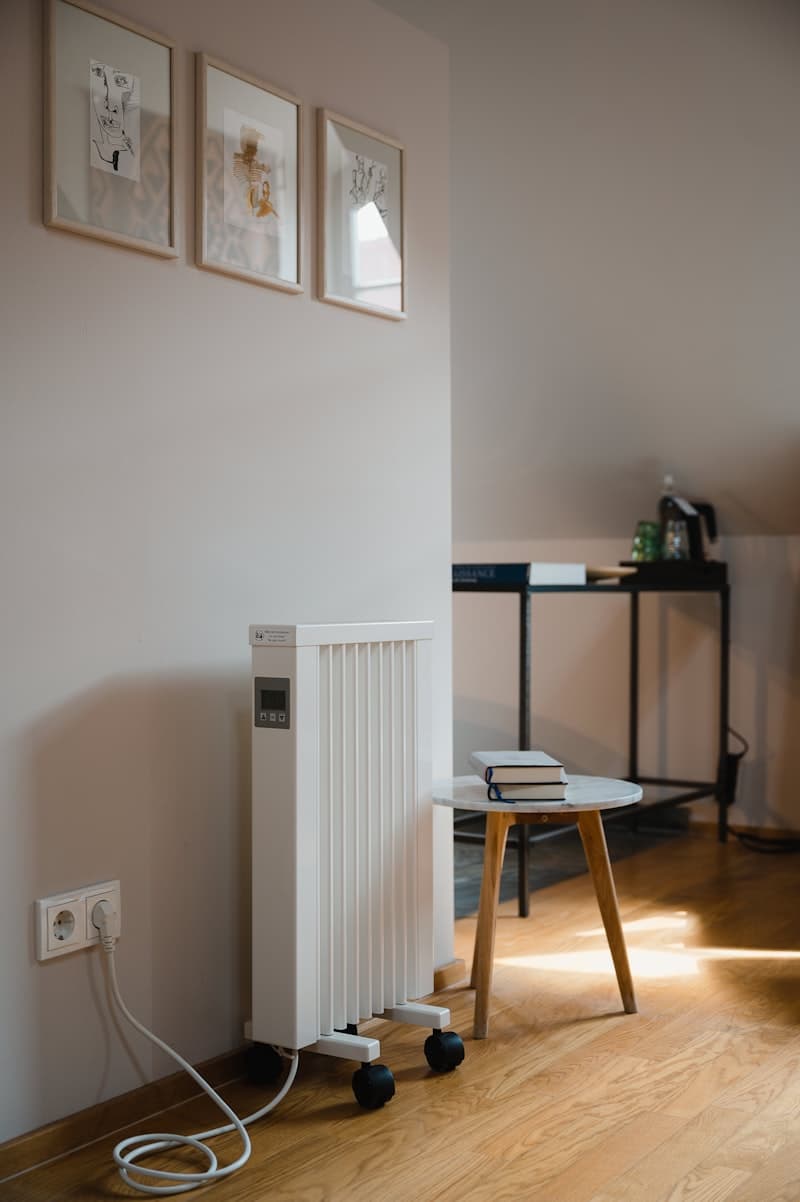
A few years of Reddit basement-humidity threads all start the same way. Someone plugs a dehumidifier in, runs it around the clock to fight that musty smell, and then opens a bill they don't recognize. One r/HomeImprovement post puts it bluntly: "Basement dehumidifier runs 24/7 — TRIPLED my electric bill." Another homeowner on r/homeowners watched their bill jump from $150–180 to $450 a month with a 24/7 unit that was, ironically, labeled "energy efficient."
Here's the thing, though: none of that is bad luck. It's multiplication. If you're wondering how much does it cost to run a dehumidifier, the answer comes down to three numbers you probably already have — your unit's wattage, how many hours a day it runs, and what your utility charges per kilowatt-hour. Once you have those, you can get to a monthly dollar figure in about 30 seconds.
The short answer for skimmers: a typical 50-pint dehumidifier running 24/7 costs roughly $30–$60 a month at average U.S. rates. Run it in Hawaii and it's closer to $190. Run it on a humidistat in Utah and it might be $25–30. The spread is enormous, which is exactly why your neighbor's bill and yours can look nothing alike.
So let's run the math together — formula first, then the size-by-size cost table, then state-by-state rates, and finally a reality check against actual meter readings people have posted online.
The 30-Second Formula (Calculate It Yourself)
Before anything else, here's the whole method. It's the same watts × hours math we used comparing air fryers and microwaves, just applied to a machine that never seems to turn off:
kWh per day = (watts ÷ 1,000) × hours run
Monthly cost = kWh per day × 30 × your rate ($/kWh)
Let's do one full example so you can see every step. Say you have a 50-pint basement unit that draws 500 watts, it runs 24 hours a day, and your utility charges $0.17/kWh:
- 500 W ÷ 1,000 = 0.5 kW
- 0.5 kW × 24 hours = 12 kWh per day (that's how much electricity a dehumidifier uses per day at this size, running flat-out)
- 12 kWh × 30 days = 360 kWh per month
- 360 kWh × $0.17 = $61.20 per month
That's it. No calculator app with ads, no "cost per pint" nonsense — just four lines.
Finding your wattage. Three places to look, in order of ease:
- The sticker on the back or bottom of the unit (sometimes listed as "input power" or amps — multiply amps × 120 for a rough watt figure)
- The manual or the manufacturer's spec page
- A plug-in power meter like a Kill-A-Watt, which is what users over on r/Sense do to get exact numbers instead of label numbers
Finding your rate. It's printed on your electric bill, usually in cents per kWh. The U.S. residential average was about 18.3¢/kWh as of mid-2026, but treat your own bill as the source of truth — it varies hugely by state, which we'll get to shortly.
Dehumidifier Wattage by Size (30, 50, 70 Pint)
Dehumidifiers are sold by water-removal capacity — pints per day — and wattage scales with it. Based on typical manufacturer specs across common models:
| Size class | Typical use | Wattage range | Representative watt |
|---|---|---|---|
| 30-pint | Bedroom, small office | 280–350 W | 300 W |
| 50-pint | Basement, living area | 450–600 W | 500 W |
| 70-pint | Whole basement, crawl space | 600–750 W | 650 W |
That lines up with what owners report, too — one r/homeowners thread pegs portable units at "350–650 watts depending on size."
One big caveat before the cost table: the compressor doesn't run at full power 100% of the time. A dehumidifier works in cycles — it pulls moisture until the air hits your target humidity, then idles (the fan may keep spinning, but the compressor, which is what eats the power, rests). How much of each hour it's actually working is called the duty cycle:
- Damp, open basement with no door: can genuinely approach 80–100%
- Closed room with a humidistat set to a sane target: often 30–60%
- Bone-dry room in winter: near 0% (it'll just sit there)
The cost tables below assume 100% duty cycle — treat them as the ceiling. Your real bill lands at or below these numbers depending on how wet your space is.
Monthly Cost Matrix: Size × Run Time
Here's the table this whole article exists for. Same math as above, at a flat $0.17/kWh, 30 days, 100% duty cycle:
| Size (watts) | 8 h/day | 12 h/day | 16 h/day | 24 h/day |
|---|---|---|---|---|
| 30-pint (300 W) | $12.24 | $18.36 | $24.48 | $36.72 |
| 50-pint (500 W) | $20.40 | $30.60 | $40.80 | $61.20 |
| 70-pint (650 W) | $26.52 | $39.78 | $53.04 | $79.56 |
Sample math so you can audit me: 300 W × 24 h = 7.2 kWh/day → × 30 = 216 kWh → × $0.17 = $36.72. ✓
For the "per day" crowd, at 24 h/day those rows work out to about $1.22/day (30-pint), $2.04/day (50-pint), and $2.65/day (70-pint).
Remember: humid basements often sit at 50–80% duty cycle rather than a full 100%, so a 50-pint unit cycling properly in a moderately damp space might realistically cost $30–50 a month instead of the full $61. The drier the room gets, the more the unit sleeps.
Your State Changes Everything (Same Unit, 2–4× the Cost)
Here's the part most cost estimates skip: that $0.17/kWh flat-rate assumption moves the total more than the machine itself does. Residential rates vary from roughly 13¢ to over 50¢ per kWh depending on where you live, and the U.S. Energy Information Administration tracks this monthly — the rates below are from the EIA's state-by-state average price table (June 2026, residential sector).
Same 50-pint unit, 500 W, 24 h/day = 360 kWh/month. Watch what the zip code does:
| State | Rate (¢/kWh) | Monthly cost (360 kWh) |
|---|---|---|
| Utah | 13.37¢ | $48.13 |
| North Dakota | 14.12¢ | $50.83 |
| Idaho | 14.37¢ | $51.73 |
| Florida | 15.10¢ | $54.36 |
| Texas | 15.94¢ | $57.38 |
| U.S. average | 18.34¢ | $66.02 |
| Ohio | 19.19¢ | $69.08 |
| Michigan | 22.99¢ | $82.76 |
| New York | 29.49¢ | $106.16 |
| Massachusetts | 29.61¢ | $106.60 |
| California | 34.74¢ | $125.06 |
| Hawaii | 52.72¢ | $189.79 |
(Costs = 360 kWh × state rate, rounded to the cent.)
Hawaii vs. Utah: same machine, same hours, nearly 4× the cost. This explains a big chunk of the "my bill doubled!!" posts — two people can run identical dehumidifiers identically and one pays $48 while the other pays $125. If you're on a tiered or time-of-use plan (common in California), your effective rate can run even higher than the state average shown here.
Does the Math Match Real Bills? Reddit Meter Data vs. Formula
Formulas are nice. Bills are real. So let's check the math against four data points people have actually posted — power meter readings and bill comparisons, not guesses:
| Source | What they measured | What the formula says | Match? |
|---|---|---|---|
| r/Sense (power meter) | 8–10 h/day → 130–150 kWh/month | 500 W × 9 h × 30 = 135 kWh | ✅ Dead on |
| r/homeowners | ~$40/month holding a basement at 60% humidity | Full-tilt ceiling = $61; at ~65% duty cycle ≈ $40 | ✅ Duty cycle explains it |
| r/homeowners | 500 W × 20 h/day at $0.25/kWh ≈ $2.50/day | 0.5 kW × 20 = 10 kWh × $0.25 = $2.50 | ✅ Identical method |
| r/HomeImprovement | "Tripled my electric bill," 24/7 operation | 24/7 + high-rate state + older inefficient unit | ✅ Multiplication, not malfunction |
The takeaway: the formula doesn't just approximate reality — meter readings land right on top of it. When someone's bill explodes, it's usually not a broken unit. It's the formula doing exactly what it says: a high-wattage machine, running continuously, in an expensive state, sometimes on a unit that predates modern efficiency standards.
Why "Energy Efficient" Labels Don't Always Save You
Modern dehumidifiers are rated by something called the Integrated Energy Factor (IEF) — liters of water removed per kWh of electricity. Higher is better, and you can compare certified models on the ENERGY STAR dehumidifier criteria page, where current thresholds (Version 6.0) run from 1.70 L/kWh for small 25-pint-class units and 2.01 L/kWh for 30–50-pint units up to 3.30 L/kWh for larger ones.
Two things worth knowing:
- Efficient ≠ cheap. IEF tells you how much water you get per kWh — not how many kWh you'll burn. A high-efficiency unit running 24/7 in a wet basement still racks up hundreds of kWh a month. It's the "energy efficient" Hisense in that doubled-my-bill thread — the label was true, and the bill still exploded, because hours × rate swamped the efficiency gain.
- Old units are quietly expensive. Federal efficiency standards tightened significantly in 2019. If your dehumidifier is 10+ years old, a current certified model can remove the same moisture meaningfully cheaper per liter — sometimes enough to matter over a humid season.
Think of IEF like miles-per-gallon: a fuel-sipping engine doesn't help if you're driving it across the country nonstop.
7 Ways to Cut the Cost Without Losing Dryness
Ranked roughly by how much they actually move the number:
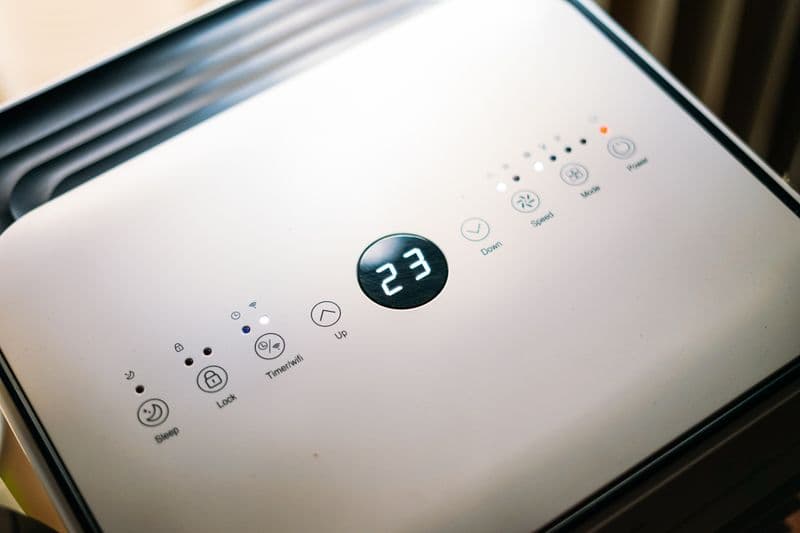
- Use the humidistat (or buy a unit with one). Letting the unit cycle off when it hits target humidity is the single biggest lever — it's the difference between 100% and 50% duty cycle, i.e., literally halving the bill. This is what the "$40/month basement" guy did.
- Don't over-dry. 50–60% RH is the standard target for basements. Chasing 40% just to be extra runs the compressor for hours with little benefit and can crack wood furniture.
- Set up continuous drainage. When the tank fills, most units shut off — while your humidity climbs back up and the machine plays catch-up later. A hose to a floor drain keeps the duty cycle smooth.
- Clean the filter and coils. A clogged filter makes the unit run longer to remove the same water. Two minutes, a few times a season.
- Close the room. Dehumidifying a basement with the door open to a humid stairwell is like bailing a boat with the plug out. Doors closed, windows closed.
- Put it on a timer or smart plug. If your utility has cheaper off-peak rates, or if nobody needs the basement dry at 3 a.m. anyway, schedule the hours. (Same phantom-load logic applies to always-on gear like chargers and robot vacuum docks — small draws add up.)
- Replace a 10+ year-old unit. Compare the IEF on the ENERGY STAR list; a modern unit can pay for a real slice of itself over a couple of humid seasons.
One more note for people running multiple machines: if you're running a humidifier or purifier in the same room as part of a seasonal swap, remember each device gets the same watts × hours × rate treatment. Purifiers are cheap (30–60 W); humidifiers depend on type — evaporative models cost a few dollars a month, while steam/warm-mist models can rival a small dehumidifier.
Bottom Line
- The math: monthly cost = watts ÷ 1,000 × hours × 30 × your rate. Four numbers, 30 seconds.
- The ballpark: a typical 50-pint unit at 24/7 is about $61/month at the $0.17 rate used in our matrix ($66 at the current U.S. average of 18.3¢) — but anywhere from ~$48 (Utah) to ~$190 (Hawaii) depending on your state.
- The fix: if the number scares you, the answer is almost never "buy a new machine" — it's cycle it with a humidistat and stop running it flat-out. That alone can halve the cost.
And if you're weighing whether running one of these against laundry makes sense, we ran a separate head-to-head on whether a dehumidifier beats a clothes dryer for drying clothes — same appliance, very different math.
Got a power meter reading or a bill shocker of your own? Run your numbers with the formula above and drop your watts × hours × rate in the comments — the more real-world data points, the better this guide gets.
References
- U.S. Energy Information Administration — Average Price of Electricity to Ultimate Customers by End-Use Sector, by State (Table 5.6.A, June 2026 data): https://www.eia.gov/electricity/monthly/epm_table_grapher.php?t=epmt_5_6_a
- ENERGY STAR — Dehumidifiers Key Efficiency Criteria (Integrated Energy Factor): https://www.energystar.gov/products/dehumidifiers/key_efficiency_criteria
Do Probiotics Survive Stomach Acid? The Mouth-to-Gut Survival Decoder (With CFU Math)
Next →Why Does NMN Keep Me Awake at Night? The NAD+ Timing Fix


