Epsom Salt Bath vs Ice Bath: Which Is Better for Muscle Recovery? (Science-Backed 2026 Guide)
Epsom salt bath vs ice bath — which is better? Compare DOMS relief, inflammation control, and contrast therapy in this science-backed 2026 guide.
Epsom Salt Bath vs Ice Bath: Which Is Better for Muscle Recovery? (Science-Backed 2026 Guide)
You just crushed a leg day. Your quads are screaming, your hamstrings are locked up, and you have two choices staring you down: a steaming hot Epsom salt bath or a bone-chilling ice bath. Your gym buddy swears by the ice. Your mom always told you to soak in Epsom salts. The internet has opinions on both. When you search for epsom salt bath vs ice bath advice, you get conflicting answers everywhere.
The global bath salt market -- driven largely by Epsom salt -- was valued at roughly $1.2 billion in 2024. On the cold side, the cold plunge tub market hit about $366 million and is projected to surpass $530 million by 2033. Both approaches have massive followings. But the information out there is a mess. Some articles treat Epsom salt like a magical cure-all. Others dismiss it entirely, claiming magnesium cannot be absorbed through the skin. On the ice bath side, you will find people calling it a miracle inflammation eraser right next to studies warning that it might blunt muscle growth.
I went through the clinical research on both -- the transdermal magnesium absorption studies, the cold water immersion trials for DOMS, the blood flow and lactate clearance data, and the contrast therapy protocols. What I found is that epsom salt bath vs ice bath is not a simple either-or question. They work through fundamentally different mechanisms, and the smartest recovery strategy depends on what kind of soreness you are dealing with, when you use them, and what your body needs.
This guide is part of our recovery and wellness series. We have already covered cold plunges in depth, compared cold plunge vs sauna, and broken down foam roller vs massage gun. This post tackles the fourth pillar: water-based therapy -- whether soaking in warm mineral water or freezing cold water does more for your muscles.
Quick Answer -- Epsom Salt Bath or Ice Bath for Recovery?
Epsom salt bath or ice bath for sore muscles? Epsom salt baths use warm water and magnesium sulfate to relax muscles through vasodilation and potential mineral absorption -- best for chronic tension, stress relief, and general soreness. Ice baths use cold water immersion to trigger vasoconstriction and reduce acute inflammation -- best for post-workout DOMS, acute swelling, and competitive athletes. When comparing ice bath vs hot bath for sore muscles, the answer depends entirely on timing and the type of soreness. For most people, using both at different times gives the best results.
| Epsom Salt Bath | Ice Bath | |
|---|---|---|
| Temperature | 98--104°F (37--40°C) warm | 50--59°F (10--15°C) cold |
| Active ingredient | Magnesium sulfate (Epsom salt) | Cold water (temperature) |
| Primary mechanism | Vasodilation + potential Mg absorption | Vasoconstriction + inflammation reduction |
| Blood flow effect | Increases circulation | Restricts then rebounds circulation |
| DOMS relief | Moderate (relaxation-based) | Strong (inflammation-based) |
| Muscle relaxation | Excellent (warmth + minerals) | Moderate (numbing effect) |
| Stress/anxiety relief | Excellent (warm + calming) | Good (dopamine/norepinephrine surge) |
| Cost per session | $0.50--$2.00 (salt) | $0--$5.00 (ice or chiller) |
| Setup ease | Easy (bathtub + salt) | Moderate (tub + ice/chiller) |
| Duration | 12--20 minutes | 10--15 minutes |
| Best timing | Evening / rest days | Immediately post-workout |
| Best for | Chronic tension, stress, general soreness | Acute inflammation, DOMS, competitive recovery |
| Not ideal for | Acute swelling, open wounds, heat sensitivity | Raynaud's, cold urticaria, cardiovascular issues |
Now let us get into the science behind each one.
How Epsom Salt Baths Work -- The Magnesium + Heat Science
Epsom salt is magnesium sulfate -- not table salt. The name comes from Epsom in Surrey, England, where the mineral-rich spring water was discovered in the 17th century. People have soaked in it for hundreds of years to soothe sore muscles and calm the nervous system. But what is actually happening in your bathtub?
Understanding epsom salt bath benefits for muscle recovery means looking at two mechanisms working together: heat and minerals.
The Dual Mechanism: Heat Therapy Plus Minerals
The heat effect. Warm water at 98--104°F causes vasodilation -- your blood vessels widen and circulation increases. More blood flow means more oxygen and nutrients reaching damaged muscle fibers, plus faster removal of metabolic waste like lactate. A review of cryotherapy and thermotherapy mechanisms (Nadler, Weingand & Kruse, Pain Physician, 2004) describes how thermotherapy increases blood flow, tissue metabolism, and connective tissue extensibility -- the opposite of what cold does. The warmth also activates your parasympathetic nervous system -- heart rate slows and breathing deepens.
The magnesium effect. Epsom salt delivers magnesium sulfate, and the theory is that magnesium is absorbed through the skin (transdermal absorption) -- though as the section below explains, the evidence for that is weak. Magnesium is a cofactor for hundreds of enzymatic reactions and, when taken internally in deficient individuals, plays a role in normal neuromuscular function. A review by Schwalfenberg and Genuis (Scientifica, 2017) notes that a large share of the Western population falls short of the recommended magnesium intake. Importantly, that evidence is about dietary and oral magnesium status -- not about magnesium delivered through a bath.
Does Epsom Salt Actually Work for Recovery? The Magnesium Absorption Debate
Here is where you have to be careful, because a lot of the internet repeats a claim that has never actually been peer-reviewed. The most-cited "evidence" that Epsom salt baths raise blood magnesium is a small report by R.H. Waring at the University of Birmingham -- but a 2017 review in Nutrients, "Myth or Reality—Transdermal Magnesium?", points out that the Waring report "has only been published on the internet... not in a scientific, peer-reviewed journal." That same review concludes that, based on current evidence, "we cannot yet recommend the application of transdermal magnesium." In other words, the popular "magnesium soaks into your muscles" story is not supported by solid science.
The honest answer: the warmth does most -- if not all -- of the heavy lifting. Thermotherapy reliably increases blood flow and reduces stiffness regardless of what you dissolve in the water. If you actually want to raise your magnesium status, oral intake from food or supplements has far better evidence than a bath. If you want to understand how magnesium works internally as a supplement versus externally through a bath, check our magnesium for sleep vs melatonin guide for the full breakdown.
The Sleep Connection
Soaking in warm water raises your core temperature. After you get out, it drops -- and that declining curve is one of the strongest physiological signals for sleep onset. Combined with parasympathetic activation and physical relaxation, an evening Epsom salt bath is a genuinely effective sleep aid for many people.
How Ice Baths Work -- The Cold Water Immersion Science
An ice bath means submerging your body in water between 50--59°F (10--15°C) for 10--15 minutes. In sports science, this is cold water immersion (CWI), and it has been one of the most studied recovery interventions for decades.
In the epsom salt bath vs ice bath debate, understanding what cold water does to your muscles is half the equation.
Vasoconstriction and Inflammation Control
Cold water triggers immediate vasoconstriction -- blood vessels narrow and blood flow to surface tissues drops sharply. When you train hard, you create microscopic muscle damage that sparks an inflammatory cascade: blood vessels dilate, fluid accumulates, and cytokines like IL-6 and TNF-alpha flood the area. When that response overshoots, you get the swelling, stiffness, and pain of delayed onset muscle soreness (DOMS).
CWI puts the brakes on that overshoot. A meta-analysis by Leeder et al. (British Journal of Sports Medicine, 2012) found that cold water immersion reduced delayed onset muscle soreness compared with passive recovery, particularly after high-intensity exercise. For athletes specifically dealing with ice bath for DOMS relief, the evidence points the same direction: cold water immersion blunts next-day soreness, though it is worth noting the effect sizes are modest and individual response varies.
The Neurochemical Surge
Research by Šrámek et al. (European Journal of Applied Physiology, 2000) found that one hour of head-out immersion in 57°F (14°C) water increased plasma dopamine by roughly 250% and noradrenaline (norepinephrine) by about 530%. Worth noting: that study used a full hour of immersion, far longer than a typical 10--15 minute ice bath, so a short plunge will not produce the same magnitude. Still, it explains why people report feeling mentally "reset" after cold exposure -- and why ice baths close to bedtime can interfere with sleep.
For a thorough look at cold water immersion -- temperature guides, duration protocols, and mental health benefits -- see our complete cold plunge benefits guide. This section focuses specifically on muscle recovery.
Does It Kill Your Gains?
A 12-week training study by Roberts et al. (The Journal of Physiology, 2015) found that men who used cold water immersion after each resistance session gained less muscle mass and strength than those who did active recovery -- gains in type II muscle fiber size and satellite cell activity were blunted in the cold group. The numbers you sometimes see quoted online (like "2% vs 15%") are not what the paper actually reported, so treat those with skepticism. The practical, evidence-based takeaway: if you are in a muscle-building phase, do not ice bath right after lifting -- wait several hours or save it for rest days.
The Rebound Effect
When you exit the ice bath and rewarm, blood vessels dilate again and fresh blood flows back into the tissues -- often called "rebound" circulation. A review of cold water immersion mechanisms by Ihsan, Watson & Abbiss (Sports Medicine, 2016) explains that cold-induced changes in muscle blood flow and metabolism are the leading proposed mechanisms behind CWI's effects on recovery and adaptation. (Note: the size and importance of this post-bath blood-flow rebound for recovery is still debated rather than settled.)
Head-to-Head Comparison -- Epsom Salt Bath vs Ice Bath
| Feature | Epsom Salt Bath | Ice Bath |
|---|---|---|
| Primary mechanism | Vasodilation + potential Mg absorption | Vasoconstriction + inflammation suppression |
| DOMS relief | Moderate -- relaxation + blood flow | Strong -- inflammation control |
| Acute swelling | Minimal effect | Excellent -- restricts fluid accumulation |
| Muscle relaxation | Excellent -- warmth + minerals | Moderate -- numbing, may increase tension initially |
| Blood flow | Increases (vasodilation) | Decreases then rebounds (vasoconstriction to rebound) |
| Lactate clearance | Moderate (increased circulation) | Moderate to strong (rebound effect) |
| Stress / anxiety | Excellent -- warm, calming, cortisol-lowering | Good -- dopamine/norepinephrine surge |
| Sleep quality | Improves -- post-bath temperature drop | May disrupt -- adrenaline surge close to bedtime |
| Muscle growth impact | Neutral or positive (recovery support) | May blunt long-term hypertrophy (research debate) |
| Cost per session | $0.50--$2.00 (Epsom salt) | $0--$5.00 (ice or chiller) |
| Setup | Bathtub + 1--2 cups Epsom salt | Tub + 10--20 lbs ice or cold plunge unit |
| Duration | 12--20 minutes | 10--15 minutes |
| Best timing | Evening, rest days, before bed | Immediately post-workout, morning |
| Safety concerns | Open wounds, heat sensitivity, low blood pressure | Cardiovascular issues, Raynaud's, cold urticaria |
DOMS relief: Ice baths win for acute, same-day soreness. Epsom salt baths are better for the stiff, achy feeling 24--48 hours later.
Muscle growth impact: Ice baths carry a genuine downside here. The Roberts et al. study showed regular post-workout CWI can interfere with anabolic signaling. Epsom salt baths have no such downside -- improved sleep quality may actually support gains indirectly.
Sleep quality: A clear win for Epsom salt baths. The warm-to-cool transition after a hot bath is one of the most reliable natural sleep aids. Ice baths, with their adrenaline surge, are the last thing most people want before bed.
Recovery Mechanism Deep Dive -- What Actually Happens to Your Muscles

The reason these two approaches work so differently comes down to what happens to your blood vessels -- and the metabolic environment inside your muscle tissue.
The Warm Water Pathway (Epsom Salt Bath)
Warm water dilates blood vessels. Peripheral circulation increases significantly, delivering oxygen, amino acids, and glucose to damaged fibers while carrying away lactate and inflammatory byproducts. Magnesium competes with calcium at the muscle fiber level -- calcium triggers contraction, magnesium promotes relaxation. The result: less cramping, less residual tension, and faster return to baseline tone. The parasympathetic shift also redirects resources toward tissue repair.
Think of this pathway as slow, sustained, and nurturing -- a healing environment built over 12--20 minutes.
The Cold Water Pathway (Ice Bath)
Cold water constricts blood vessels immediately, shunting blood toward your core. This limits inflammatory overshoot. When you exit and rewarm, rebound vasodilation floods previously constricted tissues with fresh blood, sweeping out metabolic waste. The sympathetic nervous system fires: dopamine surges 250%, norepinephrine 530%. You feel alert and energized.
Think of this pathway as fast, intense, and purgative -- a shock that resets the system.
The Key Insight
Both methods improve circulation and support recovery, but through opposite routes. Epsom salt baths go directly: vasodilation, sustained blood flow, relaxation. Ice baths go indirectly: vasoconstriction first, then a strong rebound flush. The right choice depends on which route your muscles need at any given moment.
How to Do Each Correctly -- Temperature, Duration, and Dosage
When comparing epsom salt bath vs ice bath protocols, the details matter. Temperature, duration, and dosage all affect the outcome.
Epsom Salt Bath Protocol
Temperature: 98--104°F (37--40°C). Hot enough for vasodilation without scalding. Above 107°F (42°C) risks dizziness and blood pressure drops. If you are looking up epsom salt bath temperature for recovery, aim for the 100--104°F range -- warm enough to open blood vessels but safe for a 15-minute soak.
How much Epsom salt for recovery bath: 1--2 cups for a standard bathtub (roughly 40 gallons). For intense recovery, up to 2--4 cups. More is not better -- excess salt dries skin. Follow package directions.
Duration: 12--20 minutes. Under 12 is too short for full circulatory benefit. Over 20 causes skin dehydration without additional recovery gains.
Product choice: Pure pharmaceutical-grade Epsom salt is the baseline. If you want the best epsom salt for sore muscles, look for USP-grade (United States Pharmacopeia) magnesium sulfate without added fragrances if you have sensitive skin. Options include lavender-scented (relaxation), eucalyptus (respiratory), or unscented (sensitive skin). You may also see magnesium chloride flakes as an alternative -- some claim higher absorption, but evidence is thin. Epsom salt (magnesium sulfate) wins on price and accessibility.
Ice Bath Protocol
Temperature: 50--59°F (10--15°C). Beginners start at 59°F and work down. Below 50°F adds risk without proportional benefit.
Duration: 10--15 minutes for experienced users. Beginners start at 2--3 minutes and build gradually. Benefits plateau well before the discomfort does.
Setup: Fill a bathtub with cold water and add 10--20 lbs of ice. Portable cold plunge tubs and chillers are also available at a range of prices. You do not need expensive equipment to get results.
Safety: Breathe slowly. Enter gradually. Do not do it alone as a beginner -- cold shock can cause a gasp reflex and brief disorientation.
Contrast Therapy Protocol -- Why Using Both Might Be the Best Strategy
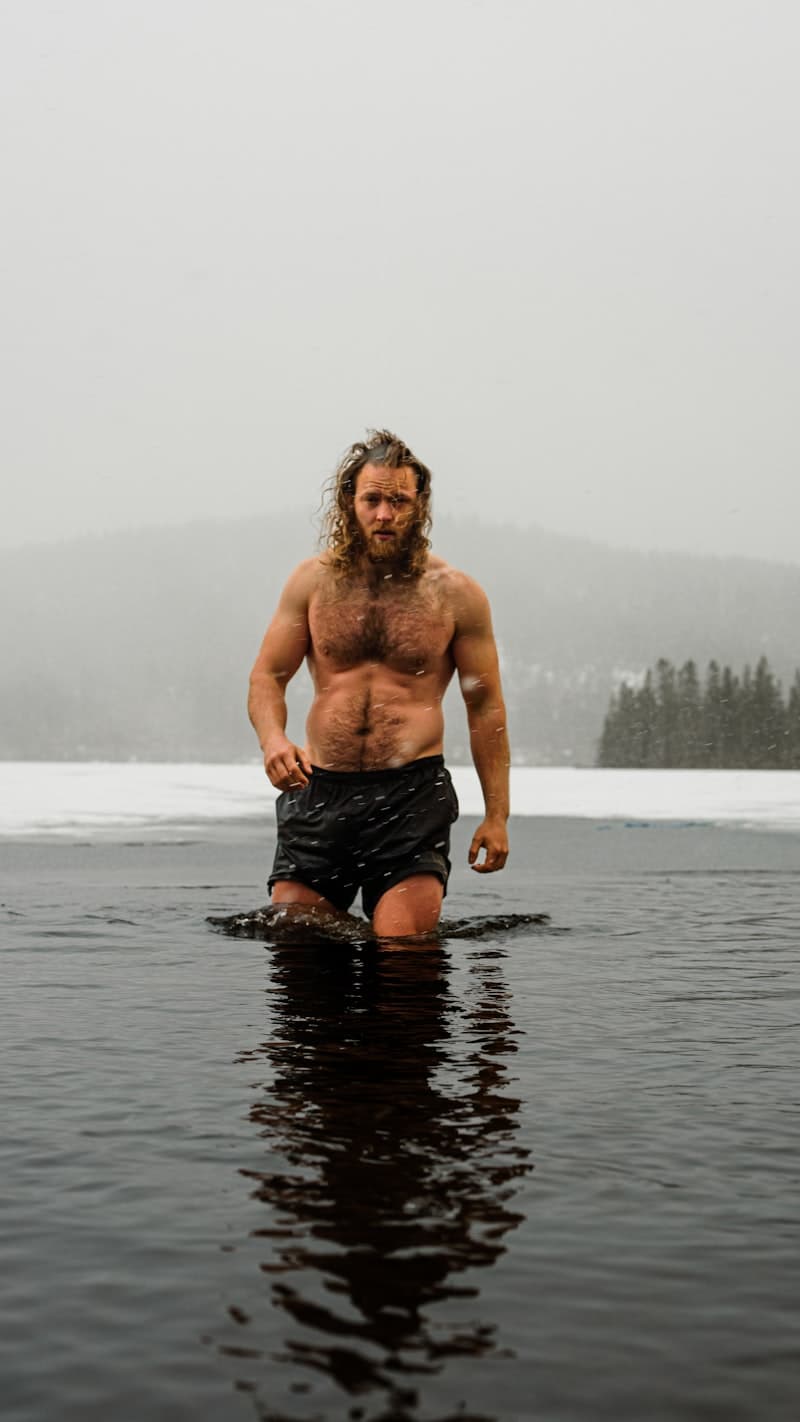
Epsom salt baths and ice baths excel at different things. Can you use both? Yes -- it is called contrast bath therapy.
What Is Contrast Bath Therapy?
Contrast therapy alternates hot and cold water immersion. The popular idea is that cycling between vasodilation and vasoconstriction creates a "vascular pump." A systematic review and meta-analysis by Bieuzen, Bleakley & Costello (PLoS ONE, 2013) found that contrast water therapy improved muscle soreness and reduced strength loss compared with passive recovery -- but it found little difference between contrast therapy and other recovery methods (such as cold water immersion alone), and the authors flagged that the included trials had a high risk of bias. So contrast therapy is reasonable, but it is not clearly superior to simpler options.
The Contrast Bath Therapy Protocol
- Prepare both: Warm water (98--104°F) with 2 cups Epsom salt + cold water (50--59°F) with ice if needed.
- Cycle 1: 3 minutes warm, 1 minute cold.
- Cycle 2: 3 minutes warm, 1 minute cold.
- Cycle 3: 3 minutes warm, 1 minute cold.
- Optional Cycle 4: 3 minutes warm, 1 minute cold.
- Finish based on your goal: Cold for inflammation reduction and energy. Warm for relaxation and sleep.
Total time: approximately 16--20 minutes.
Safety Notes
Skip contrast therapy if you have cardiovascular disease, uncontrolled hypertension, or are pregnant. Diabetics with peripheral neuropathy should be cautious due to reduced temperature sensation. When in doubt, talk to your doctor.
For a full breakdown of contrast therapy using sauna and cold plunge, see our cold plunge vs sauna guide. The principle is the same -- but using an Epsom salt bath gives you the added potential benefit of magnesium absorption alongside the heat.
Which Should You Choose? Goal-Based Recommendation
| Your Situation | Best Choice | Why |
|---|---|---|
| Post-workout DOMS (same day) | Ice bath | Cold water immersion reduces acute inflammation and swelling most effectively |
| Day-after soreness (24--48 hours) | Epsom salt bath | Warm water relaxes tight muscles and promotes blood flow to healing tissue |
| Acute swelling or joint injury | Ice bath | Vasoconstriction limits fluid accumulation around the injured area |
| Chronic muscle tension / knots | Epsom salt bath | Warmth + potential magnesium absorption promotes sustained muscle relaxation |
| Stress and anxiety relief | Epsom salt bath | Warm water activates parasympathetic nervous system; cortisol reduction |
| Competition or game day recovery | Ice bath | Faster turnaround; anti-inflammatory for repeated high-intensity efforts |
| Before bed / sleep optimization | Epsom salt bath | Post-bath temperature drop promotes sleep onset; no adrenaline spike |
| Morning energy and alertness | Ice bath | Dopamine and norepinephrine surge provides natural stimulation |
| Budget-conscious recovery | Epsom salt bath | $0.50--$2.00 per session; no special equipment beyond bathtub and salt |
| Overall best recovery strategy | Both (contrast therapy) | Alternating hot and cold maximizes circulation and combines both mechanisms |
There is no single winner. Many athletes use ice baths immediately after training and Epsom salt baths in the evening. That combination covers both ends of the recovery spectrum.
Want to layer your recovery further? Pair water-based therapy with tool-based recovery -- our foam roller vs massage gun comparison helps you add another dimension without much extra time.
Frequently Asked Questions
Is an Epsom salt bath or ice bath better for sore muscles?
It depends on the type of soreness. Ice baths are more effective for acute inflammation and swelling -- the hot, throbbing soreness right after an intense workout. Epsom salt baths are better for the stiff, aching soreness that develops 24--48 hours later. Use ice baths right after training and Epsom salt baths on rest days or before bed.
Does Epsom salt actually help with muscle recovery?
The warmth does most of the heavy lifting. Thermotherapy reliably increases blood flow, reduces stiffness, and promotes relaxation regardless of what you add to the water. The magnesium-through-the-skin claim is much weaker than most articles admit: a 2017 review in Nutrients concluded there is not enough evidence to recommend transdermal magnesium, partly because the most-cited supporting "study" was never peer-reviewed. So the realistic answer is that the heat, buoyancy, and relaxation are genuinely therapeutic, while the added magnesium is, at best, an unproven bonus.
How much Epsom salt should I use for a recovery bath?
For a standard bathtub (roughly 40 gallons), use 1--2 cups for a regular soak or 2--4 cups for intense recovery. More than that dries skin without proportional benefit. Follow package directions.
How long to soak in an Epsom salt bath for recovery?
How long to soak in an Epsom salt bath depends on your goal, but the sweet spot is 12--20 minutes. If you are wondering specifically how long to soak in Epsom salt bath sessions for post-workout recovery, aim for the full 15--20 minutes to get complete circulatory benefit. Under 12 and you miss the full circulatory benefit. Over 20 and skin dehydration outweighs recovery gains. For the best sleep benefit, get into bed within 30 minutes of getting out -- the post-bath temperature drop triggers sleep onset.
What temperature should your Epsom salt bath be for recovery?
98--104°F (37--40°C). Comfortably hot but not scalding. A bath thermometer helps. Avoid water above 107°F (42°C), which can cause dizziness and blood pressure drops.
How long should you stay in an ice bath for recovery?
10--15 minutes at 50--59°F for experienced users. Beginners start at 2--3 minutes and build gradually. Most effective within 30 minutes of finishing your workout. Beyond 15 minutes, hypothermia risk rises without proportional benefit.
Can you alternate between an Epsom salt bath and an ice bath?
Yes -- this is contrast bath therapy. A common starting ratio is 3 minutes warm followed by 1 minute cold, repeated for 3--4 cycles. The alternating vasodilation and vasoconstriction maximizes circulation. Avoid if you have cardiovascular disease, uncontrolled hypertension, or are pregnant.
Who should avoid ice baths or hot baths after exercise?
Ice baths: Avoid with Raynaud's, cold urticaria, cardiovascular disease, uncontrolled hypertension, or pregnancy. Hot Epsom salt baths: Avoid with open wounds, severe low blood pressure, heat sensitivity, or active skin infections. Both: People with diabetes and peripheral neuropathy should be cautious due to reduced temperature sensation. Consult your doctor when in doubt.
References
- Nadler SF, Weingand K, Kruse RJ. The physiologic basis and clinical applications of cryotherapy and thermotherapy for the pain practitioner. Pain Physician. 2004;7(3):395-399.
- Schwalfenberg GK, Genuis SJ. The Importance of Magnesium in Clinical Healthcare. Scientifica. 2017;2017:4179326.
- Gröber U, Werner T, Vormann J, Kisters K. Myth or Reality—Transdermal Magnesium? Nutrients. 2017;9(8):813.
- Leeder J, Gissane C, van Someren K, Gregson W, Howatson G. Cold water immersion and recovery from strenuous exercise: a meta-analysis. British Journal of Sports Medicine. 2012;46(4):233-240.
- Šrámek P, Šimečková M, Janský L, Šavlíková J, Vybíral S. Human physiological responses to immersion into water of different temperatures. European Journal of Applied Physiology. 2000;81(5):436-442.
- Roberts LA, Raastad T, Markworth JF, et al. Post-exercise cold water immersion attenuates acute anabolic signalling and long-term adaptations in muscle to strength training. The Journal of Physiology. 2015;593(18):4285-4301.
- Ihsan M, Watson G, Abbiss CR. What are the Physiological Mechanisms for Post-Exercise Cold Water Immersion in the Recovery from Prolonged Endurance and Intermittent Exercise? Sports Medicine. 2016;46(8):1095-1109.
- Bieuzen F, Bleakley CM, Costello JT. Contrast Water Therapy and Exercise Induced Muscle Damage: A Systematic Review and Meta-Analysis. PLoS ONE. 2013;8(4):e62356.
The Bottom Line
Epsom salt baths and ice baths are complementary tools, not competitors.
Ice baths give you the acute reset -- vasoconstriction that limits inflammation, a rebound flush of metabolic waste, and a neurochemical surge that sharpens focus and energy. Use them in the hours after hard training.
Epsom salt baths give you sustained recovery -- vasodilation that delivers nutrients to damaged tissue, deep muscle relaxation, parasympathetic activation, and a temperature drop that promotes better sleep. Use them for the stiff, lingering soreness that shows up the next day.
If you take one thing away: use an ice bath when the soreness is fresh and hot. Use an Epsom salt bath when the soreness is stiff and lingering. And if you want the best of both worlds, try contrast therapy.
No single method is a silver bullet. The smartest approach layers multiple strategies: water-based recovery (this guide), tool-based recovery (foam roller vs massage gun), temperature-exposure recovery (cold plunge vs sauna), and sleep optimization (magnesium for sleep vs melatonin). Each works through a different pathway, and together they cover more ground than any single method alone.
Have you tried Epsom salt baths, ice baths, or both for recovery? Which one worked better for you? Drop a comment -- I read every one.
Dumbbell vs Kettlebell: Which Is Better for Your Home Workout? (Science-Backed 2026 Guide)
Next →Robot Vacuum vs Stick Vacuum: Which One Should You Actually Buy? (2026 Guide)
Related Posts

Cold Plunge vs Sauna: Science-Backed Benefits, Risks & How to Choose (2026 Guide)

Red Light Therapy vs Near-Infrared: Which Wavelength Actually Works Better? (2026 Guide)
